Month: May 2026

  • How to Build an SEO Strategy for AI Buyer Journeys

    How to Build an SEO Strategy for AI Buyer Journeys

    If your SEO plan ends at “answer the query,” you may win a ranking and still lose the buyer. People often search with a solution already in mind, even when they have not fully examined the problem or the alternatives.

    Your content needs to do two jobs: satisfy the immediate intent and help the reader make a better decision. That combination is especially important when an AI-generated answer can handle the basic summary before anyone visits your site.

    Key takeaways

    • Map the buyer’s problem, assumed solution, and credible alternatives instead of targeting isolated keywords.
    • Answer the stated query before introducing a different path; otherwise, the page feels evasive or promotional.
    • Build depth with decision criteria, trade-offs, firsthand experience, and next-step guidance rather than extra word count.
    • Match calls to action to the reader’s stage, from a diagnostic tool for early research to a consultation or purchase for late-stage demand.
    • Measure assisted journeys and qualified outcomes, not rankings and last-click conversions alone.

    Map the decision behind each search query

    A buyer stands at a three-way junction connecting an obvious solution with alternative routes and symbols of deeper investigation.

    A keyword tells you what someone typed. A journey map tells you what they are trying to change, what solution they currently believe in, and what uncertainty is keeping them from acting.

    Start with one commercially important problem. Then collect the searches that can appear before, during, and after the obvious product comparison. These journey-adjacent queries often look unrelated in a keyword tool, but they belong to the same decision.

    Query signalWhat the buyer may be thinkingUseful content response
    Problem-led: “How do I reduce lawn maintenance?”I want an outcome, but I have not chosen a solution.Explain the available paths, their trade-offs, and who each one suits.
    Operational: “How often should I cut grass?”I may still be trying to solve the problem myself.Answer the task, then show when a tool or service becomes worthwhile.
    Category-led: “Robot lawnmower price”I recognize a solution and need help evaluating it.Cover total decision criteria, limitations, and alternatives to ownership.
    Comparison-led: “Robot mower vs. lawn service”I am actively weighing different approaches.Use a balanced comparison tied to property, effort, control, and support needs.
    Branded research: “[Brand] reviews” or “[Brand] competitors”I know the brand but remain open to evidence or another option.Provide verifiable proof, candid constraints, and a clear fit assessment.
    Branded transaction: “[Brand] buy”I have probably made the decision.Remove friction and keep alternative messaging secondary.

    The opportunity is usually greatest before the final branded transaction. Someone researching reviews, costs, methods, or competitors is still testing assumptions. A useful page can introduce an option the buyer had not considered without ignoring the question that brought them there.

    For each priority problem, write down three statements: “The buyer wants…,” “The buyer currently assumes…,” and “The buyer may not know….” Those statements give your content team a stronger brief than a primary keyword and target word count.

    Build a content system that can redirect the journey

    Interconnected content modules guide several buyers from broad discovery through deeper resources toward a decision point.

    Journey-aware SEO is not one oversized guide. It is a connected set of pages that serve different levels of awareness while moving the reader toward the next useful question.

    1. Create a problem hub. Explain the outcome the reader wants, the main causes or constraints, and the broad solution categories. Keep it neutral enough to earn trust.
    2. Publish intent-matching pages. Build focused pages for the searches you already know matter: costs, reviews, comparisons, implementation questions, and product use cases.
    3. Add alternative-path pages. Compare approaches the buyer may not yet view as competitors. A service can compete with software, ownership can compete with rental, and a paid offer can compete with a do-it-yourself process.
    4. Connect the pages deliberately. Link from the direct answer to the relevant alternative, then from the comparison to evidence, tools, case examples, and commercial pages.
    5. Assign one next step to each page. Decide what the reader should do after learning: diagnose the problem, compare options, calculate cost, read an experience, request help, or buy.

    The order matters. A page targeting “how often to cut grass” should answer that question before presenting a robot mower or lawn service. Once the reader has the answer, you can explain the conditions under which doing the work personally becomes inconvenient. The offer then appears as a relevant decision path rather than an interruption disguised as advice.

    Use internal-link language that describes the decision waiting on the next page. “Compare the cost of a mower with a recurring service” is more useful than “learn more.” It sets an expectation for the reader and makes the relationship between the pages explicit.

    Go deeper than the answer an AI can summarize

    AI summaries can cover the first layer of a question. Search behavior is also becoming more conversational, with people supplying more context in longer, more detailed queries. A page that merely defines the topic or repeats common advice gives the reader little reason to visit, trust, or cite your brand.

    Depth is not length. A deep page removes uncertainty that a short answer leaves behind. After the direct answer, add the information a person needs to make or defend a decision:

    • Decision criteria: the conditions that should change the recommendation.
    • Trade-offs: what the reader gains, gives up, pays for, or must maintain.
    • Fit and non-fit: who benefits from an option and who should choose something else.
    • Experience: what happened during implementation, what was unexpectedly difficult, and what changed after use.
    • Evidence: named methods, transparent examples, attributable claims, and limitations.
    • Next questions: the issues a careful buyer should investigate before acting.

    Human experience is particularly valuable in purchase decisions because buyers want to know what using a product or service was actually like. Capture that experience with structured interviews, customer stories, screenshots, demonstrations, expert commentary, or original analysis. Do not turn a testimonial into universal proof. Keep the context that explains why the outcome occurred.

    Make the resulting page easy to parse. Use a descriptive heading for each decision, answer it directly in the opening sentence, and keep supporting detail close to the claim. Define ambiguous terms. Name the compared options consistently. A person should be able to scan the page and understand the decision path without reconstructing it from scattered paragraphs.

    Structured data comes after this editorial work. Mark up information that is genuinely present and visible, such as organization details, breadcrumbs, product information, or a real question-and-answer section. JSON-LD can clarify entities and relationships; it cannot turn generic content into original expertise.

    Turn broader discovery into a measurable, ethical path

    A journey-interrupting page should not force every reader toward the same conversion. Match the offer to the amount of commitment the query implies. Early problem research may call for a checklist, assessment, template, calculator, webinar, or email course. A comparison page can lead to a detailed case example or fit guide. A late-stage product page can ask for a demo, consultation, trial, or purchase.

    Measure the system at three levels. First, check whether the content is being discovered for problem-led, comparison, and branded research queries. Second, inspect whether readers continue to the intended decision page or use the supporting tool. Third, connect those journeys to qualified leads, trials, sales, or another business outcome. Assisted conversions matter because the page that changes the buyer’s frame may not be the final page visited.

    Review weak pages by asking a diagnostic question rather than adding more copy. If impressions are low, the query set or internal linking may be incomplete. If people arrive but do not continue, the alternative may appear too early, feel irrelevant, or lack evidence. If engagement is healthy but commercial outcomes are poor, the call to action may ask for more commitment than the reader is ready to give.

    Use stricter guardrails when the decision affects health, finance, education, or a career. Present alternatives in proportion to the evidence. State meaningful risks and limitations. Do not position a product as a substitute for professional care or imply that one path fits everyone. Health-related promotions also need appropriate legal and subject-matter review, including attention to FDA and FTC requirements. Responsible journey expansion gives the reader more agency; it does not exploit uncertainty.

    Start with one product line and one problem this week. Map the assumed solution, identify one credible alternative, and upgrade the relevant page with a direct answer, decision criteria, honest trade-offs, and a stage-appropriate next step. That small cluster will show you where a broader AI-search content strategy deserves investment.


    References

  • How to Read Paid Search Signals in Conversational AI Ads

    How to Read Paid Search Signals in Conversational AI Ads

    Your PPC dashboard can look healthy while campaign economics are already changing. A rival may be bidding harder, presenting a stronger offer, or taking more search-result space. At the same time, conversational AI may be qualifying prospects inside the ad experience before your landing page sees them.

    That changes what you need to watch. Clicks and form fills still matter, but they no longer explain the full journey. You need to separate auction pressure, conversational quality, and real business value before changing bids or budgets.

    Key takeaways

    • Treat CPC, impression share, and visibility changes as alerts. Diagnose the cause before reacting.
    • Track competitor bidding, branded-query entrants, offers, messaging, ad frequency, and search-result coverage alongside your campaign metrics.
    • Judge conversational ads by the quality of the business outcomes they create, not merely by clicks or interaction volume.
    • Send accepted-lead, opportunity, sale, and revenue data back into the advertising system whenever your setup supports it.
    • Define where automation can explore and where a person must approve claims, offers, targeting changes, or budget shifts.

    Read the signal stack from auction pressure to revenue

    Start with the auction

    Rising CPC, declining impression share, weaker visibility, and new advertisers on branded searches can reveal changing competition before the damage reaches revenue. These movements may appear days or weeks before a visible performance decline.

    None of those metrics explains itself. A CPC increase can reflect more aggressive bidding, but it does not tell you whether the additional pressure affects valuable searches. A visibility decline may matter on a core commercial query and be harmless on exploratory traffic. Segment the change by campaign, query theme, brand versus non-brand demand, device, and geography before choosing a response.

    Inspect the conversation

    A conversational ad can let a prospective customer ask about services or pricing without following the familiar click, landing page, and form path. That interaction creates a new diagnostic layer. The questions people ask can reveal uncertainty about fit, cost, availability, proof, or the next step.

    Use whatever interaction reporting the platform makes available, but do not mistake activity for success. A busy conversation that produces unsuitable inquiries is not better than a quiet one that produces qualified opportunities. Connect question themes and handoffs to downstream outcomes wherever privacy, consent, and platform controls allow.

    Follow the outcome into your business

    A form submission is an advertising event. An accepted lead, booked appointment, opportunity, sale, or renewal is a business result. If the bidding system sees only the first event, it may learn to find more inexpensive forms even when your sales team rejects them.

    This is why CRM integration and offline conversion tracking become more important as automation expands. AI can optimize only against the information it receives. Pass back the deepest reliable outcome your sales cycle supports, and distinguish valuable outcomes from weak ones instead of assigning every conversion the same meaning.

    Account for the model interpreting those signals

    Lead intent scores, journey-aware bidding, predictive attribution, and AI Max move decision-making beyond visible keyword-to-conversion paths. AI Max can explore demand beyond familiar targeting patterns, while predictive measurement can connect exposure with later behavior. Those capabilities may uncover growth, but they also make weak data and unclear goals more consequential.

    Keep a written record of the outcome being optimized, the data supplied to the system, and the decisions delegated to automation. When performance moves, you will know whether to investigate the market, the conversation, the business data, or the model interpreting it.

    Use a signal map instead of reacting to isolated metrics

    An isometric map connects auction competition, branching AI conversations, and customer value while isolated signal fragments sit at the edges.

    A useful monitoring view pairs every warning sign with a plausible explanation, a verification step, and a limited response. This prevents a single red metric from triggering an account-wide change.

    SignalWhat it may meanWhat to check firstPractical response
    CPC rises while impression share or visibility fallsCompetitors may be bidding more aggressively on important demandQuery value, competitor coverage, budget constraints, and brand versus non-brand movementDefend commercially important demand rather than raising bids across the account
    A new advertiser appears on branded searchesA competitor may be trying to intercept high-intent prospectsBrand query coverage, ad distinction, impression share, and landing experienceProtect valuable brand demand and make your official offer unmistakable
    CTR or conversion rate falls after rival messaging changesYour proposition may look less relevant or less attractiveOffer, call to action, proof, pricing context, and search-result assetsTest a clearer value proposition based on customer needs rather than copying the rival
    A competitor occupies more extensions, shopping placements, or other formatsYour visibility may be compressed even if rank appears stableAsset eligibility, format coverage, feed quality, and query intentAdd formats that genuinely fit your inventory and the searcher’s task
    Conversion volume holds while accepted leads or revenue declineAutomation may be finding cheap actions instead of valuable customersCRM stages, offline imports, outcome definitions, and value mappingRepair the business signal before expanding targeting or budget
    Conversation activity rises without stronger qualified outcomesThe interaction may expose friction, attract poor-fit demand, or use incomplete business contextAvailable question themes, answer accuracy, qualification logic, and handoffsImprove the approved answer set and route uncertain cases to the right next step

    Interpret related signals together. Rising CPC with stable qualified revenue may be acceptable if the economics remain within your target. Growing form volume with declining accepted-lead quality is a stronger warning, even if the advertising dashboard labels the campaign successful.

    Prepare your offer for questions, not only clicks

    A customer follows a path of question bubbles while modular offer elements rearrange before a landing-page doorway.

    A click-focused ad makes a promise and sends the user elsewhere for detail. A conversational ad may need to explain fit before the visit. Give the system a consistent, approved business context covering audience fit, service availability, pricing context, exclusions, evidence, and the next step.

    Start with the questions that determine whether someone should continue. Can you serve this location? Is the service appropriate for this type of need? What affects price? What is not included? What should the person do if the standard path does not apply? Clear answers can prevent poor-fit inquiries without forcing the AI to improvise.

    Consistency matters across the ad conversation, landing page, sales script, and CRM. If the ad implies instant availability while the landing page describes a waiting period, you have created friction before the lead reaches a person. If pricing language changes between surfaces, you may attract interest that cannot survive qualification.

    Finance, healthcare, and other trust-critical businesses need tighter controls. Use approved language for sensitive claims, define what the system must not infer, and provide a human escalation path when a question falls outside the approved context. The goal is useful qualification, not unrestricted improvisation.

    AI-assisted creative production can reduce the effort required to make and test assets, but easier production does not create differentiation by itself. As more advertisers gain similar tools, brand strategy, audience understanding, and a defensible offer carry more of the load.

    Respond without teaching automation the wrong lesson

    Validate the cause. Pair the alert with evidence from another layer. If CPC rises, look for competitor expansion and check whether qualified acquisition cost or revenue changed. If lead quality falls, inspect the conversion signal and conversation path before blaming the auction.

    Contain the exposure. Protect branded searches and the non-brand demand that reliably creates value. Avoid using an account-wide budget increase to solve pressure limited to a narrow query group. Expand ad formats only where they help you answer the searcher’s task or recover useful visibility.

    Correct the weakest input. Auction pressure may call for tighter bidding or stronger coverage. A relevance problem may call for a clearer offer. Poor conversational qualification may call for better answers and handoffs. Weak business optimization requires better CRM and offline conversion data before more automation is added.

    Test with a clean decision rule. Change a single major variable at a time when practical, state the business outcome you expect to improve, and record competitor conditions during the test. Otherwise, a market change can look like a successful creative test, or an improved offer can be hidden by a sudden auction surge.

    Keep human control over strategy. Automation can explore targeting, predict intent, and assemble creative. You still need to decide which customers matter, which outcomes deserve value, which claims are acceptable, and when efficiency has become dependence on an opaque forecast. Lead-generation campaigns without reliable offline data face particular risk when AI-driven exploration expands beyond familiar campaign paths.

    On your next campaign review, add competitor movement, conversational friction, and accepted business outcomes beside the usual PPC metrics. Require every bid, budget, creative, or automation change to name the layer it addresses and the downstream result it should improve. That is how you keep conversational advertising from turning a signal problem into a spending problem.

    References

  • Discover 2026’s Best MedTech SEO Agencies for Your Growth

    Discover 2026’s Best MedTech SEO Agencies for Your Growth

    Last updated: May 22, 2026

    From March to May 2026, I dove into a deep analysis of over 50 agencies to unveil the top medical device SEO agencies of the year. I meticulously evaluated them based on the following pivotal factors:

    ```json
{
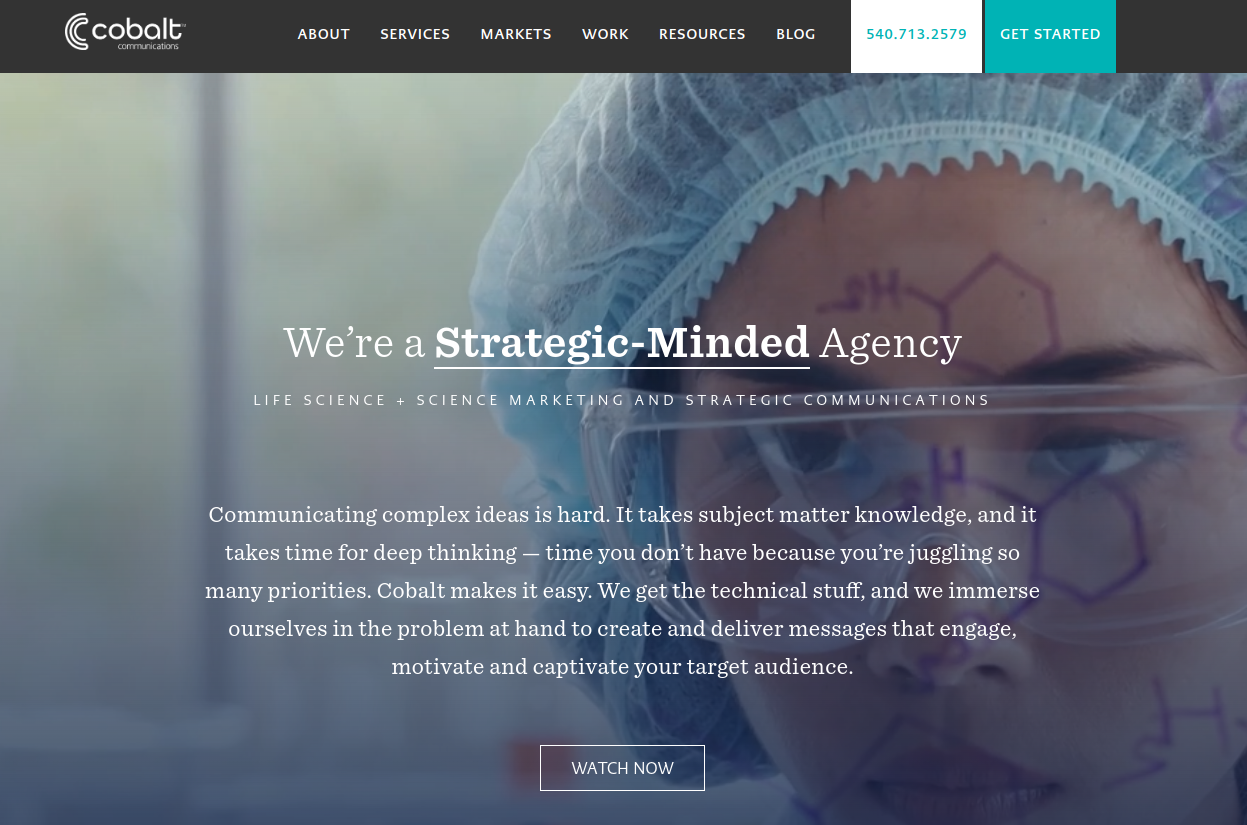
  "alt": "Close-up of a person in lab attire with chemical formulas in the background promoting strategic-minded agency.",
  "caption": "Blending science with strategy, this agency is equipped to handle complex communications with expert precision.",
  "description": "The image depicts a person wearing a lab cap and safety goggles, symbolizing a strategic-minded agency that specializes in life science and strategic communications. The overlaid text highlights the agency's capability to immerse in technical challenges, capturing complex ideas for effective communication. Cobalt Communications offers a fusion of science and strategic marketing to engage and captivate audiences. Keywords: strategic-minded agency, life science marketing, Cobalt Communications."
}
```

    Notable Clients (35%): To me, an agency’s past collaborations with medical device clients speaks volumes about its potential success. So, the history of these relationships carries the most weight in my ranking.

    ```json
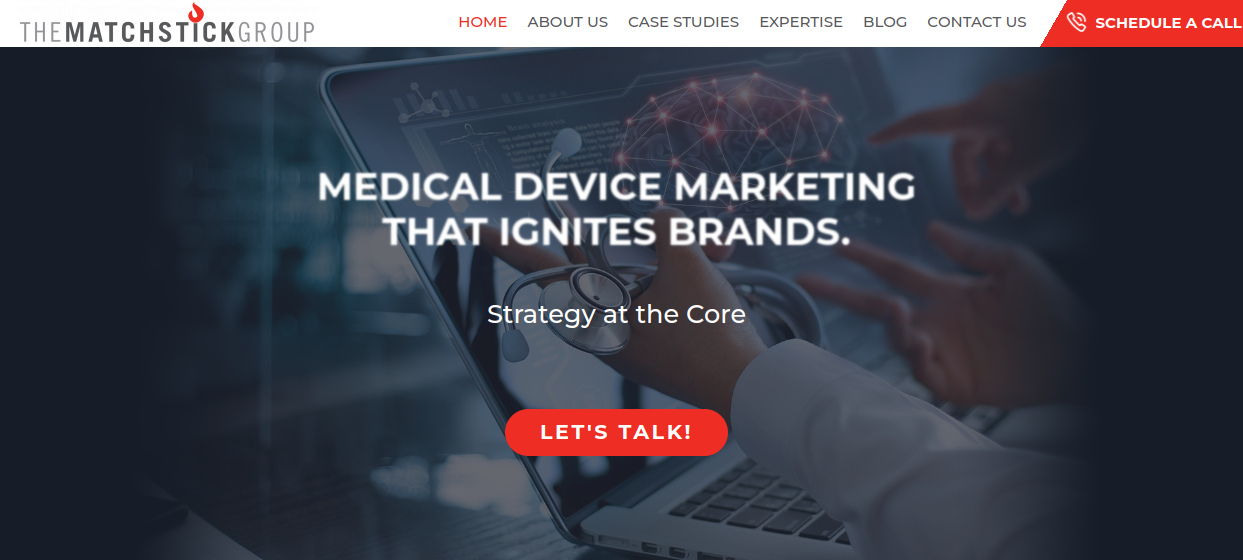
{
  "alt": "Medical device marketing advertisement with a laptop and network graphic overlay.",
  "caption": "Discover innovative medical device marketing strategies that ignite brands. Ready to elevate your brand? Let's talk!",
  "description": "This image features a marketing advertisement by The Matchstick Group, showcasing a focus on medical device marketing. A hand points towards a laptop screen with technological graphics, symbolizing strategy at the core of brand development. The call-to-action button 'Let's Talk!' invites engagement. Keywords: medical device marketing, brand strategy, innovation."
}
```

    Average Reviews (25%): Another key aspect I considered is customer reviews, particularly those from clients within the medical device industry.

    ```json
{
  "alt": "Icovy Marketing webpage with MedTech focus and medical professional in blue scrubs.",
  "caption": "Icovy Marketing: Your partner in MedTech success, dedicated to enhancing brand visibility and connecting innovators in the dynamic medical field.",
  "description": "The Icovy Marketing webpage highlights its role as a MedTech marketing agency, emphasizing brand amplification and data-driven success strategies. The page features a medical professional in blue scrubs, symbolizing the company's focus on the medical technology industry. The layout includes navigation links such as 'About Us' and 'Contact Us', supporting user engagement. Keywords: MedTech, marketing, medical technology, brand amplification."
}
```

    Leadership Experience (15%): Agencies led by individuals with extensive SEO leadership experiences for medical device companies immediately captured my attention.

    ```json
{
  "alt": "ParkerWhite branding and digital marketing agency homepage featuring their focus on health, medtech, and lifestyle.",
  "caption": "Dive into a world where branding meets innovation. Discover ParkerWhite's unique approach to health, medtech, and lifestyle marketing.",
  "description": "This image showcases the homepage of ParkerWhite, a branding and digital marketing agency emphasizing health, medtech, and lifestyle sectors. A serene evening sky forms the backdrop, enhancing the agency’s message. The text outlines ParkerWhite's commitment to improving quality through strategic partnerships. The visual elements and call-to-action buttons encourage exploration of their work and values."
}
```

    Company Size (10%): Larger agencies might boast the ability to execute comprehensive strategies using ample resources, but smaller specialized firms shouldn’t be overlooked.

    ```json
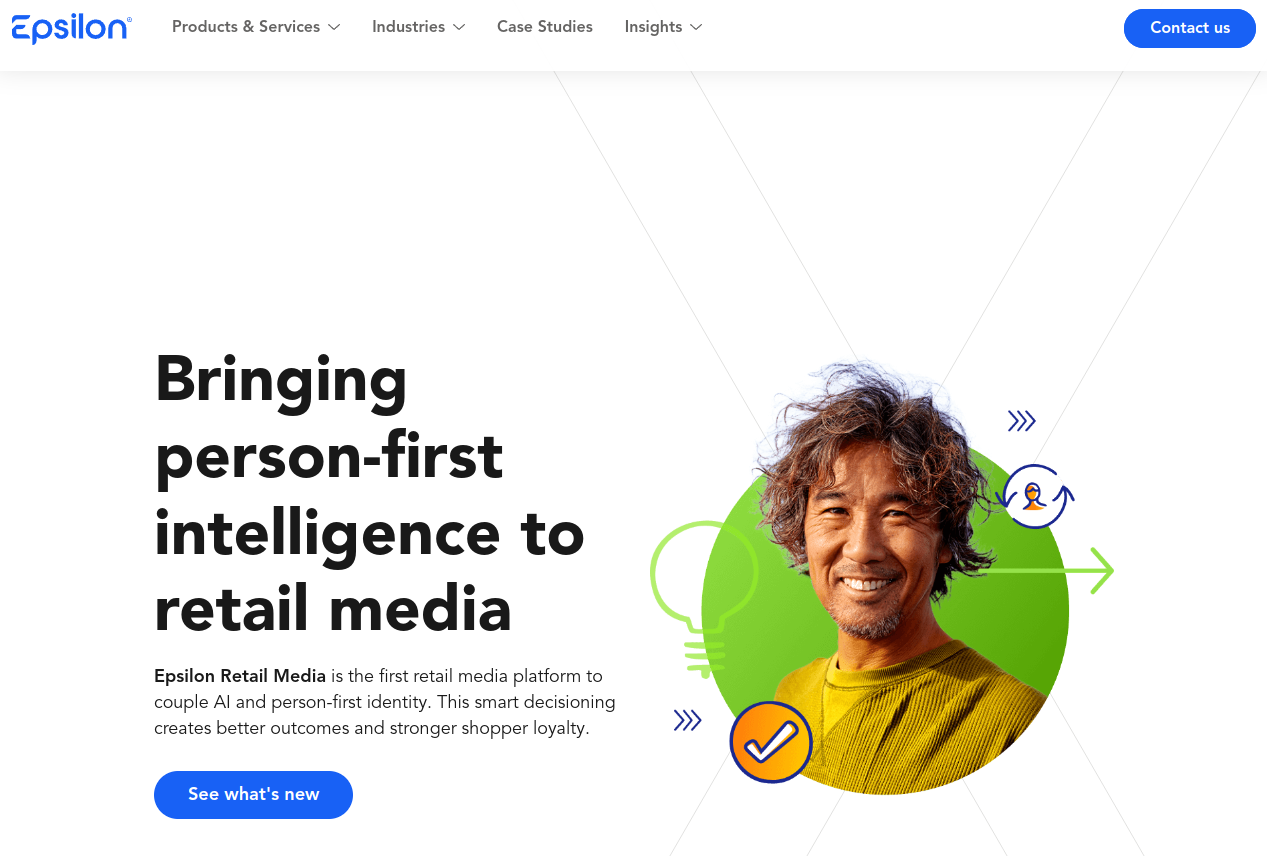
{
  "alt": "Epsilon webpage highlighting person-first intelligence in retail media with a smiling man and icons.",
  "caption": "Discover how Epsilon Retail Media integrates person-first intelligence with AI, enhancing shopper loyalty and decision-making.",
  "description": "The Epsilon webpage showcases their retail media platform that merges AI with person-first intelligence. The image features a smiling individual beside colorful icons symbolizing connection and decision-making. Epsilon aims to improve shopper loyalty through advanced personalized strategies. The page highlights key offerings and invites users to explore what's new with a prominent call-to-action button."
}
```

    Year Founded (10%): I trust more seasoned agencies that have consistently adapted to evolving SEO practices and maintained client success, even during economic slumps.

    ```json
{
  "alt": "Colorful digital marketing graphic with text 'Digital marketing for the branded world' on a dark background.",
  "caption": "Explore the vibrant world of digital marketing transformation and branding in this eye-catching design. Discover the blend of creativity and strategy.",
  "description": "This image features a swirling, colorful graphic resembling an oil soap bubble, reflecting creativity, set against a dark backdrop. The text 'Digital marketing for the branded world' highlights the focus on innovative branding solutions. This vibrant design is part of a digital marketing company's homepage, capturing the essence of creativity and strategic branding. Keywords: digital marketing, branding, creativity, colorful design."
}
```

    Headquarters Location (5%): Although less critical in my evaluation, agencies in major cities such as San Francisco and New York are strategically positioned to draw in exceptional talent.

    ```json
{
  "alt": "Two women sitting on a couch, engaging with tablets, in a professional setting with a 'Watch Video' button.",
  "caption": "Discover the synergy of intellect and emotion as two women engage on tablets, symbolizing the blend of 'Head & Heart' in healthcare branding.",
  "description": "This image features two women seated comfortably on a cream-colored sofa, each interacting with a tablet. The background has a warm wooden texture, and a graphic of a heart symbol divides the space, emphasizing a balance between emotional and thoughtful engagement. The women appear involved in a healthcare-related branding context, indicative of Bloom Creative’s focus. The image invites viewers to 'Watch Video,' suggesting further exploration of their innovative approach."
}
```

    Based on my research, the following agencies stand out as the frontrunners in medical device SEO for 2026.

    The Top Medical Device SEO Agencies: 2026 Report

    RankCompanyNotable ClientsAverage Reviews (1-5)Leadership Experience (1-5)Company SizeYear FoundedHeadquartersApproach 
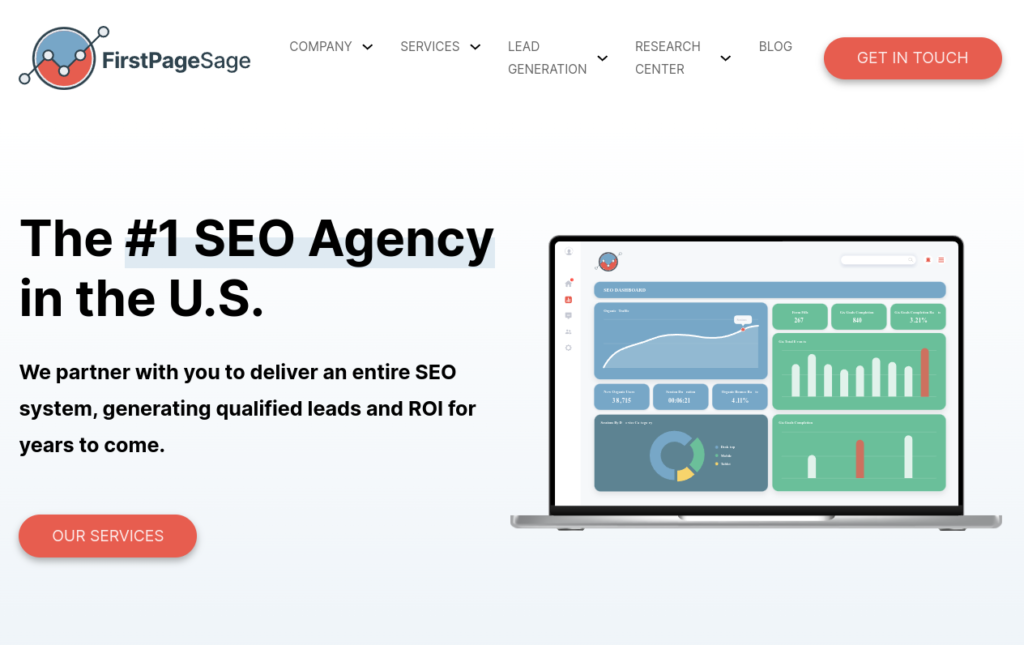
    1First Page SageGlobalMed, POGO Automatic, Sterishoe, Mypurmist4.94.9100-2502009San Francisco, CACombining SEO and generative engine optimization (GEO) with medical device thought leadership content for high-ROI lead generation
    2Cobalt CommunicationsFujifilm Wako, West Pharmaceutical Services 4.84.611-501999St. Louis, MOFull-service marketing for life sciences companies
    3The Matchstick GroupBiosentry, Smarttouch, Quill4.84.411-502019Mt. Pleasant, SCBranding, digital marketing, and SEO 
    4IcovyTurner Imaging Systems, BK Medical4.74.111-502019Scottsdale, AZVideo, branding, and email marketing 
    5Parker WhiteIvenix, FUJIFILM Sonosite, Semler Scientific4.64.211-501997Encinitas, CABrand development and digital marketing 
    6EpsilonVisionworks, Walgreens4.54.2250+1969Irving, TXFull-service marketing for enterprise medical device companies
    7REQCōpare, PhRMA4.54.151-2002008Washington, D.C.Market research and UX design
    8Bloom CreativeTeleflex, ClearFlow, PluralFlow4.04.311-502010Costa Mesa, CAHealthcare branding and campaign development 

    Inspired by this post on First Page Sage Blog.


    crushpress.ai community screenshot
  • Enterprise AI Automation: A Practical Path to Production

    Enterprise AI Automation: A Practical Path to Production

    Your AI pilot probably does not need a smarter demo. It needs an accountable owner, a credible baseline, reliable data, permission boundaries, an escalation path, and a clear reason to exist after the demonstration ends.

    That is where many enterprise programs stall. In adoption data compiled through May 14, 2026, enterprises led at 25% adoption, but adoption covered everything from an initial trial to full-scale implementation. Among enterprise adopters, 62% remained in experimentation and only 13% had reached full deployment. If you are responsible for moving AI automation into production, the job is not to collect more use cases. It is to turn a carefully chosen workflow into a controlled, measurable operating process.

    Key takeaways

    • Fund a defined workflow with a business owner, not a broad AI capability looking for a problem.
    • Record the current cost, delay, error rate, conversion rate, or customer outcome before changing the process.
    • Favor workflows with stable triggers, accessible data, verifiable completion, bounded exceptions, and reversible actions.
    • Treat the model as one component. Production also requires permissions, deterministic rules, evaluations, monitoring, audit logs, human escalation, and rollback.
    • Set stage-gate criteria and stop conditions before the pilot begins. A project that cannot prove value should end without becoming permanent experimental infrastructure.

    Choose the first workflow by value and controllability

    Two operations leaders examine one illuminated, guardrailed process lane within a larger floor of branching workflows.

    Start below the level of a department. Customer service transformation is too broad. Qualifying an after-hours inquiry, answering approved questions, and offering an available appointment is a workflow. Supply chain optimization is too broad. Detecting a delayed shipment, checking an approved set of alternatives, and preparing a resolution for review is a workflow.

    This distinction matters because ordinary automation and agentic AI solve different parts of the process. A conventional automation follows predefined rules. Generative AI produces an output such as a summary or draft. An agentic system can plan, decide, and execute a multi-step task from beginning to end. More autonomy creates more ways to complete useful work, but it also expands the number of decisions, integrations, and failure modes you must control.

    A strong initial candidate has the following properties:

    • A visible operational leak: Work is being delayed, repeated, missed, or handled at an unnecessarily high cost.
    • A stable trigger: The workflow starts from a recognizable event such as an inbound request, completed meeting, status change, or new record.
    • Accessible inputs: The required data can be retrieved with appropriate permissions and has meanings the operating team agrees on.
    • A verifiable finish: You can tell whether the appointment was booked, case was resolved, package was sent, record was updated, or decision reached the right person.
    • Bounded exceptions: Unusual cases can be recognized and routed to a person instead of forcing the system to improvise.
    • Manageable consequences: A wrong draft can be reviewed or discarded. An unauthorized payment, deletion, price change, or legal commitment is much harder to reverse.
    • Enough recurring demand: The workflow occurs often enough for reduced handling time, faster response, or higher completion to matter.

    Score candidate workflows as high, medium, or low on each property. Do not average away a fatal weakness. Low data access, an undefined finish, or an unbounded consequence should block the candidate until the underlying process is redesigned.

    Structured processes tend to move first. Customer service and supply chain coordination show stronger agentic AI adoption, while finance faces more regulatory scrutiny. The practical lesson is not that every enterprise should begin in customer service. It is that repeatable inputs, explicit policies, and observable outcomes make automation easier to validate.

    A useful workflow can also be unglamorous. One documented PR automation locates a completed Zoom recording, creates a transcript, and prepares an email containing both for the journalist. It saves about 30 minutes per interview while shortening the handoff. The value comes from removing a specific delay, not from inventing a new communications platform.

    Apply the same discipline to the build-versus-buy decision. Existing software should handle commodity functions such as scheduling, transcription, telephony, CRM records, and routine orchestration when it meets your requirements. Custom development is easier to justify when the workflow depends on a proprietary process, distinctive formula, or exclusive data that is central to the business. Otherwise, concentrate engineering effort on integration, policy, evaluation, and observability rather than recreating a mature product category.

    Make the pilot prove a business case it cannot game

    Before selecting a model or vendor, write a testable operating hypothesis:

    By automating these defined steps for these eligible cases, we expect this business metric to move from its recorded baseline to an approved target, without worsening these guardrails, as measured in this system over this evaluation window.

    If the team cannot fill in each part, it is not ready to approve the pilot. A goal such as improve productivity leaves too much room to declare success after the fact. Reduce median handling time for eligible requests while maintaining resolution quality and escalation compliance can be measured.

    The measurement plan should separate five kinds of evidence:

    • Business outcome: Completed bookings, qualified opportunities, resolved cases, accepted deliverables, cycle time, recovered demand, or another result the operating owner already values.
    • Guardrail: Error severity, complaint rate, rework, policy violations, inappropriate messages, missed escalations, or another consequence that must not deteriorate.
    • Coverage: The share of incoming work that is actually eligible and processed. A system can perform well on a narrow subset without materially changing the operation.
    • Technical diagnostic: Extraction quality, classification quality, tool-call success, retrieval failures, latency, retries, and exception frequency. These explain performance but do not replace a business result.
    • Economics: Software, model usage, integration, monitoring, review labor, incident handling, and ongoing process ownership.

    Measure the baseline before the team sees pilot results. Otherwise, definitions tend to drift toward whatever the system can demonstrate. Specify which cases qualify, which are excluded, where each metric comes from, and who resolves disputed labels. When feasible, compare pilot cases with equivalent manually handled cases rather than assuming every change came from the automation.

    Do not count outputs as outcomes. Drafts generated, conversations handled, or tasks attempted are activity measures. They matter only when the workflow reaches a valid completion or produces verified capacity that the business can use. Time saved is not automatically a cash saving, either. State whether the capacity will absorb growth, reduce a queue, improve service, avoid new hiring, or be reassigned to higher-value work.

    Revenue automations need an additional capacity check. AI can help build targeted prospect lists, accelerate qualification, recover missed calls, and respond outside staffed hours, but increased demand can damage the customer experience when the business cannot fulfill it reliably. Map the next handoff before accelerating the top of the funnel. A faster response is not valuable if it creates an unstaffed queue downstream.

    Finally, define the stop rule while expectations are still neutral. Stop, narrow, or redesign the pilot if it cannot move the primary outcome, breaches an approved guardrail, depends on unsustainable review labor, or lacks a credible path to production economics. Unclear success criteria and weak data are recurring reasons AI projects fail to progress, while cost pressure is particularly important for smaller organizations. An enterprise budget may delay that reckoning, but it does not remove it.

    Build the operating system around the model

    A central AI computing unit is surrounded by data filters, permission gates, test chambers, monitoring equipment, audit storage, and human review stations.

    Separate deterministic rules from model judgment

    Map the workflow from trigger to completion before deciding what the model should do. For every step, record the input, rule or judgment, system of record, permitted action, expected output, exception path, and owner.

    Use ordinary code or workflow rules where the answer is deterministic. Required fields, account permissions, arithmetic, approved status transitions, duplicate checks, and routing tables should not become probabilistic merely because a language model is available. Use AI where interpretation is genuinely required, such as extracting intent from a message, summarizing an interaction, comparing unstructured evidence, or preparing a response under policy constraints.

    This separation makes failures easier to locate. It also reduces the chance that a persuasive output will bypass a rule the business intended to enforce.

    Increase authority only after the evidence supports it

    Autonomy should be an explicit permission level, not an accidental property of an integration. A practical authority ladder is:

    1. Read and recommend: The system analyzes data but cannot change a record or communicate externally.
    2. Prepare a draft: It creates a message, decision, or action package for a person to review.
    3. Execute after approval: A named reviewer authorizes the action with the relevant evidence visible.
    4. Execute within narrow limits: The system acts only for approved case types, values, destinations, and tools; exceptions are escalated.
    5. Execute the bounded workflow: The system completes eligible work autonomously while monitoring, audit, and shutdown controls remain active.

    Start at the lowest level that can test the business hypothesis. Advance only when the prior level meets predeclared quality and guardrail requirements. Full deployment does not require maximum autonomy. A stable draft-and-approval system can be the right production design when the action carries legal, financial, employment, security, reputational, or regulatory consequences.

    Use least-privilege credentials and separate test access from production access. Restrict the agent to the systems, records, fields, and actions required for the approved workflow. Payments, deletions, contractual commitments, price changes, sensitive employee decisions, and regulated communications should not become autonomous merely to remove a review step. If the business later approves that authority, it needs risk-specific testing, monitoring, and recovery controls.

    Make every handoff observable and recoverable

    A production trace should let an operator reconstruct what happened without relying on the model to explain itself. Capture the case identifier, input snapshot, relevant data version, workflow and prompt version, model and tool calls, retrieved evidence, proposed action, approval or override, external write, error, retry, elapsed time, unit cost, and final business outcome.

    Design retries so they do not duplicate a booking, order, message, refund, or record. Provide a clear shutdown control, queue failed work for recovery, and document how the operating team restores the last valid state. Alerts should identify an actionable condition and its owner; a dashboard that merely shows activity will not shorten an incident.

    Data readiness should be scoped to the workflow. You do not need to repair every enterprise dataset before beginning, but you do need a reliable contract for the fields this automation uses: canonical definitions, stable identifiers, permitted sources, freshness expectations, missing-value behavior, conflict resolution, and write-back ownership. Poor-quality and inconsistent data are common barriers to successful agent deployment. Giving an agent access to more systems does not solve disagreement between those systems.

    Build an evaluation set from representative normal cases, boundary cases, known exceptions, and costly failure modes. For each case, define an acceptable result, required escalation, and prohibited action. Run it before live access, compare the system with the existing process in shadow mode, and retain it as a regression suite whenever the prompt, model, tools, policy, or data mapping changes. Production monitoring then checks whether real traffic is drifting beyond what the evaluation set covered.

    Use stage gates to escape permanent pilot mode

    The large gap between experimentation and full deployment is a governance problem as much as a technical one. Teams can keep improving a demonstration indefinitely when nobody has defined the evidence required for the next decision. Gartner has projected that around 40% of agentic AI projects could be canceled by 2027. Cancellation is not necessarily the wrong outcome; discovering weak value or uncontrolled risk early is cheaper than scaling it.

    GateEvidence requiredDecision
    Workflow approvalNamed owner, process map, baseline, eligible cases, business hypothesis, risks, and stop ruleApprove a bounded test, redesign the workflow, or reject the use case
    Offline validationData contract, representative evaluation set, expected results, prohibited actions, permission design, and cost modelMove to shadow operation only if declared quality and safety requirements are met
    Shadow operationComparison with the existing process, exception analysis, reviewer feedback, diagnostic logs, and revised operating proceduresEnter limited production, narrow the scope, or return to offline work
    Limited productionVerified business outcome, guardrail performance, coverage, review burden, incident response, rollback, and actual unit costScale, maintain the bounded scope, redesign, or stop
    Operational scaleAccountable service owner, support model, change control, recurring evaluation, capacity plan, security review, and portfolio fundingExpand only while value and controls remain intact

    Set the thresholds for these gates according to the consequence of failure, and approve them before results arrive. A drafting assistant and a payment agent should not share the same tolerance. The important discipline is that the team cannot redefine success after seeing the output.

    At portfolio level, centralize the controls that should be consistent and decentralize ownership of the business outcome. A central AI function can provide identity, approved integrations, logging, evaluation tooling, security patterns, vendor review, and incident standards. The operating team should still own the process, metric, exceptions, staffing impact, and customer consequence. If ownership remains with an innovation lab after launch, the automation has not truly entered the business.

    Maintain a register of active automations showing the workflow owner, systems touched, data classification, permitted actions, risk level, deployment stage, model and vendor dependencies, current economics, and next gate. Use it to find duplicate experiments, unsupported integrations, and pilots that consume resources without approaching a decision.

    Before the next platform purchase, choose a specific queue or handoff that is already causing measurable loss. Name its owner, baseline, eligible cases, prohibited actions, escalation path, and stop rule. If those items cannot be written clearly, more AI will not make the process ready. If they can, you have the beginning of an automation that can earn its way into production.

    References

  • AI Platform Commerce and Ads: A Practical Brand Playbook

    AI Platform Commerce and Ads: A Practical Brand Playbook

    You may still be managing AI search, paid media, product data, and ecommerce as separate workstreams. That separation is becoming the risk. AI platforms are starting to answer a question, present a promotion, select a call to action, and support a shopping task inside the same environment.

    You don’t need to rush into every beta. You need a commerce system in which your product facts, content, ads, landing experience, checkout, and measurement agree. Build that foundation now, and you can test new platform inventory without handing the platform control of your customer truth.

    The funnel is becoming a platform-controlled loop

    The familiar funnel hasn’t disappeared. Its stages are being compressed. A shopper can ask for a recommendation, compare options, encounter an ad, and begin a transaction without moving through the sequence of search result, publisher page, product page, and checkout that your reporting was designed to measure.

    Two developments make that shift concrete. Google has introduced Universal Cart as a cross-platform shopping protocol. OpenAI is testing ChatGPT ads with automatically selected calls to action such as Shop Now, Book Now, Sign Up, and Learn More, based on the creative and destination experience. The platform is no longer limited to referring demand. It can shape how that demand moves toward an action.

    Commerce layerWhat the customer is doingWhat your brand must controlWhat to measure separately
    Answer and discoveryAsking, comparing, or narrowing a choiceClear claims, product facts, evidence, and current availabilityVisibility, mentions, referrals, and assisted discovery
    Paid placementConsidering a promoted option or call to actionCreative, targeting, budget, offer, and destination alignmentImpressions, clicks, spend, and qualified arrivals
    TransactionStarting a cart, booking, signup, lead, or purchasePrice, inventory, eligibility, checkout rules, and customer supportCompleted actions, order value, margin, cancellations, and refunds
    Owned customer systemReceiving the product or continuing the relationshipOrder records, consent, service, retention, and first-party historyFulfilment, repeat business, support cost, and customer value

    A single customer interaction may cross all four layers. That doesn’t mean one platform deserves credit for the entire outcome. Keep discovery, paid exposure, transactional handoff, and the final owned record distinct whenever the available data allows it. If you collapse them into one conversion number, you won’t know whether you improved demand, bought more traffic, reduced checkout friction, or merely changed which system claimed the sale.

    This distinction also protects your SEO, AEO, and GEO work. An organic recommendation, an ad beside an answer, and a platform-assisted purchase are different events. Report them separately even when they happen in the same interface.

    Treat platform expansion as infrastructure, not another channel

    An AI interface layer floats above connected commerce infrastructure modules for product data, content, checkout, analytics, privacy, and governance.

    OpenAI’s Ads Manager beta is gaining the controls expected of a more established media platform. New campaigns can use a daily or lifetime budget, while daily budgets currently apply only to newly launched campaigns. U.S. targeting can be set by state, designated market area, or ZIP code and adjusted later in campaign settings. Reporting tables now show aggregate impressions, clicks, and spend across campaign, ad group, and ad views. These changes make the channel easier to operate, but they don’t settle attribution, customer ownership, or transaction governance.

    Google’s Universal Cart raises the stakes further because a shared shopping protocol can move the platform closer to the transaction itself. That may reduce steps for a shopper. It can also increase a merchant’s dependence on platform rules, identifiers, interfaces, and reporting. The right response is neither automatic adoption nor blanket refusal. It is a staged implementation with an exit path.

    That caution matters because AI products are shipping quickly. At Google I/O 2026, overlapping Search and Gemini functions were explicitly framed around velocity and reduced managerial overhead. Information agents in Search and Spark or Daily Brief functions in Gemini already point toward overlapping ways to monitor the web. Some lifecycle questions, including how aging alerts and accumulated information should be managed, were still unresolved in the demonstrations.

    Use four operating rules for any AI commerce or advertising integration:

    • Make the test reversible. Start with a controlled product set, geography, budget, or destination. Preserve the ability to pause the platform connection without breaking your normal site or checkout.
    • Keep one authoritative record. Decide which owned system controls price, inventory, product identifiers, geographic eligibility, and order status. A platform view should consume or mirror that truth, not become an unmanaged second version of it.
    • Name every handoff. Document where a platform interaction becomes a site session, cart, lead, booking, or order. Record the identifiers available on both sides so finance, analytics, ecommerce, and support teams can reconcile the same event.
    • Assign failure ownership before launch. Decide who responds when an item is unavailable, a price changes, a call to action reaches the wrong page, a cart cannot be completed, or a customer asks for a return.

    Before enabling a transactional protocol, get written answers to a short set of questions: Which system wins when price or inventory conflicts? Where is the cart created? How is a platform cart mapped to an owned order? What data can you export? What happens when a product becomes unavailable during the handoff? Who handles cancellations, returns, and customer contact? If a provider can’t answer those questions yet, limit the scope until it can.

    Build product and content truth before buying more reach

    AI commerce readiness begins before the campaign setup screen. An agent, answer engine, ad system, and checkout can only coordinate reliably when the same offer is described consistently across your visible page, product feed, structured data, ad creative, and transactional system.

    The apparent conflict between human-focused publishing and agent-readable commerce is avoidable. Google’s Search quality guidance told publishers to write for humans rather than AI, while Google’s own agent demonstrations showed systems browsing, interpreting, transacting, and creating web content. You shouldn’t respond by producing bot-only pages. Give the person a useful answer and make the underlying facts explicit enough for a machine to interpret without guessing.

    Use this sequence for each important product, service, offer, or location:

    1. Create a canonical commercial record. Use a stable internal identifier and define the exact name, variant, price, availability, service area, eligibility, fulfilment terms, and destination. If a field changes frequently, identify the system and owner responsible for updating it.
    2. Answer the buying question on the visible page. State who the offer is for, what it does, what it includes, its important limitations, and the next action. Put evidence beside the claim it supports. Don’t force a person or an agent to assemble the basic proposition from slogans distributed across the page.
    3. Make JSON-LD match the page. Structured data should express facts that a visitor can verify in the visible content. Names, offers, availability, currencies, URLs, and identifiers must agree with the page and the system that fulfils the transaction. Schema markup is not a place to add claims that the page doesn’t support.
    4. Synchronize your surfaces. Compare the CMS, product feed, structured data, ad creative, landing page, and checkout. A product described as available in one surface and unavailable in another creates a bad customer experience before it creates an SEO problem.
    5. Make the requested action literal. A shopping message should reach a purchasable product or a clear product choice. A booking message should reach live booking steps. A signup message should open a valid signup path. An educational message can reach a deeper explanation. Don’t send every intent to the homepage.
    6. Record changes. Log material changes to price, availability, terms, destinations, and tracking. This lets you distinguish a media-performance change from a product-data or checkout change when results move.

    Do not assume that adding schema automatically enrolls you in a commerce protocol or guarantees inclusion in an AI answer. Platform eligibility, integrations, and advertising access are separate from good structured data. The purpose of your content and JSON-LD layer is to reduce ambiguity and keep your own representation coherent, whether the next consumer is a crawler, an agent, an ad system, or a customer.

    Avoid four shortcuts: pages written only for bots, duplicated doorway content for every conversational query, markup that overstates what the visible page offers, and platform-specific product records with no owned master. Each shortcut may make an initial integration look faster. Each also increases the chance that your answer, ad, cart, and fulfilment system disagree later.

    Run controlled experiments and measure the whole handoff

    Two parallel commerce test paths run from a product through AI recommendations, advertising, landing pages, and checkout to an analyst's measurement station.

    AI-native advertising should begin as an acquisition experiment with one decision attached to it. Don’t launch merely to learn whether the interface can spend money. Decide whether you are testing qualified traffic, completed purchases, bookings, leads, incremental demand, or a particular geographic market.

    A practical first test looks like this:

    1. Choose one outcome. Define the completed business action and the system that confirms it. A click is a delivery event, not proof of a sale or qualified lead.
    2. Select the budget type deliberately. Use a daily budget for an ongoing campaign that needs recurring pacing control, or a lifetime budget for a fixed total commitment. If you specifically need OpenAI’s new daily-budget option, create a new campaign because the option currently applies only to newly launched campaigns.
    3. Target an operationally valid geography. State, DMA, and ZIP targeting can support regional tests, but the selected area should also match product availability, service coverage, fulfilment, and the landing page. Precision in Ads Manager cannot repair an offer that isn’t valid in the chosen location.
    4. Align creative and destination. Because ChatGPT’s experimental calls to action are selected automatically from the creative and destination experience, make the intended action unmistakable in both. Test every destination on the path a customer will actually use.
    5. Create a traceable handoff. Use a unique campaign destination and campaign parameters where supported. Preserve platform campaign, ad group, creative, geography, and destination identifiers in your analytics. Connect the resulting lead or order to an owned record whenever your systems permit it.
    6. Establish a comparison. Use a pre-launch baseline, an eligible holdout region, a matched period, or another defensible control. Keep the offer and landing experience stable while testing media if you want to attribute the change to media.
    7. Review business quality, not only delivery. Reconcile spend and clicks with qualified sessions, checkout starts or lead completions, final orders, revenue, margin, cancellations, and refunds as appropriate to your business.

    The aggregate totals now available for impressions, clicks, and spend make pacing checks faster at campaign, ad group, and ad level. They do not replace the rest of the commercial record. A reporting table can confirm that delivery occurred and money was spent. Your analytics, CRM, commerce system, and finance records still have to confirm what happened after the click.

    Keep four evidence classes separate in your analysis:

    • Platform-observed: impressions, clicks, spend, targeting, and creative delivery reported by the platform.
    • Site-observed: tagged sessions, product views, form starts, checkout starts, and other actions recorded on your owned destination.
    • Reconciled: a platform or campaign identifier connected to a validated lead, booking, or order in an owned system.
    • Inferred: incremental change estimated from a baseline, holdout, geographic comparison, or time-based test when a direct connection is unavailable.

    Label inferred results as inferred. Do not mix them into directly reconciled conversions and present the sum as one observed total. That distinction will matter more as discovery and transactions happen inside interfaces where your analytics may see only part of the journey.

    Set your scaling conditions before the campaign starts. At minimum, confirm that product data remains correct, the automated or displayed call to action reaches a matching experience, the final action is validated in an owned system, platform spend reconciles, and the resulting customer or order quality meets the target you already use for other channels. If one of those conditions fails, repair that layer before increasing the budget.

    Key takeaways

    • AI discovery, advertising, and transactions are becoming adjacent parts of one customer interaction, but they still require separate measurement.
    • Universal shopping protocols can reduce customer steps while increasing platform dependence, so every integration needs an authoritative data source, named handoffs, and a rollback path.
    • Human-first content and machine-readable product data are complementary when the visible page, JSON-LD, feed, ad, and checkout express the same facts.
    • OpenAI’s daily budgets, granular U.S. geo targeting, aggregate reporting, and experimental dynamic calls to action make more controlled advertising tests possible, not automatically profitable.
    • Scale only after platform delivery, owned-site behavior, validated transactions, and business economics reconcile.

    Start with one product family or service, one valid geography, one destination, and one business outcome. Audit the product record and structured data, test the complete action path, and instrument the handoff before you launch. Expand only when an order or lead can travel from platform exposure to your owned system without the facts changing along the way.

    References

  • SEO Strategy for AI Discovery: A Practical Operating Plan

    SEO Strategy for AI Discovery: A Practical Operating Plan

    You may still be earning rankings while becoming less visible at the moment a buyer forms a shortlist. SEO hasn’t stopped working. The path to a decision now runs through search results, AI-generated answers, brand verification, and sometimes a much later visit to your website.

    If your plan still equates success with sessions, publishes interchangeable answers, and treats every audit warning as urgent, your team will spend more without learning much. The practical shift is to make your knowledge easy for machines to extract, easy for people and systems to verify, and connected to pages where a buyer can act.

    Design for selection, verification, and action

    AI-driven discovery is not a separate funnel that replaces organic search. It is another layer in a fragmented journey. A buyer may investigate a category inside an assistant, verify a vendor through Google, visit a pricing or solution page, leave, and return through a branded search. That makes the eventual website session valuable, but it does not make the session a complete record of how the decision began.

    Your strategy therefore has to do more than win a position for a keyword. It has to help your brand become a plausible answer, provide evidence that the answer is accurate, and give the buyer a useful next step. Treat those as distinct jobs:

    JobWhat the buyer or system needsAssets to inspectQuestion for your team
    SelectionA clear match between a need, topic, entity, and answerEducational pages, category pages, definitions, and problem-led resourcesCan someone identify the subject and main answer without reconstructing it from vague copy?
    VerificationConsistent facts, boundaries, evidence, and relationshipsAbout pages, author information, methodologies, specifications, policies, and supporting evidenceCan an outside system check who made the claim, what it applies to, and why it is credible?
    ActionFit, cost, trade-offs, availability, and a sensible next stepHomepage, product pages, solution pages, pricing pages, and commercial contentDoes the page answer the questions that remain after basic research is complete?

    Assign every important page a primary job. A discovery page can support verification and action, but it should not try to perform every role equally. Once the role is clear, add contextual internal links to the evidence and decision pages a reader would logically need next.

    This also changes how you judge top-of-funnel content. Generic informational visits are increasingly vulnerable because buyers can get basic explanations without opening a website. Commercial and high-intent pages deserve their own reporting because a decline in broad informational traffic can coexist with stronger conversion performance. Discovery content is still useful when it establishes recognizable expertise, earns consideration, or moves a qualified reader toward verification. Traffic for its own sake is not enough.

    Turn expertise into machine-readable evidence

    Isometric illustration of an expert's source materials being organized into linked, verifiable information blocks.

    Many organizations already possess the knowledge needed to become useful answers. The problem is its form. Important facts can be trapped in PDFs, hidden behind forms, disconnected from structured data, or diluted by vague marketing language. A person with enough time may piece the meaning together. A retrieval system has a harder job.

    Run an extraction audit before adding more content

    Choose the entities, claims, and commercial facts that matter to a buying decision. Then inspect whether each one can be accessed, interpreted, and corroborated. Ask:

    • Is the essential information available in crawlable HTML, or does it exist only inside a PDF, image, gated download, script-dependent interface, or sales conversation?
    • Does the claim identify its subject, scope, audience, geography, conditions, and limitations?
    • Are company names, offering names, locations, credentials, and contact details consistent across the site?
    • Can a reader tell who is responsible for the information and what evidence or methodology supports it?
    • Do internal links connect the claim to the relevant organization, person, offering, location, and supporting material?
    • Does the structured data describe the same facts that a visitor can see, or has markup become a second and conflicting version of the business?

    When a critical document must remain a PDF, publish a useful HTML summary beside it. State what the document covers, expose the decisive facts in page text, and link to the full file for verification. Do not merely upload another copy and assume that availability equals understandability.

    Replace slogans with bounded statements. Innovative solutions for modern businesses gives a system almost nothing to work with. A stronger pattern is: the company provides a defined service, for a defined audience, in a defined market, with an explicit scope and boundary. The exact language will vary, but the statement should survive extraction without losing its subject or meaning.

    Use JSON-LD as a map, not as a substitute for evidence

    JSON-LD can make entities and relationships explicit. It cannot turn an unsupported assertion into a verified fact, rescue unclear page copy, or create authority by itself. Begin with visible, accurate information. Then use structured data to express the relationships among the business, its people, offerings, locations, and supporting material.

    Validation is only the syntax check. A technically valid graph can still be strategically empty. After validation, read every important property as if you were an unfamiliar buyer: Is the value specific? Is it consistent with the page? Does it distinguish the entity from similarly named entities? Does the relationship help explain why this business is relevant to the topic?

    Use descriptive headings, answer-first paragraphs, lists for criteria, and tables for genuine comparisons. This makes sections easier to retrieve without turning the page into disconnected fragments. Each section should identify its subject and answer a complete question, while internal links preserve the larger context.

    Treat platform-specific files as supporting infrastructure

    An llms.txt file may help systems that choose to use it even though Google does not require it. Treat it as a maintained navigation aid, not a universal ranking switch. It should point toward canonical, useful resources and stay aligned with the site. It does not replace crawlability, internal linking, structured data, or clear HTML content.

    The broader rule is important: do not let the requirements of a single platform define your entire discovery strategy. Preserve the technical foundations that conventional search needs, but evaluate additional systems on their own behavior, interfaces, and publisher support. AI discovery is multi-platform, and infrastructure that serves one system may be irrelevant to another.

    Put the next sprint behind the highest-leverage pages

    An AI discovery plan can quickly become a second backlog full of schema requests, content rewrites, technical warnings, monitoring tools, and speculative experiments. The cure is not a longer checklist. It is a stricter definition of impact.

    Start with pages that can influence a decision

    Review the homepage, pricing pages, product and solution pages, and other commercial content before commissioning another batch of generic explainers. These pages need to answer fit, scope, differentiation, evidence, limitations, and next-step questions. They are also where a late-stage visitor is most likely to arrive after researching elsewhere.

    Then look for existing demand you can compound. Pages already performing on the first results page and pages ranking in positions 11-30 can be stronger candidates than brand-new topics with no demonstrated traction. Refresh outdated sections, clarify the answer, add missing decision criteria, improve the search snippet, and link from relevant authoritative pages.

    When you do create content, ask what it contributes that an answer engine cannot reproduce from a collection of interchangeable pages. Useful differentiators include precise specifications, transparent methodology, original evidence, explicit limitations, expert reasoning, and decision criteria grounded in the actual offering. A page does not become non-commodity content merely because it is long.

    Filter every task through impact, reach, effort, and risk

    Audit software is good at detecting conditions and poor at understanding your commercial context. A warning affecting an abandoned legacy URL is not equivalent to a noindex directive on a revenue page. More importantly, a third-party audit score is not itself a ranking input.

    • Impact: Could the work materially improve qualified visibility, conversions, revenue, or the accuracy of how the brand is represented?
    • Reach: Does the issue affect an isolated legacy URL, an important page group, or the entire site?
    • Effort: What development, content, subject-matter, data, and approval work does the change require?
    • Risk: Could delay cause lost indexation, broken navigation, poor usability, compliance exposure, security problems, or an inaccurate public claim?

    Fix high-impact blockers immediately. These include serious crawlability and indexation failures, incorrect canonicals on important pages, server problems, migration defects, and issues with security or compliance implications. Schedule high-impact work that needs substantial resources. Bundle low-impact, low-effort cleanup with adjacent work. Deliberately leave low-impact, high-effort defects alone unless their context changes.

    That last choice is strategic neglect, not carelessness. Minor errors on non-indexable legacy URLs, insignificant redirect chains, non-critical HTML defects, and marginal performance refinements after a page reaches an acceptable state should not displace work on discoverability, evidence, internal linking, or conversion. Record the decision and its trigger for reconsideration so the same warning does not restart the debate every month.

    Measure influence without treating every click equally

    Conceptual illustration of a buyer moving through search, AI, verification, recommendation, and website touchpoints before a decision.

    Traffic remains useful, but it is no longer a sufficient definition of success. Even if the exact share varies by query and methodology, an estimated 60% of searches ending without a click to the open web makes session totals structurally incomplete. A missing click can mean the user received a satisfactory answer, never saw your brand, remembered your brand for later, or abandoned the task. Traffic alone cannot tell you which occurred.

    Separate your dashboard by page role and business intent. Do not blend a high-volume definition page with a pricing page and then judge both by the same traffic target.

    • Business outcomes: Track qualified leads, purchases, booked demonstrations, pipeline, and revenue where attribution is dependable.
    • Decision-page health: Monitor impressions, landing visits, engagement with meaningful next steps, and conversion rate for the homepage, pricing, product, solution, and commercial-content groups.
    • Discovery-page contribution: Track whether educational pages earn relevant visibility, attract qualified visitors, and lead people toward evidence or decision pages.
    • Visibility indicators: Watch branded search direction, detectable assistant referrals, and repeated appearance or citation across a stable set of buyer questions.
    • Technical eligibility: Monitor indexability, canonical behavior, server reliability, structured-data validity, and other conditions that can prevent an important page from being retrieved or trusted.

    Branded search volume can be a directional proxy for increased awareness, including awareness created inside AI systems, but it is not proof of AI attribution. Pair it with a stable prompt set. Use recurring discovery, evaluation, and decision questions; check the platforms your audience actually uses; and record whether your brand appears, which page is cited, whether the description is accurate, and which alternatives appear beside it. Look for repeated patterns rather than reacting to a single volatile answer.

    Your analytics may still miss the beginning of the journey. Add a simple first-heard-about-us field to an appropriate conversion flow, and include AI assistants among the response options when relevant. Self-reported attribution will not produce perfect channel accounting, but it can reveal influence that last-click reports hide.

    Most importantly, report trade-offs honestly. If broad organic sessions fall while qualified visits, decision-page conversions, and revenue rise, the program may be improving. If branded searches rise but the site cannot convert or verify the claims buyers encounter elsewhere, visibility is growing faster than readiness. Those are different problems and require different work.

    Key takeaways

    • Build for the full journey: selection as a possible answer, verification as a credible entity, and action on a decision-ready page.
    • Move decisive facts out of inaccessible files and vague copy into clear HTML, then use JSON-LD to describe the visible entities and relationships.
    • Prioritize commercial pages, proven search opportunities, differentiated evidence, and true technical blockers before broad cleanup.
    • Use impact, reach, effort, and risk to decide what enters the roadmap and what can be left alone.
    • Measure qualified outcomes, page-group health, branded demand, and repeatable AI visibility signals alongside traffic.

    For your next planning session, bring the page group closest to revenue, its recurring buyer questions, its extraction problems, and its conversion data into the same conversation. Fix the largest break in that chain first. That will tell you more about AI discovery readiness than another sitewide score ever could.

    References

  • How to Choose an Industry-Specific GEO Agency in 2026

    How to Choose an Industry-Specific GEO Agency in 2026

    You have a shortlist of GEO agencies, and every one claims to understand your industry. The hard part is deciding whether that specialization will change the work or merely decorate the proposal.

    Even bounded 2026 evaluations considered 68 environmental agencies, 42 hospitality agencies, and 38 entertainment agencies. Those counts are not a census of the market, but they make the procurement problem clear: an industry label is a weak filter. You need evidence that the agency understands your customers’ questions, your entities, your acceptable claims, and the business outcome behind AI visibility.

    Key takeaways

    • Industry specialization should change the agency’s query map, evidence requirements, entity strategy, content plan, and measurement model.
    • Ask for reproducible AI visibility evidence: the prompts, engines, outputs, cited URLs, recording conditions, and examples where the brand was absent.
    • Build your own evaluation scorecard. Environmental, hospitality, and entertainment evaluations assign different importance to specialization, leadership, reviews, client history, and media authority.
    • Treat structured data as supporting infrastructure. JSON-LD can clarify entities and relationships, but it cannot compensate for weak claims, missing evidence, or undifferentiated content.
    • Use a fixed-scope pilot with written acceptance criteria before committing to a broad retainer.

    Specialization begins with the industry’s decision process

    A specialist should be able to explain how people evaluate your category before discussing content volume. That explanation should identify the questions that lead to a shortlist, the facts needed to answer them, the entities involved, and the sources an AI system may encounter while forming an answer.

    The required knowledge changes materially by sector. The environmental category covers renewable energy firms, waste management facilities, and conservation nonprofits. Hospitality includes hotels, resorts, vacation rentals, hospitality groups, and travel brands. Entertainment spans venues, streaming platforms, production companies, festivals, and music labels. An agency that uses one generic playbook across those business models is selling a production method, not industry expertise.

    IndustryWhat the agency must modelProof to request
    EnvironmentalTechnical offerings, commercial buyers, public-interest questions, project evidence, and the distinctions among companies and nonprofitsA question map separated by organization type, audience, and decision stage, with the evidence required for each answer
    HospitalityProperties, brands, destinations, amenities, traveler intent, and the path from discovery to bookingA prompt map by traveler need and property type, plus an audit of property and brand entities across owned pages
    EntertainmentTitles, talent, venues, events, releases, distribution channels, reputation, and time-sensitive informationA content and authority plan tied to the actual titles, people, venues, events, or services the business needs audiences to discover

    Prepare a fit brief before speaking with an agency. State the commercial decisions you want to influence, the audiences making them, the entities that must be understood, the geographic or market boundaries, the claims you can substantiate, and the action that counts as business value. A specialist should refine that brief. If the proposal could be sent unchanged to a company in an adjacent sector, the claimed specialization has not affected the strategy.

    Score evidence, not the word “specialist”

    A strategy director examines case-study materials, entity tokens, source documents, a claim shield, and a customer decision path beside an empty presentation box.

    There is no universal agency-ranking formula. Environmental evaluations gave AI visibility a 25% weight and leadership experience 20%. Hospitality evaluations weighted AI visibility at 25%, industry specialization at 20%, notable clients at 15%, and GEO expertise at 15%. Entertainment evaluations placed 25% on leadership experience, 25% on reviews, 20% on founder involvement, 10% each on notable clients and media references, and 5% each on longevity and specialty.

    That variation matters. It means you should not borrow a published rank as your buying decision. Use it to find candidates, then score each candidate against your own constraint. Mark every area as Pass, Partial, or Fail and attach the evidence behind the mark.

    • Industry model: Can the team describe your buyers, entities, terminology, evidence standards, and decision journey without relying on your explanation? Ask it to map one commercially important question from initial prompt to final action.
    • AI visibility evidence: Request the prompt set, engine, captured response, cited URLs, brand treatment, recording date, and testing conditions. A favorable screenshot without the prompt and method is not an auditable result.
    • Sector work: A client logo proves a commercial relationship, not the quality or relevance of the work. Ask for a redacted artifact such as a query map, entity audit, citation analysis, content brief, or performance report from a comparable engagement.
    • Strategy-mechanism fit: Determine whether your bottleneck calls for content, technical cleanup, entity clarification, digital PR, reputation work, measurement, or a coordinated mix. The agency should diagnose the bottleneck before prescribing deliverables.
    • Measurement: Ask how the team distinguishes appearance in an AI response from a useful business outcome. The answer should cover visibility and citations as well as the downstream event that matters to you, such as an inquiry, booking, ticket sale, application, or qualified visit.
    • Delivery ownership: Find out who performs the analysis, who approves recommendations, and who joins reporting calls. Leadership credentials matter only if that expertise reaches your account.
    • Operating fit: Reviews, communication, onboarding, access requirements, and reporting quality affect whether the strategy can be implemented. Ask what the agency needs from your subject-matter experts, developers, communications team, and analytics owner before signing.

    Founder involvement can be useful, but it is not a substitute for a documented process. Likewise, a large number of media references may indicate authority, but it does not prove that the assigned team can diagnose your site or measure your priority outcomes. Score the evidence that will affect delivery, not the prestige of the label attached to it.

    Demand a GEO operating system, not a content package

    GEO does not produce a permanent position that an agency can own. AI answers can change with the engine, prompt wording, context, and available information. Your program therefore needs a repeatable process for observing answers, improving the underlying evidence, and checking what changed.

    The monitored engine set should reflect where your audience asks questions. Sector evaluations already examine visibility across ChatGPT, Perplexity, and Google Gemini, while hospitality work also includes Claude. Including every platform is not automatically better. The agency should explain why each platform belongs in your measurement plan and keep the testing method consistent enough to interpret the observations.

    1. Map decisions to questions. Begin with questions that precede a real choice: identifying options, checking suitability, comparing alternatives, resolving objections, and deciding what to do next.
    2. Establish the baseline. Record the prompt, engine, response, cited pages, brand inclusion or omission, competitors mentioned, and the language used to represent each entity.
    3. Audit the evidence layer. For each important answer, identify the factual claims you can support, where those facts live, whether the pages are accessible, and which claims lack a credible owned or independent source.
    4. Repair the entity and content layer. Improve the pages that define the organization, offerings, people, places, products, events, or other relevant entities. Resolve contradictions before expanding content.
    5. Build authority where the gap requires it. Some problems call for stronger third-party coverage or clearer brand representation, not another page targeting a variation of the same query.
    6. Measure visibility and consequence separately. Track whether the brand appears and receives citations, then connect that observation to qualified traffic and the commercial event named in your fit brief.

    One documented entertainment approach connects AI citations with ticket sales and customer acquisition costs. That is a useful model for procurement even when your outcome differs: visibility belongs in the report, but it should not be mistaken for the final result.

    Structured data belongs inside this operating system, not above it. Ask the agency which entity or relationship each schema property clarifies, which visible page statement supports it, and how it will be validated after deployment. Reject a schema-only plan that leaves thin content, contradictory facts, poor internal linking, or weak external authority untouched. Markup can make existing meaning easier to interpret; it cannot manufacture evidence.

    You should also expect different agency models. Entertainment specialists in 2026 ranged across GEO content strategy, multi-channel marketing, budget-conscious execution, analytics-led tracking, and PR-integrated GEO. None of those models is inherently right for every business. Choose the one that matches the bottleneck identified in your baseline.

    Use a fixed-scope pilot before a broad retainer

    A client and agency team observes a compact test chamber that moves source blocks through connected research, review, monitoring, and measurement modules before wider lanes are activated.

    A pilot should test the agency’s reasoning and operating discipline, not ask it to promise a ranking. Give every finalist the same fit brief and require written answers to the same procurement questions.

    1. Which customer decisions and prompt patterns would you prioritize for our business, and why do they matter commercially?
    2. How will you establish an observable baseline across the engines that matter to our audience?
    3. Which parts of the plan depend on owned content, technical changes, structured data, independent authority, digital PR, or reputation work?
    4. What facts and access do you need from our subject-matter experts, analytics owner, communications team, and developers?
    5. Who will perform each part of the work, and where will senior sector or GEO expertise enter the process?
    6. How will reporting separate captured AI outputs from interpretation, recommendations, and downstream business results?
    7. Which work products, prompt records, datasets, briefs, and account access will we retain if the engagement ends?

    Write the acceptance test into the pilot scope. The baseline should be reproducible from the recorded method. The priority questions should correspond to real customer decisions. Recommendations should identify the evidence behind each proposed claim. Every implementation item should have an owner. Reporting should distinguish visibility observations from business impact. The pilot can pass those tests even before meaningful visibility changes appear; its immediate purpose is to prove that the agency has built a credible system for producing and evaluating change.

    Several warning signs should stop the process before a long contract creates avoidable cost:

    • A guarantee that your brand will hold a particular position in an AI answer
    • A visibility claim supported only by selected screenshots
    • A generic sector case study with no inspectable artifact or method
    • A proposal measured mainly by content volume
    • A schema-only prescription offered before an entity, content, and evidence audit
    • No named delivery owner or no explanation of when senior experts participate
    • A broad retainer proposed before the agency has defined your query universe and baseline

    Your next move is simple: send the same written fit brief to every finalist and compare the mechanisms they propose. Choose the agency that can show why your industry’s questions, evidence, entities, and outcomes require a distinct plan. If nobody can do that, narrow the pilot rather than expanding the commitment.

    References

  • Conversion Signal Decay: How to Protect Funnel Performance

    Conversion Signal Decay: How to Protect Funnel Performance

    Your sales may be intact even when an ad platform’s conversion column is falling. If you respond by cutting discovery campaigns, you can turn a measurement problem into a real acquisition problem.

    Before you change bids, creative, or budget, find out whether the funnel is losing customers or merely losing the signals that connect customers to earlier touchpoints. The repair is not one tracking feature. It is a cleaner chain from first interaction to verified business outcome.

    Why discovery campaigns lose credit first

    A conversion signal is the information your measurement and advertising systems receive about an action: a purchase, a qualified lead, a phone sale, or an earlier behavior that indicates progress. Signal decay occurs when that information is blocked, separated from the originating interaction, delayed, or reduced to a weaker proxy.

    The problem is most visible near the top of the funnel. Someone can watch a YouTube ad on a television, search for the brand on a phone, and buy on a desktop days later. Another person can see the same campaign and complete an expensive purchase by phone. Standard cookie-based measurement may fail to connect either outcome to the discovery touchpoint.

    YouTube is particularly exposed because it often introduces the brand rather than closing the transaction. Google’s research identifies it as the leading platform viewers use to research, evaluate, or decide on brands and products, yet many of the resulting purchases happen elsewhere.

    This creates a dangerous sequence. The platform observes fewer conversions than the business actually received. Discovery appears inefficient, so its budget is cut. Fewer new prospects enter the funnel, reported conversion volume falls again, and automated bidding has less useful information from which to learn. What began as missing attribution eventually becomes a genuine demand problem.

    That does not mean every weak upper-funnel campaign is secretly effective. It means an attribution gap is not evidence of effectiveness or ineffectiveness. You need to repair and validate the signal path before using platform reports to make that decision.

    Audit the four places where conversion signals break

    An analyst inspects four distinct breaks along a modular measurement chain carrying glowing signals toward a completed purchase parcel.

    Start at the verified outcome and work backward. For each purchase or qualified lead, ask what identifier connects it to the site session, the lead record, and the originating campaign. The clues below help you decide which repair belongs in your measurement plan.

    Signal breakWhat you are likely to noticeMost relevant repair
    Cross-device journeyThe interaction and transaction occur on different devices, leaving purchases disconnected from earlier exposure.Enhanced conversions using hashed first-party identifiers.
    Offline outcomeThe platform records a form submission or call but cannot tell which leads became customers.Offline conversion imports from the CRM or call workflow.
    Low upper-funnel volumePurchase events are too sparse to give automated bidding timely feedback.Carefully selected micro conversions that represent real progress.
    Browser or tag lossEligible purchases exist in internal systems, but some web conversion events never reach the advertising platform.Tag validation followed, where appropriate, by Google Tag Gateway.

    These breaks can coexist. Enhanced conversions may improve cross-device matching without recovering a sale completed by phone. An offline import may report that sale while doing nothing about a blocked browser event. Google Tag Gateway may recover more event delivery but cannot tell you whether a submitted lead was valuable.

    Treat the table as a routing tool, not a diagnosis. A difference between internal orders and platform conversions can also reflect attribution eligibility, reporting settings, duplicates, timing, or implementation errors. Reconcile those definitions before assuming privacy restrictions caused the entire gap.

    Rebuild the signal chain in the right order

    The order matters. If you send more events before deciding which outcomes deserve optimization weight, you can give an algorithm a larger quantity of lower-quality data.

    1. Define the outcome hierarchy. Mark revenue, completed purchases, or closed customers as primary business outcomes. Put qualified leads beneath them when sales happen later. Treat engagement behaviors as secondary evidence. A video view, a form submission, and a completed sale should not enter bidding as if they were economically equivalent.
    2. Reconcile the existing path before adding technology. Compare the events generated by the site with backend orders, then compare sent events or imports with what the platform received. Use matching definitions and periods. This separates event-generation failures from transmission failures and attribution differences.
    3. Add enhanced conversions for cross-device matching. Enhanced conversions supplement the normal conversion tag with hashed first-party information, such as an email address. Google can use the hashed data to connect an eligible conversion with an earlier ad interaction that cookie-based tagging missed. Hashing is a matching safeguard, not permission to collect or use personal data; keep the implementation within your applicable consent and privacy requirements.
    4. Import offline outcomes from the system that knows what happened. Preserve a consistent connection between the originating lead and its later CRM or call-center status. Send the outcome that matters – qualified, closed, purchased, or associated revenue – instead of stopping at the form completion. This lets bidding learn from customers rather than merely from people who submit forms.
    5. Introduce micro conversions only when primary outcomes are too sparse. Useful candidates can include a meaningful video view, an add-to-cart action, or sustained on-site engagement. Choose the action closest to the campaign’s role in the funnel, and keep it visibly separate from the primary conversion. If an easy engagement event becomes the main objective, the system may produce more of that behavior without producing more customers.
    6. Evaluate Google Tag Gateway after the base implementation is sound. The gateway uses a first-party path on your domain to load Google tags, which can recover some signals affected by browser restrictions. It can be especially practical on sites using a compatible content delivery network such as Cloudflare. It should strengthen a correct tag setup, not conceal a broken one.
    7. Test for duplication, delay, and value errors. Confirm that the same transaction cannot arrive once through a web tag and again through an offline import without deduplication. Check that values, statuses, and timestamps retain their intended meaning. A larger conversion count is not an improvement if it is caused by double counting.

    Roll out one major signal change at a time where practical, and annotate its launch date. If enhanced conversions, a new bidding strategy, and a budget increase all begin together, you will not know whether a reported improvement came from recovered attribution, algorithmic optimization, or added media spend.

    Judge recovered performance without mistaking attribution for growth

    Parallel channels show attribution signals becoming complete while customer and purchase volume stays steady, followed by a separate branch where both genuinely increase.

    A measurement repair can raise platform-reported conversions even when total revenue has not changed. That first jump may be legitimate signal recovery: the platform can now see outcomes that were already occurring. It becomes business growth only when verified revenue, customer acquisition, lead quality, or another primary outcome improves.

    Review four layers separately:

    • Delivery: Did the intended web and offline events reach the platform, with fewer unexplained gaps?
    • Quality: Are imported outcomes tied to purchases, revenue, qualified leads, or closed customers rather than inflated by low-intent actions?
    • Attribution: Did more verified outcomes become associated with cross-device or upper-funnel interactions?
    • Business performance: After bidding has had a relevant decision cycle to use the improved data, did the economics of acquisition improve in your internal records?

    Keep attribution settings, campaign scope, and outcome definitions consistent during a before-and-after comparison. If you change the measurement window or redefine a conversion at the same time, a reporting increase cannot be cleanly attributed to better signal capture.

    Large undercounts are possible, but you should not borrow someone else’s correction factor. Haus Research found that Google’s advertising tools underreported YouTube’s impact by 70% or more in its measurement work. That result shows why an audit can materially change a channel decision; it does not justify multiplying every advertiser’s YouTube conversions by the same amount.

    The same caution applies to infrastructure benchmarks. Google reports an 11% signal uplift for Google Tag Gateway users compared with advertisers not using the technology. Treat that as a vendor-reported benchmark, not a guaranteed result for your site. Your implementation should be judged against your own eligible events, verified outcomes, and acquisition economics.

    Recovered attribution also does not prove incrementality. A channel can receive more accurate credit for a sale without having caused an additional sale. Use restored signal data to improve reporting and bidding, but keep the causal question separate when deciding how much budget the channel deserves.

    Key takeaways

    • A falling platform conversion count can represent signal loss, a real funnel decline, or both; verify the signal path before cutting discovery spend.
    • Use enhanced conversions for cross-device gaps, offline imports for CRM and call outcomes, micro conversions for sparse feedback, and Google Tag Gateway for eligible tag-delivery loss.
    • Optimize toward the deepest reliable business outcome. Do not give an engagement event the same status as revenue.
    • Measure signal delivery, outcome quality, attribution recovery, and business growth as separate layers.
    • Do not apply a published undercount or uplift percentage as a universal correction factor. Establish the gap in your own funnel.

    Choose one high-value journey – for example, YouTube exposure to website visit to CRM sale – and map every handoff from interaction to verified outcome. Repair the first place where the identity or outcome disappears, validate it, and then move to the next break. That sequence gives you a defensible basis for the next budget decision instead of another guess based on a decaying signal.

    References

  • How to Build AI-Assisted Multi-Channel Marketing Operations

    How to Build AI-Assisted Multi-Channel Marketing Operations

    You probably don’t need another dashboard. You need a dependable way to turn one campaign brief into coordinated channel work, bring the results back into one operating view, and move from a useful signal to an approved action without reopening every platform.

    AI can shorten that loop, but only when it sits inside a clear operating system. Give it shared definitions, bounded permissions, review gates, and a record of every decision. Without those controls, AI simply produces inconsistent work faster.

    Find the delay between data and action

    When a campaign spans 12 channels, weekly reporting can become a chain of exports, spreadsheet repairs, naming lookups, metric reconciliation, screenshots, and explanations. The obvious cost is staff time. The more damaging cost is latency: a performance problem can continue consuming budget while the team is still assembling the evidence needed to discuss it.

    Start by tracking a full working week before choosing an AI tool. Record the work as it happens, including small tasks that disappear inside a reporting block. Use one row per task and capture:

    • Trigger: what caused the task, such as a scheduled report, a stakeholder question, or a performance alert.
    • Input: the dashboard, export, brief, message, or spreadsheet you had to open.
    • Transformation: what you changed, matched, calculated, reformatted, interpreted, or explained.
    • Output: the report, recommendation, platform change, approval request, or status update produced.
    • Manual handoffs: every person or system that had to receive, approve, correct, or re-enter the work.
    • Decision unlocked: the action that became possible after the task was complete. If there was no decision, note that too.
    • Elapsed time and waiting time: separate hands-on effort from delays caused by missing access, stale data, unclear ownership, or approvals.

    Then classify each task by the kind of work it contains. Retrieval moves information out of a channel. Reconciliation makes names and totals line up. Interpretation decides what the evidence means. Execution changes a live campaign. Explanation turns the decision into something another person can understand.

    This classification reveals where AI belongs. Repeated retrieval, formatting, matching, and first-draft explanation are strong candidates for assistance. Budget choices, attribution judgments, brand claims, audience exclusions, and live publishing require tighter human control. A task can contain both kinds of work, so automate the bounded transformation rather than handing over the entire task.

    Prioritize bottlenecks by their effect on the data-to-action cycle, not just by the hours they consume. Map the path as signal → review → decision → platform change → verification. A repetitive task near the beginning of that path can delay every decision downstream. Removing that delay is usually more valuable than automating a polished deliverable that nobody uses to make a decision.

    Build a shared campaign contract before adding automation

    Team members assemble channel components around a shared campaign blueprint while a small glowing AI mechanism works within predefined slots.

    Cross-channel automation needs a control plane: a small set of shared objects and rules that exist independently of any network. The central object should be a campaign contract. This is the approved record of what the campaign is trying to do and which elements must remain consistent when work moves between channels.

    A practical campaign contract should identify the business objective, intended audience, offer, message, conversion event, budget guardrails, geographic scope, active period, creative concept, required claims or disclaimers, asset identifiers, owner, approval state, and canonical campaign ID. It should also distinguish fixed elements from adaptable ones. The offer may be fixed while format, length, crop, placement, and channel-specific wording remain adaptable.

    The canonical campaign ID matters because network names are presentation labels, not reliable identity. Adopt a consistent naming convention across accounts, but keep a separate registry that maps every network campaign, ad group, creative, and tracking asset back to the shared campaign. This lets a shortened or platform-constrained name change without breaking the relationship.

    Build a metric dictionary beside that registry. For every metric used in a cross-channel view, record its business meaning, originating system, calculation, attribution basis, refresh expectation, exclusions, and owner. Networks can use different campaign structures and attribution logic, so identical labels do not guarantee identical measurements. Keep platform-reported conversions, analytics conversions, and modeled business outcomes visibly distinct unless you have an explicit reconciliation rule.

    Operating layerAuthoritative recordWhat AI may doWhat must be controlled
    IntentApproved campaign contractDraft channel adaptations and identify missing fieldsObjective, offer, audience, claims, and approval state
    IdentityCanonical campaign registrySuggest matches between network objects and shared IDsAmbiguous matches and changes to existing mappings
    EvidenceRaw channel data plus metric dictionaryNormalize formats, flag gaps, and prepare summariesDefinitions, attribution differences, and reconciliation rules
    DecisionRecommendation and approval ledgerGenerate hypotheses, summarize evidence, and draft actionsFinal judgment, accountable owner, and authorization
    ExecutionPlatform change historyPrepare or queue permitted changesSpend, publishing, targeting, deletion, and rollback

    This design prevents a common failure: forcing every channel into one flattened schema and calling the result unified. Unification should make relationships visible while preserving meaningful differences. Normalize identity, ownership, dates, currencies, and approved definitions. Do not erase attribution differences or channel-specific context merely to make the spreadsheet look tidy.

    Give AI bounded jobs, not vague authority

    An AI assistant performs better when each job has a defined input, transformation, output, and permission boundary. Telling it to optimize the campaign mixes analysis, judgment, execution, and accountability into one instruction. That makes errors harder to detect and leaves nobody certain about what the system changed.

    Write an AI work order for every automated workflow. Include:

    • Approved inputs: the exact campaign contract, data tables, assets, and prior decisions the job may use.
    • Requested transformation: the specific mapping, classification, adaptation, comparison, summary, or recommendation required.
    • Elements that must not change: such as the offer, conversion event, audience exclusions, brand claims, or legal language.
    • Output schema: the required fields and status values, including missing information and unresolved uncertainty.
    • Escalation rule: the conditions that should stop the workflow and send it to a named owner.
    • Write permissions: whether the system may only read, draft, queue for approval, or execute.
    • Verification step: how the team will confirm that the intended platform state matches the approved action.

    For example, a creative adaptation job could receive an approved campaign contract and master asset. It may adjust length, format, placement language, and crop guidance for each channel. It must preserve the offer, approved claims, audience, and call to action. Its output should contain draft variants, assumptions, missing assets, and a review status. It should have no publishing permission.

    Use deterministic rules where the answer must be exact. IDs, currencies, required fields, date formats, budget caps, and approval states should be validated by explicit logic. AI is useful when language or context is ambiguous: matching imperfect names, classifying creative themes, finding possible explanations, adapting a brief, and turning structured evidence into a readable draft. It should not quietly invent a value when an exact field is missing.

    A sensible permission ladder moves from read to draft, then recommendation, approval queue, and finally limited execution. Advance a workflow only after you can reconcile its inputs, inspect its logs, identify an accountable owner, detect failures, and reverse an incorrect change. For paid campaigns, unreviewed budget or targeting changes can waste money. For owned channels, an unreviewed publishing action can expose inaccurate claims. Keep those actions behind explicit approval until the controls have proved dependable.

    The goal is not to keep humans clicking every button forever. It is to reserve human attention for decisions that involve trade-offs, accountability, or material risk. The system can handle preparation and coordination while the owner approves the action and remains able to explain why it happened.

    Run the operation from exceptions and decisions

    Two marketing operators review three highlighted campaign exceptions routed by a transparent AI prism while routine signals continue in the background.

    A unified dashboard still leaves someone hunting for the important row. An effective operating view should instead tell you what changed, what needs attention, what decision is blocked, and whether an approved action reached the platform correctly.

    Organize the working queue around four kinds of exception:

    • Data exceptions: failed connections, stale refreshes, missing fields, duplicate records, unmatched campaign IDs, or totals that fail an agreed reconciliation rule.
    • Performance exceptions: a campaign crosses a threshold that the owner defined for its objective, budget, and stage. The AI may detect the condition, but it should not invent the threshold.
    • Decision exceptions: the evidence supports more than one plausible action, an assumption remains unresolved, or approval is overdue.
    • Execution exceptions: the live platform state does not match the approved change, verification failed, or the expected result cannot be observed.

    Check data health before discussing performance. A persuasive summary built from a stale connector or broken campaign mapping is still wrong. Surface the affected channels, the last successful refresh, the missing entities, and the decisions that should be paused until the evidence is repaired.

    Turn every recommendation into a decision record. Capture the campaign ID, evidence considered, attribution basis, proposed action, expected effect, uncertainty, reviewer, approval status, execution status, platform confirmation, and rollback instruction. If the recommendation changes during review, preserve both the original and approved versions. This gives you a traceable chain from evidence to action instead of a collection of chat messages and overwritten spreadsheet cells.

    Reporting should follow the same logic. Lead with business outcomes and material changes. Show what moved across channels, but label differences in attribution and data freshness. List actions completed, decisions required, owners, and unresolved data-quality issues. Put diagnostic detail in an appendix rather than forcing a stakeholder to infer the decision from a wall of metrics.

    Agencies can also automate branded reports assembled from multiple networks. The narrative still needs controls. Generate it from the approved metric dictionary and decision ledger, require links back to the underlying evidence, and prevent the report from presenting a hypothesis as a confirmed cause. Automation should remove assembly work without hiding uncertainty.

    Choose a pilot that tests the operating model

    Evaluate AI-native tools against your workflow, not their most polished demo. The useful promise is a shared brief that can coordinate work across channels and a unified view that shortens the route from evidence to action. Whether a product can support that promise depends on its connectors, identity model, controls, and failure behavior.

    Ask each vendor or internal team to demonstrate the following with a representative campaign:

    • Map network objects to your canonical campaign ID without discarding channel-specific structure.
    • Show the origin, refresh state, definition, and attribution basis of every reported metric.
    • Reconcile a channel view with its native platform under a written reconciliation rule.
    • Apply a change to the shared brief, preview the resulting channel adaptations, and route them through approval without publishing.
    • Expose every prompt, rule, recommendation, approval, and executed change in an audit trail.
    • Demonstrate what happens when a connector fails, a campaign is renamed, required data is missing, or two records appear to match.
    • Restrict permissions by role, channel, account, action type, and approval state.
    • Export the campaign registry, metric definitions, decision history, and reports in usable formats.
    • Show how a queued or completed change is stopped, corrected, or rolled back.

    Begin the pilot with a frequent, reversible workflow such as weekly data assembly, exception detection, recommendation drafting, and report generation. Connect data in read-only mode first. Establish the campaign mappings and metric definitions, reconcile the output, and then allow the system to draft recommendations. Keep execution behind approval while you test whether the evidence, reasoning, and logs are good enough to support a real decision.

    Measure the pilot against your own baseline. Track hands-on reporting time, waiting time, manual transfers, corrections, unmatched entities, stale-data incidents, recommendations accepted or materially changed, and elapsed time from signal to verified action. Do not substitute a vendor’s productivity claim for the bottleneck you observed in your own audit.

    Pause expansion if the system cannot reproduce agreed totals, preserve attribution context, identify the evidence behind a recommendation, enforce approval boundaries, or reveal what it changed. Those are operating requirements, not optional refinements. Adding more channels before they work will multiply ambiguity.

    Key takeaways

    • Optimize the delay from signal to verified action, not merely the time spent producing a report.
    • Create a shared campaign contract, canonical ID registry, and metric dictionary before automating cross-channel work.
    • Normalize identity and definitions while preserving genuine differences in channel structure and attribution.
    • Give AI bounded transformations, explicit inputs, structured outputs, escalation rules, and the minimum necessary permissions.
    • Run daily work from data, performance, decision, and execution exceptions rather than scanning every dashboard.
    • Test a read-only, approval-gated workflow against your own baseline before allowing broader execution.

    On your next reporting cycle, start the task log before opening the first platform. Use what it reveals to write the campaign contract and select one approval-gated workflow. Once that workflow can move from clean evidence to a verified action with a complete record, you have something worth extending to the next channel.

    References

  • How to Build Search Visibility Across Google and AI

    How to Build Search Visibility Across Google and AI

    Your pages can rank in Google while your brand remains absent from AI recommendations. The reverse happens too: buyers hear your name in communities, search for confirmation, and find thin pages, inconsistent claims, or results that fail to answer the decision in front of them.

    You do not need separate strategies for every discovery channel. You need one evidence system that works before a search, during Google validation, and when an AI system assembles an answer. The framework below will help you find the weak layer and invest there instead of treating every visibility problem as a ranking problem.

    Key takeaways

    • Plan for three moments: pre-search discovery, search confirmation, and AI synthesis.
    • Make important pages explicit about the entity, problem, audience, evidence, alternatives, and limitations.
    • Earn credible mentions in the communities and publications where buyers actually narrow their options.
    • Do not confuse AI training, current data access, and citation retrieval; each affects visibility differently.
    • Track branded demand, Google performance, AI inclusion, citation patterns, and language variants as separate signals.

    Map the three moments that create a buyer’s shortlist

    For many considered purchases, the first meaningful search is no longer a broad category query. A buyer may already have encountered several names through social feeds, specialist publications, peer groups, review discussions, or Reddit. By the time that person reaches Google, the query may be a brand review, a comparison, or a check for a specific concern. In other words, the mental shortlist often forms before the Google query.

    AI discovery adds another route through the same decision. A person can ask for recommended options, a comparison, or an explanation without visiting a conventional results page. The system may then combine information from brand-owned pages, independent coverage, community discussions, and other retrievable material.

    Decision momentWhat the buyer is doingWhat you need to provide
    Pre-search discoveryLearning the category and noticing possible optionsUseful participation, credible mentions, memorable problem-brand associations, and distribution where the audience already gathers
    Search confirmationChecking a brand, claim, comparison, reputation issue, or purchase concernClear owned pages, accurate third-party results, direct answers, and enough detail to support a decision
    AI synthesisAsking a system to explain, compare, shortlist, or recommendUnambiguous entity information, substantive evidence, independent corroboration, and passages that can be understood outside their surrounding page

    This model gives you a better diagnosis than a visibility score alone. If you rank for unbranded category terms but branded searches and direct visits remain weak, your pre-search presence may be the constraint. If people search for you but hesitate after landing, the confirmation layer is failing. If Google performs well but AI answers omit or misdescribe you, inspect whether your evidence is explicit, consistent, independently supported, and available in the contexts those systems retrieve.

    Do not assume absence from an AI response proves a single cause. The system may not have retrieved the relevant page, may not have found enough corroboration, may have interpreted the request differently, or may have selected a different answer on another run. Look at the citations and competing entities before choosing a remedy.

    Turn important pages into evidence Google and AI can use

    An abstract web page organizes demonstrations, sources, comparisons, and expert evidence for use by search and AI systems.

    A page can be technically indexable and still be difficult to use as evidence. The usual problem is not a missing keyword. It is missing meaning. The page never states exactly what the company or product is, whom it serves, which problem it solves, when it is appropriate, or where its limitations begin.

    That ambiguity matters in both search environments. Google has to decide which query and intent the page deserves to serve. An AI system has to extract claims, connect them to an entity, weigh them against other material, and assemble a useful answer. Clever brand language that avoids plain definitions makes both jobs harder.

    Use a decision-first page pattern

    1. Name the decision. Put the real question in the title, opening, or primary heading. A comparison page should identify the alternatives. A service page should name the problem and intended customer.
    2. Define the entity plainly. State what the company, product, service, person, or place is before introducing slogans or benefits.
    3. Set the scope. Identify relevant audiences, use cases, regions, languages, product versions, or other conditions. A claim without its boundary is easier to misunderstand.
    4. Explain the reasoning. Show why an option fits one situation and not another. Include tradeoffs, constraints, and unsuitable cases instead of presenting every feature as universally positive.
    5. Add experience that changes the decision. Reviews, interviews, support questions, community discussions, and customer language can reveal setup friction, recurring objections, unexpected limitations, and the circumstances behind a positive or negative outcome.
    6. Answer the next question. Connect the page to pricing, compatibility, implementation, alternatives, policies, or supporting explanations when those details determine the next step.

    Firsthand detail is especially valuable for subjective decisions. Official pages often describe capabilities, while community conversations explain what using the product felt like and why someone preferred one option. That is a major reason experience-rich discussions can become useful retrieval material. You can bring comparable depth to your own site through genuine reviews, interviews, demonstrations, support insights, and transparent explanations. Do not imitate the tone of a forum or manufacture customer stories.

    Keep the entity consistent across the site

    Check whether your homepage, about page, product pages, author profiles, help content, titles, internal links, and JSON-LD describe the same relationships. Product names, organization names, URLs, service areas, and category labels should not drift from page to page.

    Structured data should confirm what the visible page already establishes. It can make an explicit relationship easier to interpret, but it cannot turn vague copy into evidence or create independent authority. If the markup says one thing and the page implies another, fix the underlying content first.

    Review each priority page at the passage level. Copy a key paragraph into a blank document and ask whether a reader could still identify the entity, claim, scope, and supporting reason. If the paragraph depends on a logo, navigation label, or unexplained pronoun, rewrite it so the meaning survives extraction.

    Earn the mentions that happen before someone searches

    Publishing more pages will not place your brand into conversations occurring elsewhere. That requires audience research, listening, credible participation, and distribution. The objective is not to spread a link across every platform. It is to become relevant in the few environments where your buyers learn the category and narrow their options.

    1. Map decision environments. Identify the communities, professional groups, creators, specialist publications, review spaces, and comparison sites that appear while buyers investigate the problem.
    2. Record the questions that recur. Separate category education, implementation concerns, comparison questions, complaints, and brand-validation queries. These are different content and participation opportunities.
    3. Set up listening. Watch for the problem language, category terms, competing approaches, and your brand name. A timely, complete answer is more useful than a promotional interruption.
    4. Contribute without forcing the brand. Answer the question, disclose your connection when relevant, and mention your product only when it genuinely belongs in the answer.
    5. Build publication credibility. Give editors and specialist publishers a defensible insight, explanation, example, or point of view rather than asking for a context-free mention.
    6. Return what you learn to the site. When the same objection or misunderstanding keeps appearing, update the appropriate owned page so future searchers find a direct response.

    Reddit deserves attention only when your audience uses it for relevant decisions. The claim that a model was trained on Reddit is not, by itself, a reason to launch a subreddit or manufacture posts. Training, licensed or current access, and retrieval for citations are separate mechanisms. Training can influence general patterns without preserving a specific thread as a retrievable memory. Current access can expose newer discussions. Retrieval can surface a thread because it answers the immediate query.

    That distinction changes the action. You cannot reliably place a sentence into a model’s memory by posting it. You can create or support a genuinely useful public discussion that people find, reference, and potentially retrieve later. An empty product subreddit, scripted endorsement, or coordinated pile of repetitive comments supplies neither trustworthy experience nor durable community value.

    Choose platforms by behavior, not fashion

    Evaluate each platform against a short scorecard:

    • Decision relevance: Are people asking questions that affect a shortlist or purchase?
    • Audience fit: Are the participants actual users, buyers, advisers, or credible peers?
    • Contribution fit: Can your team answer usefully without turning the interaction into an advertisement?
    • Experience depth: Does the environment support reasoning, tradeoffs, and real usage details?
    • Discoverability: Can useful discussions continue to be found through site search, Google, links, or AI retrieval?
    • Continuity risk: What happens if the platform’s popularity, policies, or search visibility changes?

    A fashionable platform with weak decision relevance is a distribution distraction. A smaller specialist community where buyers openly compare options may contribute more to both reputation and engine comprehension.

    Separate core-update volatility from language retrieval failures

    An analyst compares widespread movement among web pages with broken connections between a source page and an AI answer system.

    A ranking decline and an AI visibility gap can happen at the same time without sharing a cause. Broad Google changes, weak content, inconsistent entity information, off-site reputation, language detection, and retrieval choices require different remedies. Diagnose the pattern before rewriting the site.

    Wait for a core update pattern, then inspect the affected intent

    Google makes broad core changes several times a year. For the May 2026 core update, Google indicated that the rollout could take up to two weeks. That specific window does not apply automatically to every future update, but it illustrates why a single day’s movement is a poor basis for a site-wide response.

    1. Mark the announced rollout period on your reporting timeline.
    2. Segment changes by page type, query intent, country, language, device, and brand versus non-brand demand.
    3. Look at the results that replaced you. Identify whether they answer a different intent, provide stronger evidence, offer a more useful format, or represent a different kind of site.
    4. Check technical access and indexing separately from content quality. A crawl or canonical problem should not be diagnosed as an editorial problem.
    5. Prioritize pages where the decline persists and a clear usefulness gap exists. Preserve pages that are merely fluctuating until the pattern is stable enough to interpret.

    A core-update loss does not automatically mean that every affected page is defective. It does mean the competitive result set has changed. Avoid mass deletion or indiscriminate rewriting during volatility. Removing established URLs can also remove content, links, and accumulated relevance you may later need. Preserve the URL, document the evidence, and improve it only when you can name the user problem the change will solve.

    Test each language as its own retrieval environment

    Multilingual visibility is not a translation checkbox. The language of a query can change which pages are retrieved, which authorities are favored, how local context is interpreted, and even which language the system thinks it is processing.

    Catalonia provides a useful warning because Catalan and Spanish queries can be tested in the same geography. Documented results have included Catalan being misidentified as Occitan, even with local context in Barcelona. The practical lesson extends beyond Catalonia: a strong result in one language does not prove equivalent retrieval in another.

    Build a paired test for every commercially important language:

    • Use queries with the same underlying intent rather than comparing unrelated keywords.
    • Record the query language, returned answer language, cited domains, brands included, and geographic framing.
    • Flag language misidentification, imported terminology, missing local entities, and citations from the wrong market.
    • Review whether your page was written for a local reader or merely translated word for word.
    • Strengthen native terminology, local examples, geographic context, and relevant in-language corroboration where gaps appear.
    • Report each language separately so strong performance in a dominant language does not hide failure in another.

    If one language underperforms while another succeeds in the same location, start with language detection, local evidence, and retrieval differences. A site-wide authority campaign is unlikely to be the most precise first move.

    Use a scorecard that reveals the next visibility constraint

    A single ranking report cannot tell you whether buyers know your brand, whether Google confirms their expectations, or whether AI systems include you accurately. Keep the layers separate, then read them together.

    Track pre-search demand

    • Brand mention volume by relevant platform or publication
    • The problems, categories, and competing options mentioned near the brand
    • Positive, negative, mixed, or corrective context
    • Branded search trends
    • Direct and referral visits connected to distribution activity

    Count context, not just mentions. A brand repeatedly associated with the wrong audience or problem may become more visible without becoming more likely to enter the desired shortlist.

    Track Google confirmation

    • Visibility and clicks for brand, brand review, brand comparison, and brand alternative queries
    • Unbranded discovery queries tied to the problem you solve
    • Which owned and third-party pages appear for brand validation searches
    • Page and query clusters affected during core updates
    • Whether the landing page answers the same concern expressed in the query

    If branded demand rises while clicks or downstream actions remain weak, inspect the results page and landing experience. The awareness layer may be working while search confirmation is exposing a reputation problem, unclear positioning, or an unanswered objection.

    Track AI inclusion and interpretation

    • Whether the brand appears in a fixed set of problem, category, comparison, and validation prompts
    • How the system describes the brand and intended audience
    • Whether inclusion is a recommendation, neutral mention, warning, or citation
    • Which domains and passages support the answer
    • Whether important claims are accurate, outdated, incomplete, or attributed to the wrong entity
    • How the result changes by platform, language, and location context

    Keep the prompts and test conditions stable enough to compare observations, but do not treat one generated answer as a permanent rank. Repeated inclusion, recurring citation patterns, and consistent descriptions are more informative than an isolated response.

    Read the combined signals as a diagnostic:

    • Mentions rise but branded demand does not: check audience fit and whether the brand is being connected to the right problem.
    • Branded demand rises but Google confirmation is weak: improve brand-result coverage, reputation evidence, and decision pages.
    • Google visibility is strong but AI inclusion is weak: inspect passage clarity, entity consistency, independent corroboration, and the domains being cited instead.
    • AI inclusion exists but descriptions are inaccurate: reconcile conflicting facts across owned pages and correct retrievable public information where you have legitimate access.
    • One language lags: investigate language-specific retrieval and local evidence before assuming a global authority problem.

    Start with one commercially important decision, not the entire market. Map where the shortlist forms, upgrade the owned page that should confirm it, choose the off-site environment where a useful contribution belongs, and capture a baseline across Google and a fixed AI prompt set. Your next investment should follow the first measured constraint. That is how visibility becomes an operating system instead of a collection of disconnected SEO tasks.

    References