Tag: Video

  • Revamped Google Asset Studio Now Boosted by Gemini AI Tools

    Revamped Google Asset Studio Now Boosted by Gemini AI Tools

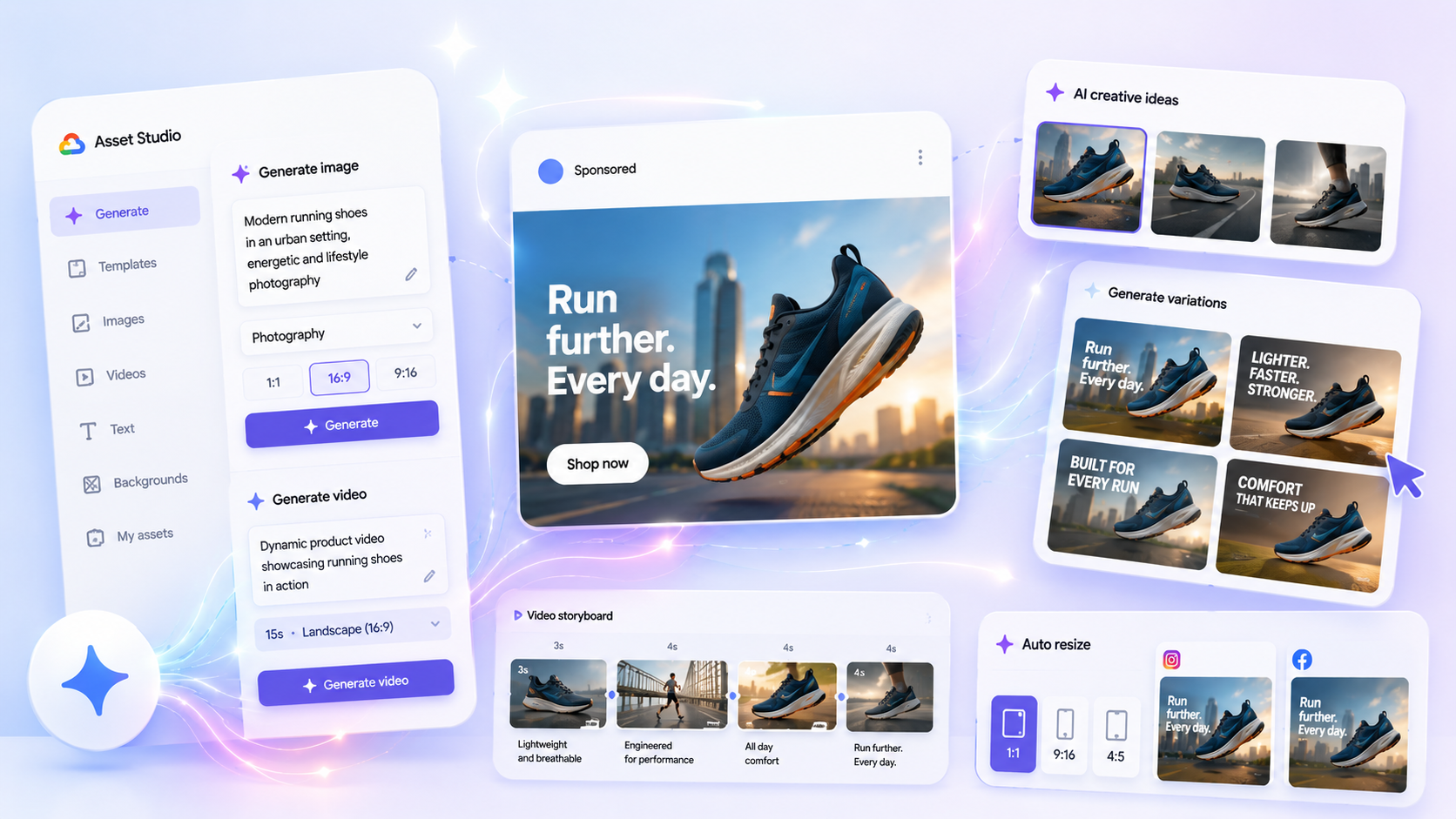
    Today, I’m excited to share that Google is making significant enhancements to Asset Studio, aimed at helping advertisers like us generate creative assets more efficiently by leveraging the power of Gemini. This was announced at Google Marketing Live 2026.

    Driving the news. Asset Studio will now feature AI-driven creation capabilities across text, images, and videos, allowing us to use natural language prompts to guide the process.

    Google assures us that the platform is capable of understanding:

    • Marketing briefs
    • Brand guidelines
    • Website content
    • Campaign goals

    By doing so, it generates creative assets that span different themes and formats, tailored to our needs.

    Additionally, Google is integrating the Gemini Omni, their multimodal model, into Asset Studio. This enhances our workflows, especially in video creation.

    With 1-Click Creative Testing, we can quickly identify top-performing assets in terms of campaign objectives. This means more efficient testing and better results for us.

    How it works. By applying Gemini models, Asset Studio interprets our marketing briefs, guidelines, and objectives. Using natural language prompts, we can generate and perfect our assets, whether they’re text, image, or video. Plus, Gemini Omni ensures our video workflows are seamless.

    The aim is clear: centralize creative production and minimize the challenges we face when building campaigns across platforms like Google and YouTube.

    Why we care. Creative production bottlenecks are a major issue for us advertisers. Google’s updates show that integrating generative AI into our workflows makes creative production much more streamlined.

    For those of us managing cross-platform campaigns, the ability to swiftly generate and test creative assets is a game-changer.

    What to watch. As we automate more of our creative processes, it’s important to compare the performance of AI-generated assets against those from traditional workflows. We might need to rethink approval processes and brand safety in light of AI’s growing role.

    Availability. We can expect the new Asset Studio features to become globally available in English this summer, opening up new possibilities for our advertising strategies.

    Dig deeper. There are more updates from Google Marketing Live 2026 that are worth exploring for additional insights and tools that could benefit our campaigns. For example:


    Inspired by this post on Search Engine Land.


    crushpress.ai community screenshot
  • Google’s Engaging Video Ads Transform Local Search Experience

    Google’s Engaging Video Ads Transform Local Search Experience

    Recently, I’ve noticed Google experimenting with video ads in the local search pack. This marks a shift towards more captivating visual formats in location-based searches.

    Driving the news. Anthony Higman spotted this change, observing Google’s move to incorporate ‘immersive map view videos’ into PPC ads connected to local results.

    These video ads pop up within the local pack — the map-based listings that display businesses near me or users searching.

    What’s new. Instead of just static listings or text-based ads, I may soon see video content from advertisers in local search results.

    ```json
{
  "alt": "Google search result for Rubenstein Law, showing a drone view of urban buildings, promoting Motorcycle Accident Attorneys.",
  "caption": "Discover trusted Motorcycle Accident Attorneys at Rubenstein Law. Enjoy a 24-hour service and comprehensive legal support in Forest Hills. Your compensation is their priority.",
  "description": "This is a Google search result for Rubenstein Law, showcasing a promotional video still of an urban landscape captured from a drone, highlighting their services as Motorcycle Accident Attorneys. Located 2.1 miles from Forest Hills and open 24 hours, they emphasize assistance in personal injury claims, especially motorcycle accidents. Engage with experienced attorneys for a free case evaluation to get the compensation you deserve. Keywords include Rubenstein Law, motorcycle accident, personal injury attorney, and Forest Hills."
}
```

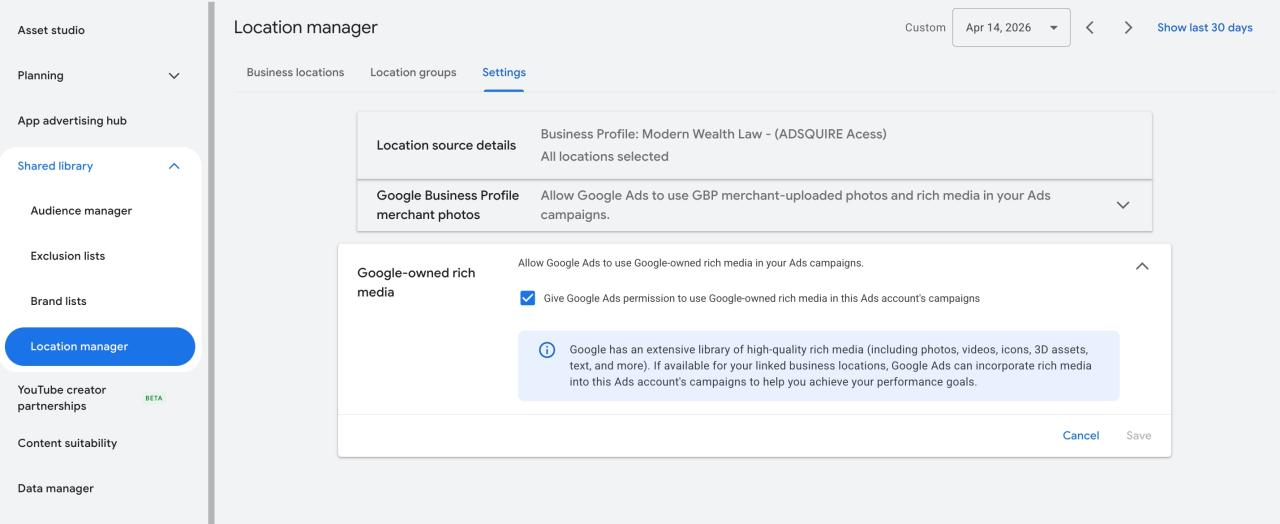
    The feature seems linked to settings in Google Ads’ Location Manager and may be enabled through a pre-opted setting in the shared library.

    This feature blends paid ads with Google Maps-style immersive experiences, offering a novel way to stand out and show off locations, products, or services more effectively than static listings.

    Why we care. For businesses, this update presents significant opportunities to increase visibility and engagement in high-intent local searches. Video ads could greatly enhance how prospective customers engage with local offerings.

    Google Ads Location Manager settings page showing business profile and rich media options.
    Explore the Google Ads Location Manager settings to optimize your business profile and utilize rich media in your ad campaigns.

    Yes, but. Right now, it seems the feature is in early testing phases, and its performance versus traditional local ads remains unclear.

    There’s also some concern around the creative requirements, as video production can add an extra layer of complexity for advertisers.

    The bottom line. Google’s move to integrate video into local search indicates an intent to make ads more engaging, offering businesses new tools to capture attention.

    First spotted. This update initially caught Anthony Higman’s eye, who shared details about the new local listing ad type on LinkedIn.


    Inspired by this post on Search Engine Land.


    crushpress.ai community screenshot
  • Transform Your Marketing: Google’s Veo Brings AI Video Generation to Google Ads

    Transform Your Marketing: Google’s Veo Brings AI Video Generation to Google Ads

    Click fraud in Google Ads: Where exposure rises and how to reduce it

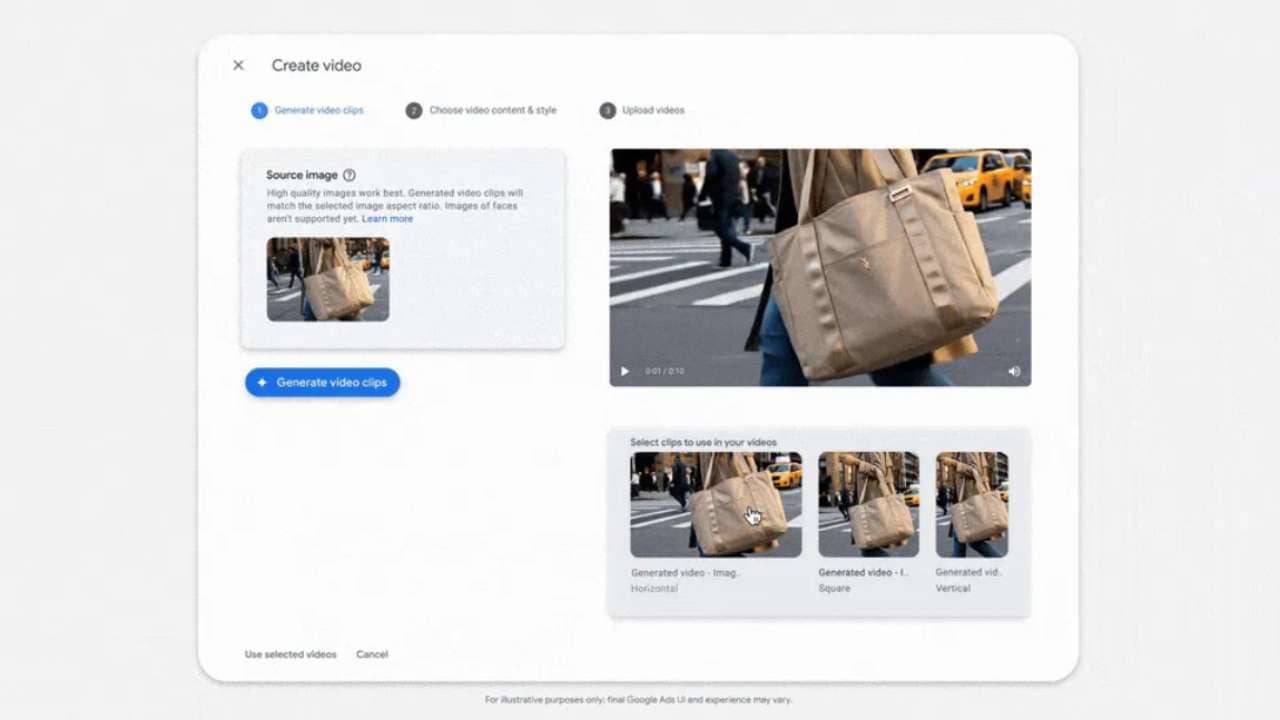
    I’ve discovered an exciting new development in Google Ads — a tool called Veo, which lets me easily convert up to three static images into engaging 10-second video ads for YouTube. All of this is possible without the need for extensive video production.

    Now, I can craft short videos directly in Google Ads thanks to Veo, Google’s advanced generative video model. There’s no need to worry about video production hassles anymore.

    How it works. I simply upload up to three static images into the Asset Studio, and Veo magic happens. It generates videos up to 10 seconds long, incorporating natural motion tailored for YouTube’s audience. With customizable templates, these can quickly become ready-to-serve ads.

    What else it can do. By integrating with Nano Banana, I can further enhance my creatives, swapping backgrounds, adjusting texts, and fine-tuning content for specific audience interests.

    ```json
{
  "alt": "Screenshot of a video creation interface with a focus on a tote bag on a crosswalk.",
  "caption": "Explore dynamic storytelling through this intuitive video creation interface, showcasing a fashionable tote bag amidst a bustling city crosswalk.",
  "description": "This image displays a video creation interface designed to simplify video clip generation. The screen highlights the selection of a source image featuring a tote bag on a city crosswalk. Users can generate video clips with options for horizontal, square, and vertical formats. The interface guides users through the process of creating engaging video content, emphasizing ease of use and customization."
}
```

    The bigger picture. This innovation is part of Google’s ongoing effort to democratize video advertising. Earlier, I witnessed the rollout of video templates and automatic video creation in Demand Gen campaigns, and now, this takes things a step further, making creative video accessible to advertisers without extensive production resources.

    Why we care. Video ads generally outperform static graphics on YouTube, but typically, they demand significant time, budget, and expertise. Veo simplifies this, enabling me to transform existing product images into professional video ads rapidly. For campaigns heavy on images, this is a game-changer.

    Early testing caught my attention when Ameet Khabra, founder of Hop Skip Media, shared insights on LinkedIn. She noted that “consumer product brands with clean imagery and inherent motion logic will benefit most.”

    The bottom line. With AI creative tools becoming mainstream in Google’s ads platform, the divide between advertisers with and without production budgets is narrowing. If you’ve struggled to get a video production budget approved and have assets with inherent motion logic, now is an excellent time to experiment with AI-generated video in Google Ads.


    Inspired by this post on Search Engine Land.


    crushpress.ai community screenshot
  • YouTube Experiments with AI Summaries: A Game Changer?

    YouTube Experiments with AI Summaries: A Game Changer?

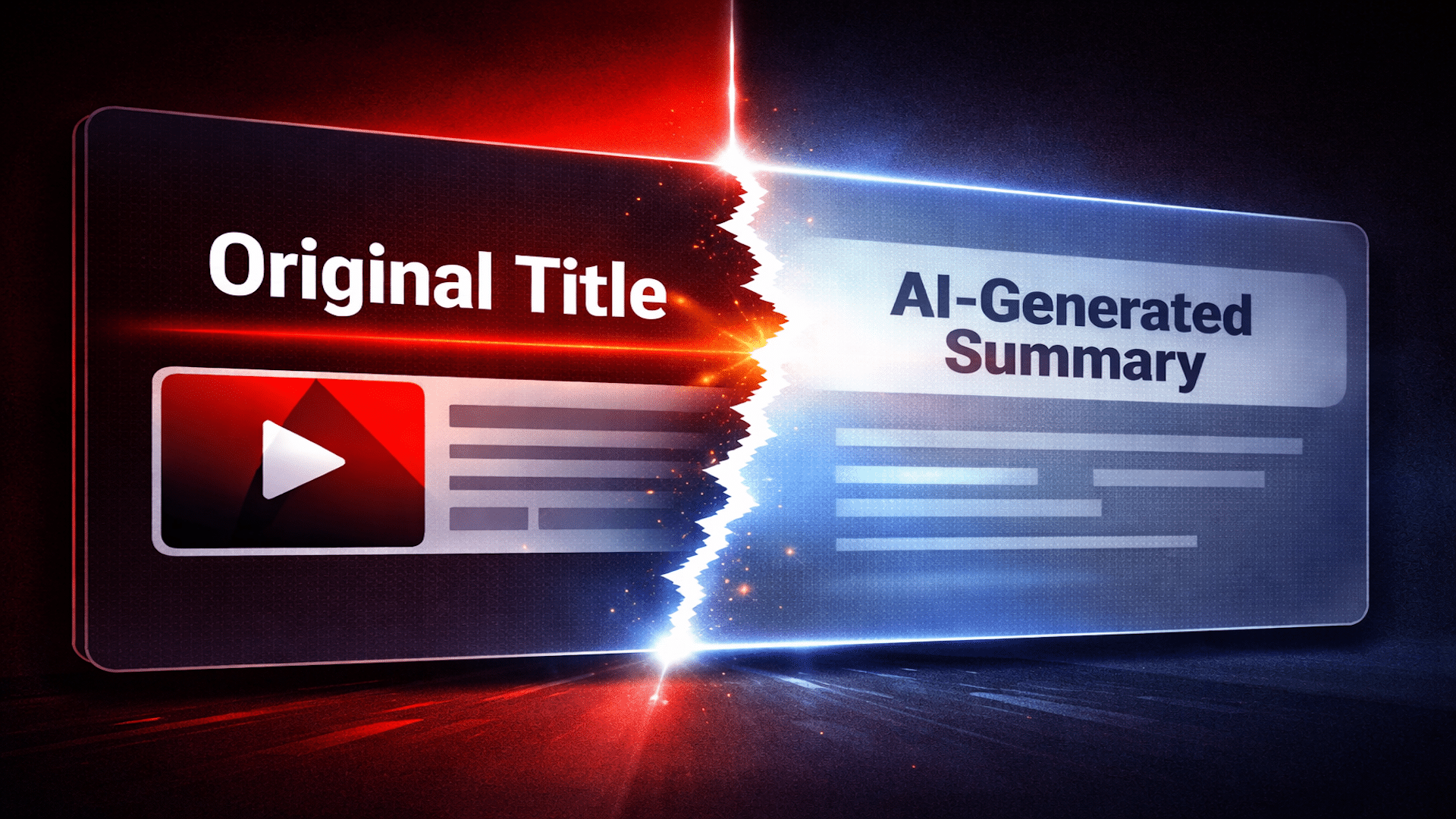
    I recently came across an intriguing development on YouTube where Google is testing AI-generated summaries in video feeds. Essentially, this involves replacing traditional video titles with AI-created synopses, leading to quite a stir in the community.

    As a YouTube user, I noticed these AI summaries popping up in the Android app. Some users on Reddit have pointed out that video cards are now missing titles, and instead have collapsible summary boxes—definitely a twist from what we’re used to.

    The details. Video thumbnails still appear as usual, but the absence of titles has caught my attention.

    AI summaries are housed in expandable text boxes right below each video, which means we need to tap to understand the content fully. So far, this test seems confined to Android users on YouTube.

    What it looks like. A Reddit user named GrimmOConnor shared a screenshot that demonstrates these changes.

    Why we care. The shift toward AI summaries makes me wonder about the control creators have over their content’s presentation. Titles play a crucial role in ranking and driving clicks. Replacing them might affect keyword strategy, brand voice, and engagement—and there’s the risk of inaccuracies that could impact performance.

    ```json
{
  "alt": "YouTube interface showing a park ranger simulator video summary and thumbnail.",
  "caption": "Explore the serene world of park ranger duties with this immersive simulator, where maintaining nature meets digital adventure.",
  "description": "The image shows the YouTube interface with a thumbnail of a park ranger simulator video. The video summary highlights tasks like maintaining a national park by picking up trash and repairing trails. The thumbnail features a person, possibly part of a YouTube video cover, dressed casually. Keywords: park ranger, simulator, YouTube, video, gaming."
}
```

    The context. It’s worth noting that Google is already exploring AI-generated headline rewrites in Search results, which seems to be part of a larger strategy extending beyond Discover and now reaching YouTube as well.

    Google mentioned a “small” experiment in Search where original page titles were swapped for AI-generated versions to enhance query matches and engagement.

    Reaction. Feedback so far hints at a less satisfying browsing experience. The added step of expanding summaries could slow down discovery and hinder content selection, which opposes YouTube’s engagement goals.

    What’s next. There’s no word yet from YouTube about a wider rollout. The absence of titles might just be a bug, but integrating AI summaries fits with Google’s broader push into using generative AI.

    First seen. I first learned about this test through Android Authority.


    Inspired by this post on Search Engine Land.

    crushpress.ai community screenshot