Tag: Travel Planning

  • How AI Search Is Reshaping Travel Brand Visibility

    How AI Search Is Reshaping Travel Brand Visibility

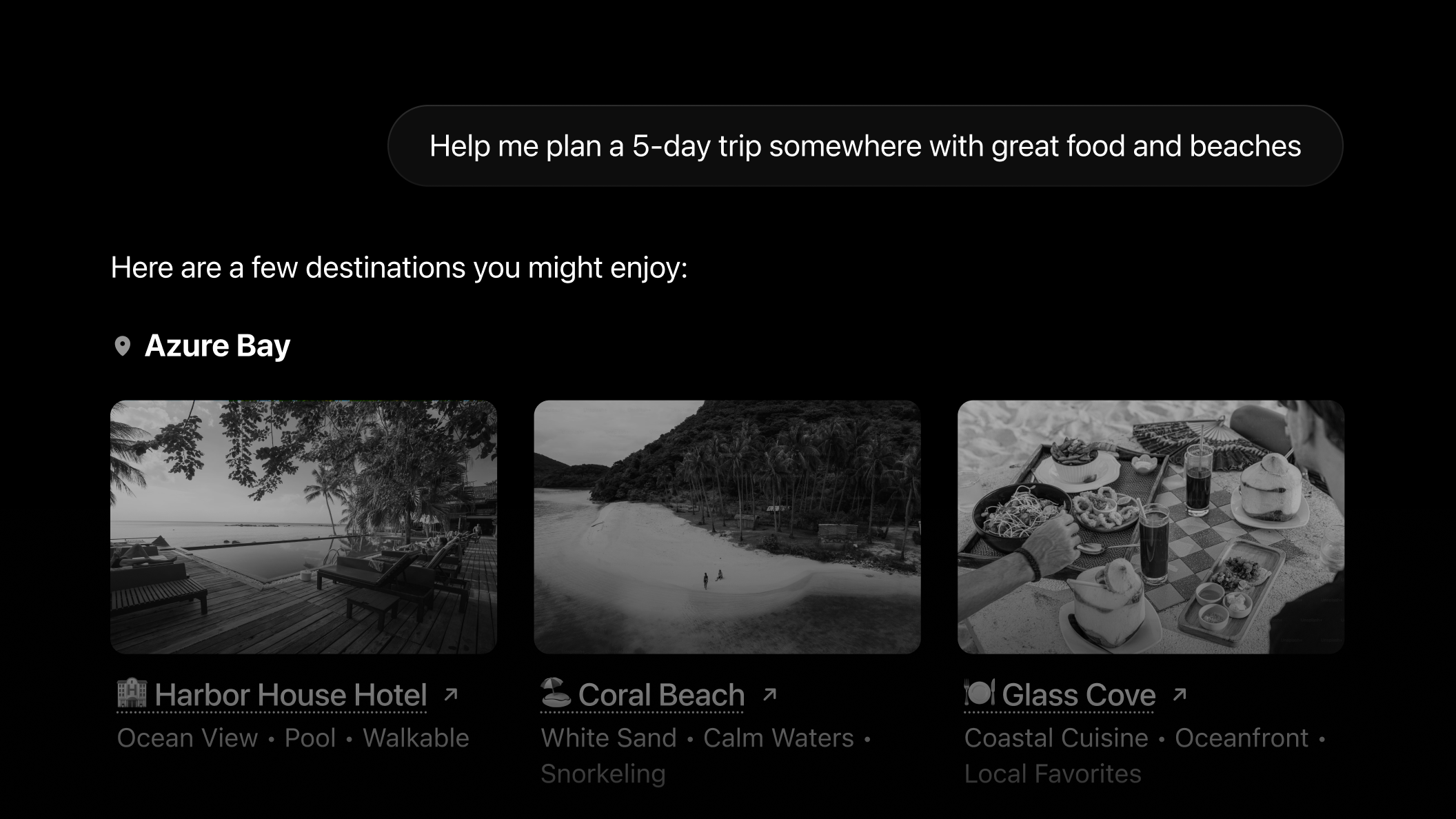
    I’m seeing travel planning move away from the traditional search bar and into AI answer engines like ChatGPT. For most of the past two decades, a traveler would type a destination-focused keyword into Google, open a dozen tabs, and stitch together a trip one page at a time.

    Now, that same traveler can ask a question, keep the conversation going, and let the answer engine synthesize recommendations, compare options, or even help book the trip. The journey from curiosity to decision is becoming faster, more conversational, and far less dependent on traditional search results.

    I believe this shift is rewriting how travelers discover brands. Visibility is no longer only about winning top-ranked blue links in Google. Increasingly, it depends on earning mentions, citations, and trust inside AI-generated answers.

    For travel brands, that changes the competitive landscape. The companies that show up in AI search are the ones most likely to shape the itinerary, influence the booking decision, and ultimately win the trip.


    Inspired by this post on Try Profound Blog.


    crushpress.ai community screenshot
  • Travel AI Optimization Strategies That Get Cited

    Travel AI Optimization Strategies That Get Cited

    I’m seeing a major shift in how people plan trips: 40% of travelers now use AI to research, compare, and organize their travel decisions.

    That changes how I think about travel content. It is no longer enough to write only for traditional search results. I also need to make content clear, useful, and easy for AI systems and large language models to understand, summarize, and cite.

    In this guide, I focus on practical travel AI optimization strategies, including stronger FAQs, schema markup, topical authority, and a content strategy built around the questions real travelers ask.

    My goal is simple: create travel content that answers intent directly, builds trust, and gives AI platforms the structured context they need to reference my brand when travelers are planning their next trip.


    Inspired by this post on HiGoodie Blog.


    crushpress.ai community screenshot
  • AI Referrals Dramatically Boost Travel Site Engagement

    AI Referrals Dramatically Boost Travel Site Engagement

    I’ve noticed a fascinating trend recently: AI referrals to U.S. travel sites have surged significantly in May. According to Adobe, travelers coming from AI sources tend to spend more time on these sites and are less likely to leave immediately compared to those from traditional referral sources.

    By the numbers: This remarkable growth is backed by data showing a 194% increase in AI-driven traffic year-over-year for May 2026. Since Adobe started monitoring AI traffic in October 2024, there’s been an astounding 2,215% rise.

    • AI-assisted travel planning has moved beyond initial stages. Now, it’s common for travelers to utilize large language models for comparing destinations, examining hotel features, creating itineraries, discovering promotions, and making bookings.

    AI visitors showed stronger engagement: Although AI-referred visitors currently convert 28% less than non-AI visitors, the gap is closing. Adobe reports that the difference has narrowed by nearly 70% since October 2024.

    • Engagement metrics reveal that AI-referred travelers are 21% more engaged than their non-AI counterparts, spending 70% more time per visit and having a 41% lower bounce rate.
    • Adobe suggests that such patterns indicate more deliberate and high-intent behavior, even though AI-referred traffic still lags slightly in conversion rates.

    Travel pages and AI readability: Adobe has also been assessing the readability of travel websites by AI systems. They developed an AI Content Visibility Checker to evaluate how much page content AI can process.

    • Within the travel sector, hotels and car rentals are ahead. Hotel homepages scored 63% readability, while car rental homepages reached 59%. Individual product pages performed even better, with hotels at 73% and car rentals at 71%.
    • Nonetheless, Adobe reports that over a third of content on leading travel pages is still unreadable by AI systems.

    Where travel sites scored best: Hotels seem to excel in several page categories, including destination guides, activity pages, search results, customer service, and promotions.

    • Car rentals excelled on FAQ pages, while cruises led in blogs and news content. Conversely, airlines lagged behind other major travel sectors across all page types analyzed by Adobe.
    • This trend illustrates how well-structured, information-rich pages allow AI systems to better interpret content, thanks to detailed property descriptions, amenities, and core offerings.

    Retail’s conversion advantage: AI-driven traffic to U.S. retail sites also set a new record in May, surging 138% year-over-year and an impressive 1,324% since October 2024.

    • Unlike in the travel sector, AI-referred retail visitors had a 54% higher conversion rate than non-AI traffic, overturning last year’s trend where AI conversion rates were nearly half.
    • Cosmetics and electronics shine in retail readability due to detailed content like ingredient lists, tutorials, product specs, and how-to guides, while grocery and furniture lagged.

    Why we care: Adobe’s insights suggest AI referrals are increasingly valuable commercially, particularly in retail. However, many sites miss the mark by having significant content inaccessible to AI systems. If key content is hidden, poorly structured, or blocked, you could lose visibility before users reach your site.

    About the data: Adobe’s research draws on over 8 million visits to U.S. travel sites, over 1 trillion visits to U.S. retail sites, and more than 100 million SKUs. Additionally, they surveyed more than 5,000 U.S. consumers in March regarding their use of AI in shopping and travel planning.


    Inspired by this post on Search Engine Land.


    crushpress.ai community screenshot
  • Discover New Features on Google Maps: Insider Tips and More!

    Discover New Features on Google Maps: Insider Tips and More!

    I’ve recently discovered that Google Maps has introduced some exciting new features to better inform us about local businesses and events. Now, we can also choose to leave reviews using nicknames, giving us a bit more privacy when sharing our thoughts.

    Know Before You Go. One of the highlights is the ‘know before you go’ feature now available on Google Maps. I remember seeing this tested earlier, but it’s great to see it officially rolled out now.

    When I search for places, I can easily access ‘know before you go’ tips, showing me crucial details like parking tips, secret menu items, and ideal reservation methods. This information comes from user reviews and other online resources.

    These tips, dubbed ‘insider tips’ by Google, are now available in the U.S. on both Android and iOS. I’ve found them quite helpful in planning my visits more efficiently.

    Here’s a glimpse of how it looks:

    Trending Nearby in Explore Tab. There’s also a new addition to the Explore tab, highlighting trending restaurants, activities, and attractions nearby. I can simply swipe up on the explore tab to discover these popular spots.

    This feature sources trends from platforms like Viator, Lonely Planet, and local influencers, including Sisterssnacking. It’s been a fantastic way for me to stay updated on what’s happening around me.

    This update is available globally this month on both Android and iOS devices.

    Here’s what the new Explore tab looks like in action:

    Nicknames for Reviewers. One feature I particularly like is the option to use nicknames when leaving reviews. According to Google, “If you’d prefer not to use your real name, you can now choose a nickname and profile.”

    While there might be concerns about spammy reviews, Google assures us that their systems are equipped to monitor and detect fake reviews continuously, linking our reviews to our Google Accounts.

    This feature is rolling out globally this month on Android, iOS, and desktop.

    Here’s a quick look at how to set up a profile with a nickname:


    Inspired by this post on Search Engine Land.


    crushpress.ai community screenshot
  • Revolutionize Your Travel Planning with Google AI

    Revolutionize Your Travel Planning with Google AI

    Recently, I’ve been exploring the latest features Google has introduced to streamline travel planning. With the release of AI Mode, Google now offers advanced ways to book flights and hotels, along with new tools to organize trips and discover deals more efficiently.

    Among these updates is the introduction of Canvas in AI Mode, which aids in travel planning, and the global rollout of flight deals. Additionally, Google’s agentic booking now allows for seamless dinner reservations, flights, and hotel bookings directly through their platform.

    I noticed these features are quite similar to the AI Shopping updates that were announced last week. But, what stands out is the agentic capability of Google AI Mode. It not only suggests restaurants, hotels, and flights but also assists with the booking process. Previously, these features were exclusive to Google Labs, but now anyone can access them without opting into Labs.

    The dinner reservation feature is particularly exciting. In the U.S., it’s now rolling out with integration through platforms like OpenTable, Resy, and more.

    Looking ahead, Google plans to enhance its AI Mode to assist in booking flights and hotels. They’re collaborating with industry partners to allow users to describe their travel preferences and effortlessly compare options based on schedules, prices, and reviews before completing bookings with chosen partners.

    I’m really intrigued by how the travel booking process will evolve with these innovations. Google is working closely with well-known partners like Booking.com, Expedia, and Marriott to refine this experience.

    Further enhancing our travel experience is the Canvas feature in AI Mode. It’s now available on desktops in the U.S., offering a space to manage and strategize travel plans effectively.

    Google’s flight deals feature is also expanding into over 200 countries and supporting multiple languages, making it easier to find great travel bargains by simply describing your travel desires as you would to a friend.

    The landscape of travel planning is changing, and as someone who’s invested in these innovations, I see these AI tools as pivotal in shaping the future of travel-related businesses. If you’re in the travel sector, understanding and adapting to these changes is crucial.


    Inspired by this post on Search Engine Land.


    crushpress.ai community screenshot