Tag: Strategic Planning

  • Maximize ROI: Transform SEO into a Revenue-Driven Strategy

    Maximize ROI: Transform SEO into a Revenue-Driven Strategy

    Vanity metrics vs revenue

    I realized that relying on generic traffic reports from agencies wasn’t showing real business outcomes. Budgets are tight, yet investment in vendors continues with little impact on the sales pipeline.

    Focusing solely on increasing traffic volume is outdated and could hide true commercial performance. Now, it’s essential to create an acquisition strategy that impacts buyers and secures the profit and loss margins even before sales happen.

    As a marketing leader, I’ve learned to question both internal teams and external agencies rigorously. I no longer settle for just operational outputs; financial accountability is crucial, focusing on pipeline contributions, LTV to CAC ratios, and cutting down on paid media reliance.

    The New Path to Purchase: Why Traffic is Bleeding Your Budget

    Chasing informational traffic at the top of the funnel can drain budgets. If those clicks don’t lead to sales, it’s a vanity metric rather than a meaningful business outcome.

    With many consumers relying on large language models (LLMs) for comprehensive research before reaching search engines, it’s crucial to be recognized as an authority during this AI-driven research phase.

    The 7.48% Reality: The Power of the Educated Buyer

    The difference in traffic quality is evident. In our experience, standard organic searches convert at just 2.75%, whereas AI searches boast a 7.48% conversion rate.

    Consumers today trust AI tools like Gemini, ChatGPT, and Perplexity. When they synthesize content to recommend a product, that endorsement often holds more weight than traditional branded content. It’s a powerful trust-building tool.

    Once a consumer clicks on an AI-driven recommendation, they’ve often already decided, based on your authoritative content, and are ready to make a transaction.

    From Found to Cited: Architecting the Default Recommendation

    I realized that by transforming our digital asset approach, we can secure that 7.48% conversion rate. It’s not just about ranking in search results anymore; it’s about being the definitive expert cited.

    Success lies in transforming marketing strategies into structured capital management.

    • The old way: Generating large volumes of traffic with lengthy blog posts that don’t contribute to the pipeline.
    • The new way: Develop a GEO hub that offers tools like cost calculators and detailed data, establishing clear expertise and authority.

    LLMs demand facts and consensus, so by building assets based on proprietary data, we become the go-to recommendation.

    Strategic ROI: Using Citation Authority to Reduce Ad Spend

    Viewing SEO solely as a traffic strategy is outdated. It needs to be considered a strategic asset that lowers customer acquisition costs.

    I align our organic assets closely with high-cost marketing initiatives to back off on defensive ad spending when organic trust is established.

    ```json
{
  "alt": "The CapmatchOne logo with a gradient circle and bold text.",
  "caption": "Discover innovation with the CapmatchOne logo, featuring sleek typography and a modern gradient circle.",
  "description": "The CapmatchOne logo features bold, modern typography coupled with a gradient circle, symbolizing connection and innovation. The sleek design conveys a sense of progress and creativity. This image can be used for branding or promotional purposes, appealing to audiences interested in innovative solutions and forward-thinking designs."
}
```

    Here’s my approach to integrating paid and AI search efforts:

    • IF we become the default AI recommendation, THEN our paid strategy must reduce brand bidding, slashing acquisition costs.
    • IF we identify profitable queries through paid search, THEN SEO should proactively capture this demand.
    • IF a competitor gains better AI recommendation, THEN paid campaigns should quickly address this while SEO adjusts strategies to regain AI trust.

    The Monthly Cannibalization Review: Your Immediate Action Item

    I ensure that our Head of Search and Head of Paid Media engage monthly to review our efforts against paid brand bidding, avoiding unnecessary spending.

    This strategy protects capital by reallocating funds from redundant ads to new market opportunities.

    The Enterprise Scorecard: 3 Questions to Ask Your Agency Tomorrow

    I challenge vendors with these essential questions to determine their value beyond task completion.

    1. What’s our citation share of voice for our highest-margin categories?

    Ensure organic strategies align with high-margin product research phases.

    The expected response: We’ve identified the critical queries and secured primary citations, significantly boosting our market presence and financial outcomes.

    2. How is our citation strategy directly reducing our paid media CAC?

    Provide evidence of organic authority fulfilling demand typically met by paid ads.

    The expected response: By securing key AI citations, we’ve reduced reliance on paid ads, dropping CAC and redirecting funds to new market strategies.

    3. Are our digital assets structured for LLM extraction?

    I push my teams to design AI-friendly content that resonates in search engine results.

    The expected response: We have redefined our content structures to enhance AI extractability, leading to more frequent recommendations and increased conversion opportunities.

    Demand Commercial Outcomes, Not Operational Output

    In challenging times, SEO must be treated as a vital business unit with accountability for revenue outcomes.

    Resist being swayed by vanity metrics. Insist on measurable financial impact to demonstrate true success.

    Any agency or team unable to justify their effect on financial results won’t maintain relevance. It’s about being the cited authority before transactions even happen.


    Inspired by this post on Search Engine Land.


    crushpress.ai community screenshot
  • Crafting Resilient SEO Plans Amid Constant Change

    Crafting Resilient SEO Plans Amid Constant Change

    As I’m deep into the marketing planning season, a familiar tension surfaces that I’ve often heard from CMOs and VPs:

    “We build a plan, but the execution never matches the intent.”

    If this echoes your experience, know that you’re not alone. The issue isn’t flawed strategies or incorrect goals, but rather that most SEO plans aren’t built to withstand operational hurdles like shifting priorities or unforeseen product launches.

    Over the years, after guiding various businesses in developing SEO strategies, I’ve realized that success doesn’t hinge on lavish budgets or cutting-edge tools. Rather, it’s about creating plans that reflect actual workflow realities.

    Let me guide you through crafting an SEO annual plan that’s not just aspirational but actionable in the real world. We’ll explore setting clear, actionable goals and establishing quarterly systems to keep us on track even when the unexpected arises.

    Why Annual Planning Still Works

    It might seem outdated to engage in annual planning when new tools like AI Overviews, ChatGPT, and Perplexity change the landscape overnight. The impulsiveness of frequent algorithm changes can make a 12-month plan seem laughable.

    Yet, companies that avoid long-term planning often end up merely reacting, chasing trends without accumulating the assets necessary for sustained growth.

    Annual plans should provide guidance and resource allocation frameworks that enable smart decision-making when adjustments inevitably occur.

    The Need for Better Planning in a Fragmented Search Landscape

    With your audience seeking answers from AI-generated summaries and multiple platforms competing for attention, SEO success involves more than just Google rankings. You need to build brand authority, so AI systems recognize and reference your content.

    Your strategy has to unify brand authority and topical depth, applicable across various search situations—from traditional queries to conversational AI.

    An effective SEO plan should lead to business results, competitive advantages through authority, and preparedness for market changes.

    Setting Action-Driven Goals

    It’s common for many SEO plans to falter by prioritizing metrics detached from actual business outcomes, like focusing on rankings or traffic that don’t translate to revenue or conversions.

    1. Start with Performance Metrics

    Identify what success means for your business—be it ecommerce revenue from organic traffic, SaaS trials, or qualified leads for services.

    Analyze these metrics at granular levels, ensuring resource investment is targeted towards high-revenue opportunities.

    2. Add Contextual Visibility Metrics

    Rather than focusing on isolated keyword rankings, track keyword groups that represent business themes. This offers a comprehensive view of market segment performance.

    3. Establish Leading Indicators

    Identify metrics that signal future changes, allowing timely interventions to maintain performance. Such metrics might include publication rates or indexation issues.

    The Baseline Audit: Know Your Current Position

    A thorough assessment of your current stance, focusing on technical health, content gaps, and authority signals, is crucial to prioritize effectively.

    Strategy Around Constraints

    Most planning falters when it doesn’t account for resource limitations or shifting priorities. Use an effort-versus-impact matrix to prioritize tasks effectively.

    Quarterly Execution

    Break annual goals into achievable quarterly targets, reserving part of your bandwidth for unexpected challenges. This ensures plans remain actionable, not just theoretical.

    Cross-Functional Alignment

    SEO isn’t isolated. Regular collaboration with product, content, and PR teams ensures consistency and reinforces shared goals.

    Common Pitfalls

    Avoid rigidity, competitor mimicry, and neglecting fundamentals in your SEO strategy. Focus on aligning plans with business realities and remaining flexible.

    Bridging the Gap Between Planning and Execution

    Avoiding execution gaps requires plans that reflect real-world conditions, enabling flexibility and focus on impactful metrics.


    Inspired by this post on Search Engine Land.


    crushpress.ai community screenshot
  • Master Ecommerce PPC: Boost Campaign Performance

    Master Ecommerce PPC: Boost Campaign Performance

    I’ve delved deep into four key areas that shape how ecommerce PPC campaigns perform: mastering the essentials of Performance Max, leveraging Amazon’s conversion power, building social audiences, and crafting insightful dashboards.

    PPC in ecommerce differs vastly from PPC for lead generation or SaaS. The mechanics of campaigns, the conversion data volume, and each platform’s unique role demand a specialized approach.

    Entering the ecommerce realm helped me identify which fundamentals truly matter. Let’s look at how the core differences between ecommerce and non-ecommerce models influence PPC strategy and how to play to each platform’s strengths.

    1. Performance Max is Built for Ecommerce

    Google Ads is essential for ecommerce, primarily because of Performance Max campaigns, or PMax. It’s tailored for ecommerce, where data flows from high sales volumes and lower ticket sizes, allowing rapid learning and improvement.

    To maximize PMax’s potential, optimizing your feed, segmenting your campaigns, and ensuring conversion tracking are crucial steps.

    ```json
{
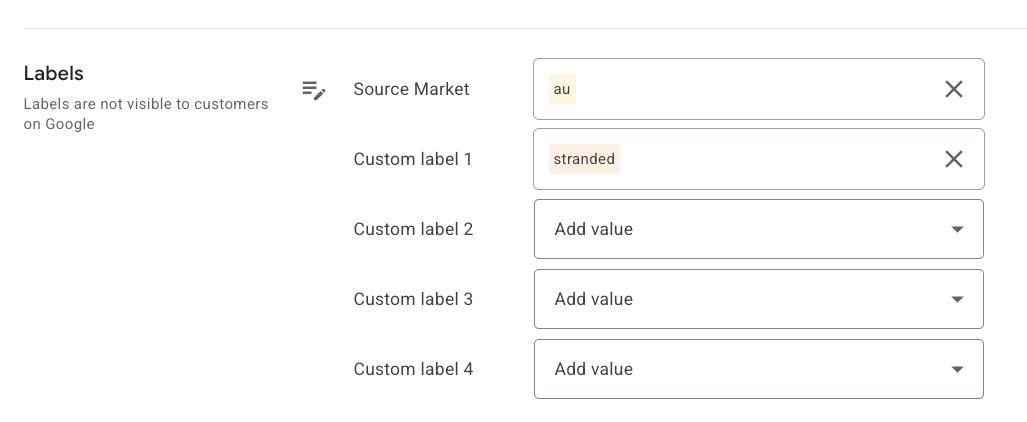
  "alt": "Interface showing Google Ads labels with 'Source Market' and 'Custom labels'.",
  "caption": "A glimpse into organizing data with Google Ads labels—where Source Market and Custom labels streamline categorization.",
  "description": "The image displays the 'Labels' section of Google's interface, featuring 'Source Market' with a label 'au' and 'Custom label 1' marked 'stranded'. Other custom labels are yet to be filled, providing a flexible setup for organizing and filtering data within Google Ads. These labels assist in categorizing and managing marketing campaigns more effectively."
}
```

    Feed Optimization

    Optimizing your feed can dramatically enhance PMax performance. Ensure your product titles and descriptions are well-structured, utilize character limits, and incorporate keywords effectively.

    Campaign Segmentation

    By categorizing your feeds effectively, you can segment campaigns for better results. Utilize default and custom labels in Google Merchant Center to achieve precise targeting and higher ROAS.

    Conversion Tracking

    Accurate conversion tracking is critical. Integrating with tools like Shopify to sync data with Google Ads enables automated bidding strategies and campaign experiments for enhanced ROI.

    2. Amazon Excels in Ecommerce Advertising

    Amazon is an advertising powerhouse for ecommerce, offering transparency and deeper insights through its platform, which results in higher conversion rates compared to competitors.

    ```json
{
  "alt": "A table displaying search query data with metrics like volume, impressions, and clicks.",
  "caption": "Dive into detailed search query metrics—explore volume, impressions, click through rates, and brand shares to fine-tune your strategy.",
  "description": "The image presents a detailed table of search query analytics divided into columns such as Search Query Score, Volume, and two funnels: Impressions and Clicks. Each funnel includes Total Count, Brand Count, and Brand Share with respective numerical values. This visualization offers insights into online search performances, crucial for data-driven marketing strategies, and highlights metrics like click-through rates. Ideal for SEO analysis and performance optimization."
}
```

    Transparency

    Amazon provides detailed reporting, enabling clear insights into conversion performance at both the keyword and market level, setting it apart from platforms like Google and Meta.

    Higher Conversion Rates

    Amazon’s unified platform leads to seamless transactions, resulting in higher average conversion rates and more reliable attribution data, minimizing guesswork.

    Rankings Philosophy

    Amazon’s approach to linking ads and organic rankings provides clarity and allows advertisers to precisely strategize on improving offers and performance based on conversion metrics.

    3. Social Media: Not the Conversion Leader

    While social platforms are crucial for brand awareness and audience building, they typically aren’t optimal for direct conversions, making them secondary to platforms like Amazon Ads and PMax.

    ```json
{
  "alt": "Table showing search funnel data for cart adds and purchases including total count, rates, brand counts, shares, and shipping speed.",
  "caption": "Unveiling e-commerce insights: A table showcasing the search funnel metrics from cart adds to purchases, revealing customer behavior patterns and brand impact.",
  "description": "This image displays a detailed table of e-commerce search funnel data, illustrating metrics from cart adds to purchases. Columns include Total Count, Cart Add Rate, Brand Count, Brand Share, and Same Day Shipping Speed for both stages. This data helps in understanding user interaction and conversion through the sales funnel, highlighting conversion rates and brand influence in online shopping. Keywords: e-commerce, customer behavior, sales funnel, conversion rates, brand impact."
}
```

    Building Customer Lists

    Using social channels to host giveaways can substantially grow your customer lists, which are invaluable for targeted marketing efforts such as promotions and cross-selling.

    Awareness

    Utilize social media to build brand visibility with cost-effective campaigns, focusing on awareness over immediate sales for new-to-market products.

    Remarketing

    Social media excels in creating remarketing funnels that engage customers more deeply, enhancing overall campaign effectiveness.

    4. Dashboarding for Clarity and Success

    Effective dashboarding is vital for maintaining clarity across multiple platforms. A good dashboard distills complex data into actionable insights, critical for profitability and strategy alignment.

    With tools like Sellerboard, you can connect revenue and costs down to the SKU, providing clarity and revealing which platforms and strategies are truly driving success.

    Guide to Next Steps in Ecommerce PPC

    Recognizing the nuances of ecommerce PPC is crucial for making informed decisions that result in campaign success. These insights continue to guide my strategy and I hope they do the same for you.


    Inspired by this post on Search Engine Land.


    crushpress.ai community screenshot