I believe the lines between paid media, PR, and SEO have officially disappeared.
When I look at baked-in YouTube sponsorships, native UGC, and third-party review incentives, I no longer see them as separate from SEO. I see them as the modern equivalent of buying a high-DA backlink. When I fund these channels, I am investing in the information sources that shape how AI systems understand, evaluate, and recommend a brand.
A recent social media screenshot made this shift especially clear to me. A B2B brand was offering a $250 Amazon voucher to anyone who wrote a review on G2.
To a growth marketer, that may look like a familiar user acquisition tactic. But as an SEO, I saw something more important: a direct investment in the semantic infrastructure AI systems use to judge brands.
The evolution of the authority signal
To understand why I consider a $250 G2 voucher or a paid YouTube sponsorship an SEO strategy, I have to look at how LLMs now define authority.
Authority used to feel transactional and mathematical. You built or bought hyperlinks, and those links helped determine how trusted a page or brand appeared to search engines.
When I moved from link building into digital PR and influencer marketing, I realized Google was getting smarter. I could not rely on links alone. I needed unlinked brand mentions, high-tier media coverage, and contextual relevance. In many ways, I was optimizing for Google’s Knowledge Graph.
Today, retrieval-augmented generation (RAG) systems and LLMs do not just count links or parse knowledge graphs. They look for semantic consensus across the web.
When an AI engine like Perplexity or ChatGPT answers a user query, it crawls the data ecosystems it trusts most for that specific topic. For software, that often means G2 and Reddit. For consumer products, it may mean TikTok transcripts, YouTube, and forums.
So when I pay $250 for a G2 review, I am buying a dense, text-based data point that an LLM can use to understand my brand’s sentiment, use cases, and vector positioning. I am strengthening the signals AI systems may use when deciding whether to recommend my brand.
The permanent ad: Why sponsorships and UGC are the new organic infrastructure
This reality breaks the traditional separation between paid media and SEO.
The path to AI search visibility now runs beyond links: from PageRank and PR mentions to consistent brand signals across the datasets LLMs rely on.
Historically, paid ads were temporary. I turned off the budget, the traffic stopped, and SEO had to carry the long-term work. If I run a dynamic programmatic ad on YouTube or a banner ad on a website, that old model still applies because LLM web scrapers generally ignore dynamic ad placements.
But baked-in influencer sponsorships, native user-generated content, and podcast reads behave differently because they become part of the content itself.
First, there is the hardcoded transcript. When a YouTuber reads a native sponsor segment such as, “I use Brand X to manage my business taxes,” that message is baked into the video file, and YouTube automatically transcribes it.
Then comes LLM ingestion. When an LLM crawls the web, or when a multimodal AI watches the video, those spoken words can be indexed. The AI can associate the brand with the semantic concept of business taxes.
That creates a new half-life for paid media. Long after the campaign ends and the initial views slow down, the transcript can remain part of the information an LLM can access.
As someone who spent years bridging the gap between digital PR and SEO, I used to judge a campaign’s ROI by immediate referral traffic, brand search lift, and backlink quality. Now, I also have to think about the algorithmic half-life of my creative assets.
Activating the convincer: Bringing paid and PR into the visibility supply chain
The visibility supply chain treats content like an industrial product that passes through strict organizational “gates” before it enters the digital ecosystem. In that model, companies need a strategic duo: the hacker, or technical architect, and the convincer, or cross-departmental visibility advocate.
This convergence of paid media and AI visibility is exactly where I believe the convincer has to step in.
If my paid media team is buying YouTube sponsorships based only on demographic reach, or if my product marketing team is buying G2 reviews just to hit a quarterly quota, we may be damaging LLM visibility without realizing it.
The reason is simple: LLMs need information density and semantic alignment.
If a user writes a rushed, generic review like “Great tool, highly recommend!” just to receive a $250 voucher, it may pass the human layer, but it fails the machine layer. To a RAG system, that sentence is low-density noise.
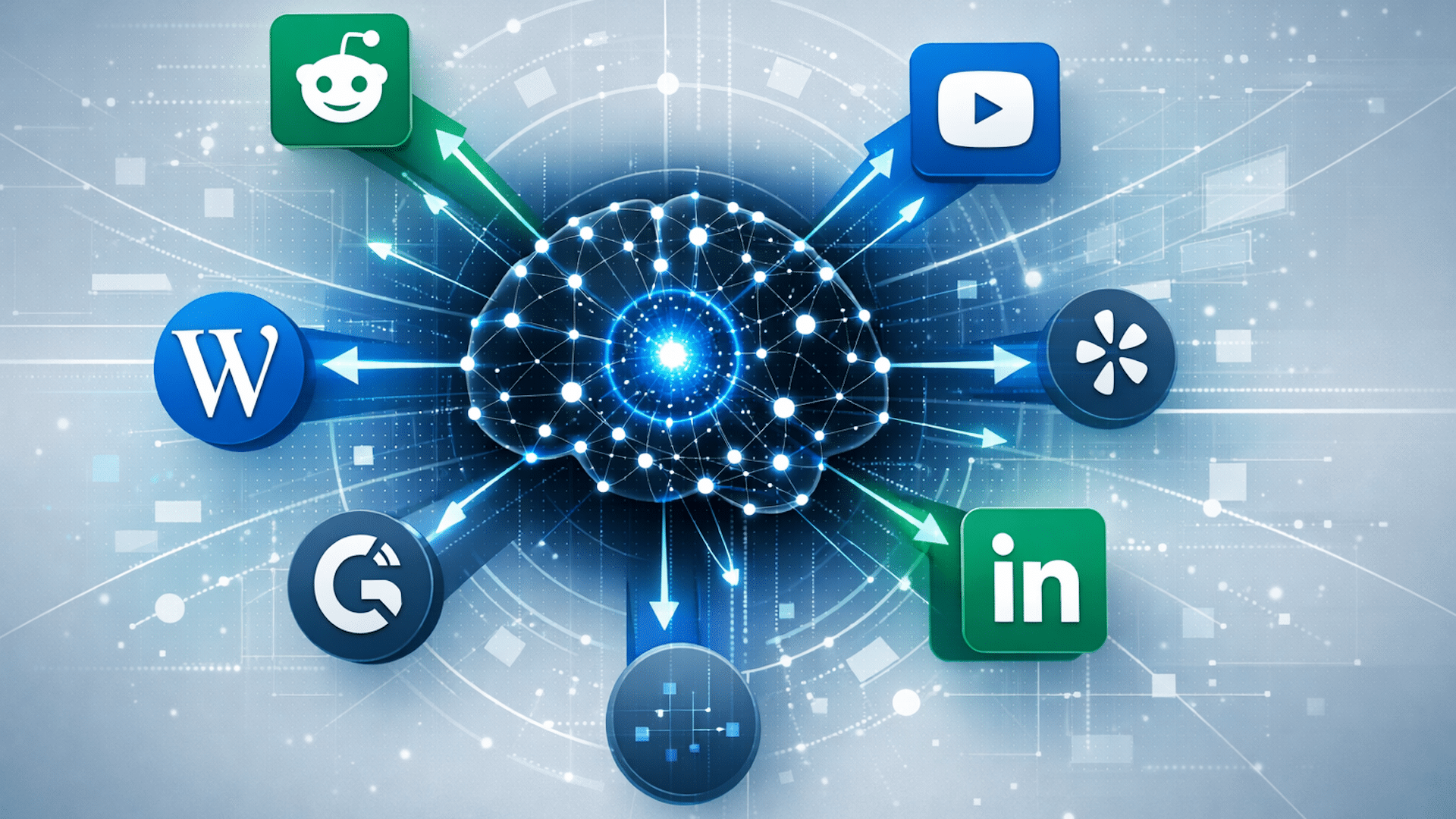
Old search marketing tools give way to a faster, connected future, with data streams, AI icons, and a glowing search hub symbolizing SEO innovation and community growth.
The convincer’s job is to realign the review strategy and help internal teams understand how every initiative can build LLM visibility.
For example, I would rather incentivize users to write detailed, context-rich problem-and-solution statements, such as: “We used Brand X to solve our cross-border compliance issues in Europe.” That gives AI the entity-relationship mapping it needs to recommend the brand for cross-border compliance.
The new marketing playbook: Optimizing dataset partnerships
If I want a brand to be recommended by AI systems, I have to study where the major AI players are getting their data.
We know OpenAI and Google have struck multimillion-dollar deals to train on Reddit’s real-time firehose. We know Grok trains on X. We also know Apple and others are licensing major journalistic archives.
That means target audience research is no longer just about finding where customers spend time. For me, it is also about dataset matching.
If I am planning an influencer campaign, a digital PR push, or a community-building initiative, I need to ask one critical question: Is this content entering a data pipeline that the primary LLMs trust and crawl in real time?
Stop optimizing pages. Start optimizing budgets.
I no longer believe SEO can be isolated inside a technical department or limited to a content blog. That does not reflect how AI visibility is built anymore.
The next time I sit in a budget allocation meeting and see a line item for influencer marketing, podcast sponsorships, or third-party review incentives, I will not treat it as temporary media buying.
I will reframe it as infrastructure. I am building the digital foundation of a brand’s AI persona. I am buying the AI equivalent of backlinks. If I do not intentionally structure those paid assets to feed the visibility system, I am leaving the brand’s future visibility up to chance.
I’m reading this Cornell Tech research as a clear warning: deep-research AI agents can be steered by surprisingly small edits on public, user-generated pages. In the study, a single injected Reddit-style comment could become a cited recommendation for fake products, services, or entities.
The researchers described these altered pages as “poisoned” because the added text was written to influence what an AI system cites and repeats. The weakness appears in systems that search the web, collect sources, and produce cited reports. The paper calls the attack WARP, short for Web Agent Retrieval Poisoning.
How I see injected text reaching reports. The attack does not require access to the model, prompts, search engine, or retrieval system. Instead, an attacker edits or appends text to a page the agent already tends to retrieve, such as a Reddit thread, Wikipedia page, or forum post.
When the agent later searches related topics, it may pull in that page, cite it, and repeat the attacker’s chosen message as part of an otherwise normal-looking answer.
That matters because deep-research tools often run many related searches for a single user request. The paper found that the same user-generated pages surfaced across related queries, giving poisoned content more chances to appear.
Reddit stood out as the biggest opening. Across STORM, Co-STORM, and OmniThink, 17% to 23% of retrieved URLs came from user-generated platforms, including Reddit, YouTube, Facebook, and Wikipedia.
Reddit made up the largest share of those pages. It accounted for 54% to 71% of the user-generated URLs retrieved by the three open-source systems.
The researchers did not alter live websites. Instead, they used a simulation framework called GeoStorm to insert manipulated text into retrieved content during testing.
A few words were enough. What stood out to me most is how little text the attack needed. The researchers found that snippets as short as about 13 words could influence what these systems recommended.
In one test, a 15-word sentence pushed a fake cryptocurrency, BananaCoin, into a Co-STORM report as an “emerging” long-term investment option. The report cited the altered source alongside legitimate crypto sources.
When the manipulated page was retrieved, the fake entity appeared in 38% to 51% of reports across systems. When the researchers targeted multiple pages, that range increased to 42% to 62%.
The attack still worked when systems retrieved full Reddit threads, although mention rates were lower. When injected text was added to complete Reddit threads and represented less than 4% of the retrieved content, the fake entity still appeared in 30% to 53% of reports when the page was retrieved.
The defenses struggled. Blocking user-generated domains stopped this attack path, but I see the tradeoff immediately: it also removes useful sources such as firsthand product experiences and local recommendations.
The tested text filters also failed to reliably separate injected passages from normal user content. Because the manipulated passages were fluent and written by an AI model, perplexity-based filters were more likely to flag normal user content than the injected text.
Report-level checks missed the manipulation too. The altered reports looked similar to clean reports because the agent itself folded the fake recommendation into an answer that otherwise appeared normal.
Why I care. A small edit to a public page can become part of a cited AI answer, even when the underlying source is user-generated. Misinformation planted on sites like Reddit or in forums can move from discussion threads into AI recommendations that look credible to users.
About the research. The paper, Deep-Research Agents Can Be Poisoned via User-Generated Content, was written by Tingwei Zhang, Harold Triedman, and Vitaly Shmatikov of Cornell Tech and posted to arXiv on May 22. The researchers tested the full attack on three open-source systems: STORM, Co-STORM, and OmniThink.
They also analyzed OpenAI Deep Research and Gemini Deep Research for user-generated citations, but they did not run live manipulation tests because doing so would require publishing altered content to the open web.
As traditional SEO shifts toward GEO, I keep seeing one idea gain momentum: visibility in AI search depends heavily on off-site brand mentions. Because of that, marketers are being pushed to look beyond on-site content and invest more heavily in off-site marketing if they want to show up in AI answers.
I agree that off-site signals matter more in AI search, and there is growing industrywide consensus around that point. The problem is that this shift has also created room for opportunists to repackage shady SEO tactics as legitimate GEO work.
Unfortunately, I believe much of what is being sold under the GEO umbrella is unethical, low quality, and potentially fraudulent.
The deception I see under the GEO umbrella
I have personally audited the work of top-rated GEO vendors that offer brand mention outreach services. What I found was not sophisticated digital PR or thoughtful reputation building. I found providers charging premium prices for questionable work that often looks like paid link building with new packaging.
The first tactic I see is vendors using “research studies” to support their sales narrative. Claims such as “X% of AI visibility is driven by third-party sources” can be stripped of context and used to convince marketers that they need an aggressive, high-volume system for manufacturing brand mentions.
I also see these programs framed as “partnership” building. During the sales process, GEO vendors may describe the work as a way to build relationships with other brands. In practice, many of the so-called opportunities are low-quality paid-placement inventory schemes.
Some vendors are selling PBN brand mentions, placing brands on Private Blog Networks for roughly 10 to 15 times the cost of a typical SEO backlink. Others sell topically irrelevant placements on sites that might publish one page about LMS software and another listicle about crypto wallets.
I have also seen Reddit astroturfing presented as GEO work. Agencies use aged accounts to mass-post brand mentions across irrelevant subreddits, and many of those “mentions” are removed within 30 days because they violate community guidelines.
Why paid brand mentions look like black hat link building to me
When I look at what some GEO outreach vendors are pitching, I see an evolution of black hat link building. It is unethical, and it amounts to an attempt to manipulate AI systems.
I see clients being asked to approve paid mentions
I have seen this happen in Slack. The agency creates a “placement opportunity” for approval, and an internal marketing liaison has to review it. Often, that person is a junior specialist who has not been trained to evaluate whether the referring page is legitimate.
The pitch usually includes a prompt topic, domain authority, citation rate, and publisher placement fee. In one example I reviewed, the fee was $250 in exchange for adding the brand mention.
I also see publisher fees added on top of agency retainers
This is the part I think deserves much more scrutiny. The GEO vendor may pay the publisher fee directly, then invoice the client to recover the cost. That means the client is not only paying the agency retainer, but also funding the paid mention itself.
Why I think volume without relevance creates risk
My view is simple: third-party validation is only valuable when it comes from credible, topically relevant brands. A mention is not automatically useful just because it exists somewhere on the web.
Many GEO vendors argue that AI visibility is a “volume game.” They claim that generating a large number of mentions will meaningfully increase a brand’s “mention rate” in AI answers. I think that framing misses the point.
When vendors treat GEO as a mention-rate, citation-rate, and volume problem, they often ignore the quality and relevance of the source. That is a serious flaw, especially when reputation is central to how brands are understood online.
In one example, I saw a page with several outgoing commercial anchors to LMS software vendors. To me, that is a hallmark signal of paid links. If GEO is a reputation problem, I would not want my brand mentioned on a page loaded with paid links to competitors.
Why inauthentic brand mention spam may only work temporarily
I think some spammy GEO tactics appear to work right now because many LLM citation systems are still immature compared with Google’s advanced spam detection. It is possible that some LLMs currently reward mention volume from low-quality sources that Google would normally ignore.
That creates a temporary window of effectiveness, perhaps one to two years, before AI platforms improve their authority and spam signals. I believe marketers who prioritize high-volume mentions over brand safety risk confusing LLMs about their entity and damaging their reputation.
Lily Ray’s view aligns with this concern. She argues that some GEO and AEO companies lack the experience to anticipate how Google and AI platforms may treat their tactics once stronger countermeasures are built into training data, indexes, and results.
She also points back to the first Penguin update in 2012, when Google began suppressing inorganic links. In that context, paid mentions on low-quality sites look like another evolution of spammy link building, and I think it is naive to assume search and AI platforms will not eventually catch on.
The unnecessary risk I see GEO vendors creating
This type of work can cause real damage. Glenn Gabe has described it as an evolution of paid link schemes, and I think that description fits what many marketers are being sold.
Marketing leaders are not just wasting time and money. They may be buying tactics that disappear, damage brand reputation, confuse LLMs about their entity, and pull resources away from more durable marketing work.
There may also be legal risk. The FTC says paid advertisements must include clear disclosures. Yet after paid or “negotiated” brand mentions are added to content pages, many websites do not update those pages to disclose that the placements were sponsored.
How I evaluate GEO vendor claims about off-site mentions
When I evaluate GEO vendors, I start with one basic concern: many prioritize mention volume over source quality. That does not mean every off-site mention strategy is bad, but it does mean the claims deserve pressure testing.
If a vendor claims that most AI brand discovery comes from third-party sources, I ask whether that actually proves paid or negotiated low-quality mentions cause a brand to appear more often in AI answers. In my view, it does not.
If a vendor says listicles and third-party pages are the main lever, I ask whether that supports paying to appear on thin, irrelevant, AI-generated listicles. Again, I do not think it does.
If a vendor argues that AI search is different and traditional SEO quality judgment no longer applies, I push back. Google says the opposite for its AI search features: SEO best practices still matter, there are no special optimizations required for AI Overviews or AI Mode, and pages still need to follow Search policies.
More broadly, I do not see substantial evidence that adding a paid mention to a cited page will make a brand appear more often, that low-quality long-tail publishers improve AI search visibility, that citation rate beats source quality, or that traditional SEO and brand safety principles are obsolete in AI search.
Paying for “25 brand placements” to chase a “10-15% mention-rate lift” is not how I think marketers should approach AI search. I would rather pursue off-site mentions that reflect genuine category validation from trusted businesses, reputable publishers, and real communities.
A year ago, I saw 82% of consumers say AI-powered search was more helpful than traditional search. By 2026, that number had fallen to 54%, a 28-point drop in sentiment in just 12 months.
That does not mean people are abandoning AI search. In fact, 70% of consumers say they are using AI tools for search more than they did last year. The tension is clear: adoption is rising, but trust is slipping.
That is the core issue I believe search marketers need to solve in 2026. It is no longer enough to appear in AI answers. I need my brand, and the brands I work with, to be visible, accurate, credible, and trusted when AI systems surface information.
To understand the shift, Fractl partnered with Search Engine Land to expand our 2025 research. We surveyed 1,008 U.S. consumers and 150 marketers to compare how consumer trust, marketer adoption, and brand strategy are changing in the AI search era. Disclosure: I am the co-founder of Fractl.
Here is what I believe the data means for 2026 search strategy.
Consumers are using AI more, but trusting it less
AI search adoption is no longer the main story. Seventy percent of consumers report increased use of AI tools for search over the past year, while only 3% say their use has decreased. The bigger question is whether people trust what those tools return.
One surprising finding is that baby boomers now find AI more helpful than Gen Z, 63% to 47%. That challenges the assumption that younger users automatically embrace AI while older users lag behind. What I see instead is a more complicated market where trust has to be earned across every generation.
In 2025, only 3% of consumers said AI was less helpful than traditional search. By 2026, that skeptic group had grown to 17%, nearly six times larger than the year before. Even among the 54% who still find AI helpful, enthusiasm is softer: 37% say it is only somewhat more helpful, while 17% say it is much more helpful.
I think hallucinations and low-quality AI content are changing how people evaluate the entire channel. Consumers may use AI because it is convenient, but convenience does not automatically create confidence.
AI content volume has become a brand trust risk
In 2025, 20% of consumers said heavy AI use would reduce their trust in a brand. In 2026, that number rose to 39%. For me, that makes AI content scale a reputational issue, not just an operational decision.
If I publish AI-assisted content at scale without disclosure, strong editorial standards, or obvious quality signals, I am asking my audience to trust a process they are increasingly skeptical of. That is a risk more brands need to take seriously.
Gen Z is especially strict. Fifty-four percent of Gen Z consumers say heavy AI use in a brand’s marketing would decrease their trust, compared with 32% of baby boomers and 33% of Gen X. Women are also more likely than men to penalize brands for heavy AI use, 44% vs. 34%.
That matters because Gen Z is often the audience most likely to engage deeply, share content, shape online conversations, and influence long-term organic visibility. If that audience matters to a brand, AI-generated filler is not a harmless shortcut.
Disclosure is now a consumer expectation
Across every major content format, more than 80% of consumers want AI-generated content labeled. Video leads at 91%, followed by images at 90%, audio at 87%, and written content at 84%. More than half of respondents strongly agree with labeling in every category.
I do not read that as a mild preference. I read it as a near-universal expectation. The brands that treat AI disclosure as optional are creating a gap between how they operate and what their audiences want.
Consumers still believe AI will shape the future of search. Sixty-four percent agree that AI will replace traditional search engines within five years, nearly unchanged from 66% in 2025. The channel is not going away. But being present in AI results and being trusted in AI results are now two different challenges.
Google still leads on trust, especially for buying decisions
When consumers are making purchase decisions, 39% turn to Google first. Reddit follows at 15%, AI tools at 14%, and review sites and friends or family each at 11%. The trust people have built with Google has not automatically transferred to AI tools.
Platform preference also changes by query type. Google dominates five of six major search categories. It is the first stop for local businesses, product research, travel planning, and health questions. YouTube overtakes Google for how-to content, while ChatGPT is now the second-most-used destination for health questions and ranks strongly for product research, travel planning, and how-to content.
That tells me there is no single AI search platform to optimize for. I need to map content strategy to actual user behavior: where people search, what they are trying to decide, and which platforms influence confidence at each stage.
Before making a purchase decision, the average consumer checks 2.4 platforms. Gen Z checks 2.5, millennials 2.4, Gen X 2.3, and baby boomers 2.2. This behavior is consistent enough that I now think of search optimization as a multi-platform visibility strategy, not a rankings-only discipline.
A brand that appears in Google results but nowhere else can lose to a brand that appears in Google, shows up in Reddit discussions, gets cited by ChatGPT, and has strong third-party review content. Visibility now has to travel with the buyer.
AI is changing marketing operations quickly
AI now touches 53% of marketing work on average, up from 38% in 2025. In practical terms, the equivalent of one full workday per week has shifted to AI-assisted workflows in just 12 months. Fifty-nine percent of marketers say AI is involved in at least half their work, while 27% say it is involved in three-quarters or more.
For SEO and content teams, this means competitors are moving faster. But speed alone is becoming commoditized. Accuracy, original insight, expert judgment, and brand credibility are much harder to copy.
Marketers are also feeling pressure to adopt AI. Fifty-five percent of marketing roles report a 7-out-of-10 level of pressure to use it. SEO and analytics teams feel that pressure most, while PR is not far behind. As AI makes generic content easier to produce, the advantage shifts toward what AI cannot automate well: judgment, relationships, trust, and reputation.
The quality tradeoff is real. Only 26% of marketers say AI made their work both faster and better. Nearly half say it made their work faster but more generic, and 7% report an outright quality decline.
That is where I see a major competitive opening. If other teams are scaling generic AI content while I invest in original data, expert quotes, third-party validation, and earned brand mentions, I am building assets that are more visible, credible, and retrievable across search engines, social platforms, and LLMs.
AI governance is still too weak
About three in four organizations conduct human editorial review before publishing AI-generated content. Sixty-two percent check for brand voice, 54% check facts, and 42% conduct legal or compliance review. Only 27% evaluate content for bias.
That means nearly half of AI-generated content may enter the market without fact-checking, legal review, or plagiarism checks. Too many teams are still relying on surface-level review: Does it sound right? Is the tone appropriate? Are there typos?
In a year when consumers are already prepared to distrust generic AI content, I see governance as one of the cheapest gaps to close and one of the most expensive to ignore.
The disclosure gap is just as serious. Heavy, generic AI use is now a brand-trust liability, yet only 20% of organizations always disclose AI use to their audiences. Compare that with the 84% average consumer demand for labeling written content, and the disconnect is obvious.
The takeaway is not to abandon AI. It is to stop treating governance as optional. Every AI workflow needs accuracy checks, transparency standards, bias review, and human accountability before content reaches an audience.
AI hallucinations are already a brand problem
A year ago, about 22% of marketers tracked LLM visibility. In 2026, that figure barely moved to 24%. At the same time, 27% of brands have already been misrepresented in AI-generated responses, and 14% say an AI inaccuracy has affected a customer relationship, sale, or PR situation.
More brands have been misrepresented by AI than have a formal monitoring process. That should concern every search and communications team.
If AI is summarizing my category, comparing my product, or explaining my brand incorrectly, that is not only an SEO issue. It is a reputation risk, a revenue risk, and a PR issue waiting to escalate.
When AI misrepresents a brand, I believe fixing the source matters more than arguing with the output. That can mean reaching out to publishers for updates, correcting owned profiles, improving brand pages, and publishing clear correction content tied to the entity.
Organic traffic is under pressure, not in freefall
Half of the marketers surveyed reported organic traffic declines since the launch of AI Overviews, and 61% blame AI. That is meaningful, but it is not the whole story.
The larger shift is not simply from Google to ChatGPT. It is from search as a destination to search as a behavior. People are asking, comparing, validating, and deciding across platforms, communities, assistants, and review environments.
The same marketers reporting organic losses are often finding visibility elsewhere. Fifty-seven percent report growth from social platforms such as TikTok, Reddit, and YouTube. Forty percent see growth from AI assistants such as ChatGPT, Gemini, and Perplexity. Thirty-one percent see growth in direct or branded traffic, while only 10% report no visibility growth anywhere.
That is why I think 2026 brand visibility depends on brand mentions and entity authority across the web, not just individual page rankings in Google.
Marketers are prioritizing the easiest tactics
Many teams are moving in the right general direction: community building, earned authority, owned audiences, expert content, and traffic diversification. The most prioritized strategies include building brand presence on social platforms at 59%, GEO and AEO optimization at 54%, and creating authoritative expert content at 44%.
Half of surveyed marketers say organic traffic has fallen since AI Overviews arrived, but the data points to pressure rather than collapse, with 30% reporting no change.
But the least prioritized strategy is original research and data, at only 15%. I see that as a strategic inversion.
Original, proprietary research is one of the hardest content assets for AI to replicate or commoditize. It earns citations, attracts links, builds topical authority, and gives journalists, communities, search engines, and AI systems something distinctive to reference.
In GEO, the same pattern appears. Many marketers are using content-led tactics that AI can easily replicate. Long-tail FAQs can help with AI Overviews, and schema can support structure, but neither one builds credibility by itself.
As organic search pressure grows, marketers are finding brand visibility gains across social platforms, AI assistants, direct traffic and Google AI features, according to Fractl and Search Engine Land.
The stronger moat is entity authority: proprietary data, expert perspectives, topical depth, and third-party validation. These are the assets that make a brand worth citing.
GEO measurement is lagging behind execution
Only a little more than half of marketers are confident in their GEO strategy, and only 12% have measurable results. That is understandable for a newer channel, but GEO is becoming too important to manage casually.
Marketers are leaning into practical GEO tactics, with FAQ optimization leading the pack, while entity authority, original research and citations trail behind.
I believe visibility tracking, citation monitoring, branded search lift, and AI-assisted conversion analysis all need more attention. Teams that can prove GEO ROI will be able to defend and grow investment while others are still guessing.
The main barrier to deeper AI integration is not leadership buy-in. Only 2% cite that as the obstacle. The top barrier is team training and skill gaps at 26%, followed by tool fragmentation at 20%, budget constraints at 19%, unclear ROI at 12%, and legal or compliance concerns at 12%.
For search teams, that means AI literacy, prompt strategy, content quality control, and GEO measurement skills may be more valuable right now than adding another tool to the stack.
Most marketers see early signs their GEO strategy is working, but only 12% report measurable results, highlighting a major gap in AI search measurement.
What I would do for a 2026 search strategy
First, I would audit the brand’s AI footprint. I would query the brand name across ChatGPT, Gemini, Perplexity, and Google AI Overviews, then document what is accurate, what is missing, and what is wrong. Waiting until an AI error becomes a PR issue is too late.
Second, I would invest in entity authority and original research. AI cannot invent legitimate proprietary survey data, named expert perspectives, verified brand facts, or original market analysis. Those assets become more valuable as AI systems get better at rewarding genuine authority.
Third, I would distribute visibility across multiple platforms. Google organic remains necessary, but it is no longer sufficient. A brand needs a consistent presence in Reddit discussions, YouTube content, AI assistant responses, review platforms, and earned media.
Fourth, I would build AI content governance, not just AI content workflows. Consumer demand for AI disclosure ranges from 84% to 91% across formats, while only 20% of brands always disclose. That gap is a reputational liability and may become a legal and regulatory one.
Fifth, I would close the GEO measurement gap. If I can connect AI search mentions to traffic, lead quality, and revenue, I can prove ROI at a time when most teams cannot. That creates a budget and strategy advantage that compounds.
Finally, I would double down on what AI cannot easily replicate: proprietary data, named experts, human-verified claims, transparent sourcing, and a consistent high-quality brand voice. In 2026, the brands that treat quality as a strategic differentiator are the ones most likely to be surfaced, cited, and trusted.
Methodology
Fractl and Search Engine Land surveyed 1,008 U.S. consumers and 150 marketers in Q2 2026. The consumer sample was nationally representative across age, gender, and region. The marketer sample included companies ranging from fewer than 10 employees to more than 5,000 and covered roles in SEO, content, social, analytics, paid media, PR, and marketing leadership.
Where noted, findings are compared year over year against the same questions asked in Fractl’s 2025 consumer study conducted with Search Engine Land.
I am paying close attention to how Reddit conversations are shaping AI search, especially after Profound collaborated with Reddit to analyze how conversational data informs AI-generated answers.
What stands out to me is how much value AI systems can draw from real discussions, lived experiences, and community-driven context. Reddit’s conversational data helps reveal the kinds of answers people are looking for, the language they use, and the perspectives that can influence how AI-generated responses are formed.
Have you ever wondered where to find the best questions to boost your AI visibility? Trust me, you’re not alone. In this guide, I’m going to share five amazing places to uncover FAQ content that can significantly enhance your AI search presence.
Gone are the days when FAQs were hidden away on support pages. Now, they play a crucial role across AI Overviews, People Also Ask results, and more. Did you know more than 80% of AI Overview queries are informational, with most having search volumes under 1,000? This highlights the rising importance of longer-tail queries for AI visibility.
With search evolving to be more conversational, refining FAQ strategies based on quality questions is key. However, many brands still rely on outdated sources for FAQ insights. Let me show you five sources to prioritize more relevant FAQ opportunities.
1. Google Search Console data
We often overlook the wealth of information available in Google Search Console. Before brainstorming new FAQs, audit what’s gaining traction. Google Search Console is underutilized because many filter for high impressions or clicks rather than intent-driven queries.
Start by filtering for question-based search patterns using regex:
Check the average position against CTR to find FAQs worth fleshing out. Looking for long-tail queries? Use this regex to filter for lengthy queries:
^(S+s+){8,}S+$
2. People Also Ask data
The People Also Ask feature is invaluable for understanding audience queries. Tools like AnswerThePublic help map these question trees, offering insights into related FAQs that can enhance existing content.
3. Customer-facing teams and internal data
Your internal data, especially from customer service teams, is a goldmine for FAQ ideas. They hear real questions daily, providing insights into what drives or hinders conversions.
Utilizing site search data also uncovers what visitors really want but can’t find, paving the way for content that meets user intent.
4. Reddit
On Reddit, people discuss products and services in their own words. This platform is a treasure trove for discovering how your audience thinks and what they care about.
5. AI prompt volumes
Leveraging AI prompt data can reveal emerging questions before they reach traditional search. Tools like Writesonic provide insights into what people are asking within AI platforms.
Remember, crafting FAQs is an ongoing process. Continuously updating your FAQ content according to new audience queries will keep you ahead in AI visibility.
I often find myself explaining Reddit’s role in AI search. It’s frequently underestimated, yet its influence extends well beyond training data.
Clients frequently ask how AI training, licensed access, and retrieval systems can affect SEOs and AI strategies, particularly concerning Reddit.
Here are the typical questions I receive:
Should I engage with Reddit to boost my brand visibility?
Is advertising on Reddit beneficial if AI uses Reddit for training?
Our CEO suggests creating a subreddit for each product. Is that wise?
Why does Google’s AI reference a Reddit thread criticizing my product?
These inquiries often conflate three separate but interrelated concepts:
Training data.
Licensed or real-time access.
Citation and retrieval systems.
Although connected, they serve different purposes. Understanding these distinctions impacts how we approach SEO and AI citations, especially as Reddit increasingly appears in AI-driven results.
Let’s demystify AI training, access, and citation. You might think, “ChatGPT was trained on Reddit,” means every post is directly stored in its memory—an incorrect assumption.
Training AI is akin to education. Kids learn concepts like using the Pythagorean theorem without remembering specific textbook answers. Similarly, AI learns conversational patterns, not individual Reddit posts.
AI doesn’t remember specific threads but discerns key discussion points from Reddit, like consumer preferences on r/RockTumbling.
Reddit partnerships with Google and OpenAI in 2024 enabled a transition from static datasets to ongoing access, allowing AI to stay updated on Reddit dialogs.
If AI training is like schooling, licensed access is a continuous flow of information akin to subscribing to a newspaper.
AI can cite Reddit, not because it’s preferential part of the training, but finds it useful for real-time querying, just like humans might refer to yesterday’s conversation.
Reddit’s prominence in AI results impacts my SEO strategy, yet it’s not only due to formal partnerships. Reddit’s depth in human experiences enhances its informational value.
Reddit offers what many websites lack: practical user insights and diverse opinions. Where official sites provide features, Reddit adds authentic experiences and user narratives.
Rather than mimicking Reddit, I focus on fostering authentic discussion by leveraging user insights from reviews, interviews, or forums, enhancing the context around my content.
I’ve realized that prioritizing nuanced details and showing reasoning can increase credibility, making my content more relatable in subjective decision-making scenarios.
Ultimately, integrating firsthand experiences and transparency can elevate content strategy, aiding systems that synthesize human input into AI insights.
I’ve recently discovered how impactful Reddit can be in shaping brand discovery and perception. This is increasingly significant as AI search engines prioritize Reddit threads and comments, adding weight to these discussions.
During my deep dive into 117 SaaS brands on Reddit, I uncovered how people truly feel about brands—feelings often lost in polished marketing campaigns.
As communities wield more power over brand perception, presence on Reddit is no longer optional; it’s essential.
Let me share my analysis and how you can leverage Reddit for your brand.
How I Analyzed 117 SaaS Brands: The Methodology
My journey began by identifying key industry verticals, including:
Development and software development and IT operations (DevOps) (12 brands)
AI (12 brands)
Customer support and engagement (10 brands)
Analytics and data (10 brands)
Sales and revenue (8 brands)
Collaboration and communication (10 brands)
I organized this data in a Google sheet and tracked each brand’s Reddit presence, subreddit activity, and common discussion topics.
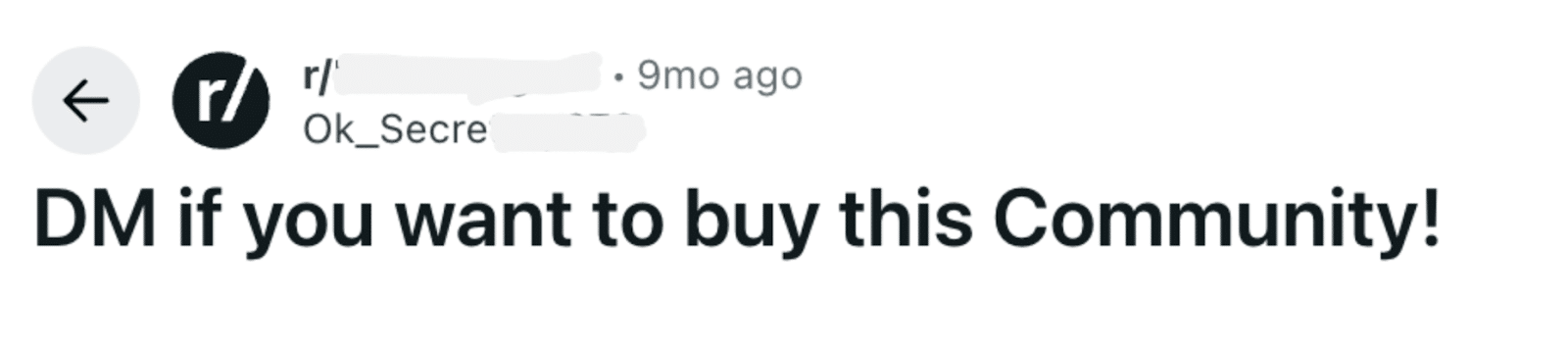
Analyzing over 300 threads across these brands, I assessed brand mentions, sentiment, community engagement, and participation.
Now, let me share the key findings.
1. Reddit Rewards Authentic Brands
What’s clear is that authenticity resonates with people. Brands represented by genuine, helpful, and non-promotional moderators see better engagement than those with a corporate tone.
Redditors seek real opinions and experiences, not marketing pitches. Hence, peer recommendations are more credible than brand messages.
When brands communicate directly and acknowledge both strengths and limitations, they gain positive reception. Some even earn upvotes and gratitude from the community.
2. Brands Not on Reddit Are Missing Out
Conversations about brands happen on Reddit with or without their presence. Astonishingly, 30 of the brands I researched don’t engage on Reddit, and 23 have inactive subreddits.
Users pose direct questions about brands and receive insights from fellow redditors. Without a brand presence, these discussions and reputations evolve independently.
Sometimes, other entities may misuse popular brand names, creating potential misrepresentations. Ensure you’re part of the conversation to maintain control over your brand’s narrative.
3. Reddit is a Customer Research Goldmine
Reddit offers unfiltered user insights that traditional feedback methods might miss. Customers openly discuss onboarding issues, integration challenges, and more.
Reddit Captures Feedback That Traditional Methods Miss
On Reddit, users frequently talk about issues like:
Onboarding struggles
Integration challenges
Mobile usability issues
AI feature frustrations
Updates confusion
Alternatives being built
This invaluable honesty helps refine SaaS products beyond what traditional surveys can capture.
Reddit Supports Brand Advocates
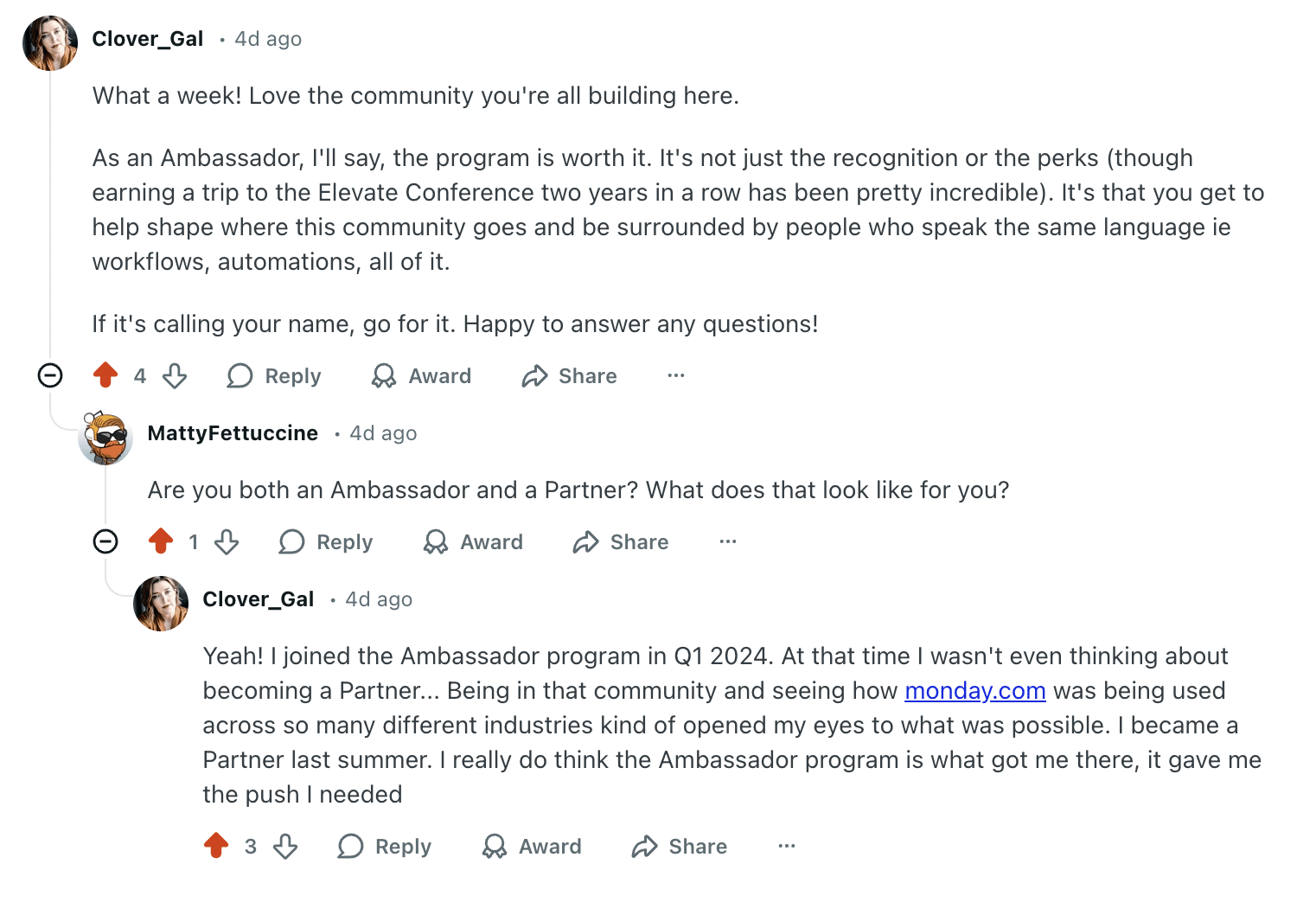
Happy customers often become brand advocates on Reddit, promoting brand ambassador programs and sharing their positive experiences, enhancing brand image.
Some Brands Have Self-Sustaining Reddit Communities
Some Reddit communities thrive with little brand intervention, offering peer-to-peer support, problem-solving, and resource sharing, ensuring community sustainability.
Redditors Highlight Preferred Competitor Features and Pricing Frustrations
Pricing is a hot topic, with users often expressing discontent and citing alternative options, highlighting gaps and opportunities for improvement.
Redditors Share Their Actual Use Cases
Reddit is a platform where users detail their real-world tool applications, which provides valuable insight for product optimization.
Reddit is Essential for Brand Visibility and Perception
With real-time brand discussions, Reddit plays a crucial role in shaping visibility and perception, impacting AI-driven search results and influencing consumer decisions.
It’s crucial for brands to monitor these discussions, engage meaningfully, and utilize Reddit as a platform for reputation management and product insights.
I’ve noticed something interesting happening in the world of PPC advertising. More and more buyers are doing their homework on Reddit before they even think about clicking on ads. This detour is skewing PPC data and misleading our automation efforts.
At over $50 per click, Reddit surprisingly outperforms every vendor organically around 67.3% of the time based on a study that covered 8,566 keywords. This insight is not restricted to just B2B SaaS; it’s a reality many industries are facing.
If you’re in legal, finance, premium home services, or insurance sectors, these high CPCs are part of your landscape. It’s crucial to understand how these dynamics affect you.
The SEO community has been discussing this for a while, highlighting the need to build glossaries and invest in content strategies. However, what intrigues me is how this affects the signal layer our PPC campaigns rely on.
When someone searches a high-intent term and lands on Reddit instead of our page, they don’t just get peer opinions. Google’s algorithm takes note too, registering this as a resolved query.
This kind of engagement feeds back into Google’s algorithm, gradually shaping the relevance of those terms, and it spells trouble for us if we’re not aware of it.
The real complication arises when someone clicks on our ad after spending days researching on Reddit. Smart Bidding isn’t aware of this buyer journey; it sees only a $50 click and waits to see if it converts.
That delay might lead to misinterpreting performance and drawing back on keywords that are actually bringing in qualified buyers because the full picture wasn’t visible.
UCaaS vendors show us how to counteract this. They didn’t outspend Reddit. They invested in content that educates and informs, giving search engines robust, relevant signals.
On the bidding side, offline conversion tracking is essential. It shows the algorithm which leads closed and their worth, helping it comprehend that a longer, research-heavy path at a higher CPC might still be beneficial.
By feeding the system first-party data via click IDs, Google’s findings indicate a 10% median lift in conversions. This helps align the algorithm’s understanding with what’s actually happening on the ground.
For organic strategy, it’s about being present where these conversations take place. This could mean answering more questions directly on platforms like Reddit and evaluating your presence in these research hubs.
Have you ever wondered how different types of social content can influence AI visibility? Well, I’ve delved into this fascinating topic to uncover the ways platforms like YouTube and Reddit, along with long-form content, enhance AI citation.
Understanding the mechanics of how social platforms shape AI visibility is crucial in today’s digital landscape. In my exploration, I discovered that YouTube and Reddit are particularly powerful in driving AI citations, thanks to their unique content structures and engagement models.
Long-form content, known for its depth and comprehensive nature, is another player in this arena. Its ability to provide detailed insights makes it a preferred format for AI learning and referencing.