
Tag: Guest Posting

  • Master Guest Post Outreach: Proven Strategies for 2026

    Master Guest Post Outreach: Proven Strategies for 2026

    Since 2021, I’ve been immersed in the world of guest posting, working on over 350 published pieces. Through this experience, I’ve honed a scalable outreach process that reliably captures approvals without the need to pay for placements.

    While guest blogging is increasingly challenging, the fundamental principles of personalized outreach remain unchanged. With a focus on creating mutual value, this approach will be just as effective in 2026 and beyond.

    Step 1: Build Your Outreach List

    Your outreach list is essentially a compilation of websites to which you’ll propose guest-written content. There are several effective strategies to build this list.

    The simplest method is to search for your niche accompanied by phrases like “write for us” to discover potential websites.
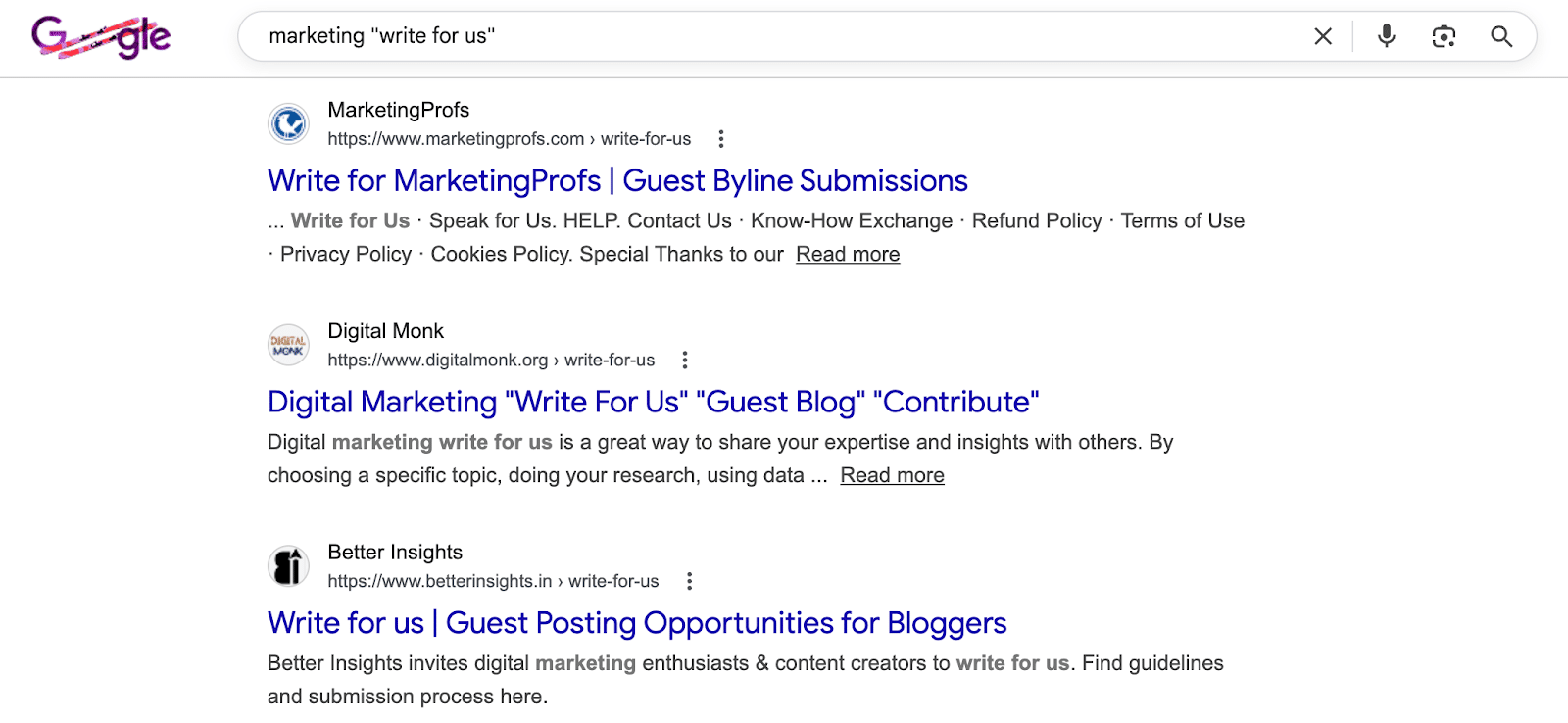
    ```json
{
  "alt": "Google search results for marketing 'write for us' showing various guest blogging opportunities.",
  "caption": "Explore guest blogging opportunities with top marketing sites keen on fresh perspectives. Perfect chance to share your insights and expertise.",
  "description": "The image displays a Google search results page for the query 'marketing "write for us"'. The top results include guest blogging opportunities from platforms like MarketingProfs, Digital Monk, and Better Insights. This search is ideal for content creators and digital marketing professionals looking to contribute articles and share their expertise on established platforms. Keywords such as 'guest blogging', 'digital marketing', and 'content creators' make this a valuable resource for writers seeking to expand their reach."
}
```

    Many reputable websites openly accept guest posts with established approval processes you can find online. This was precisely the approach I used to get published on G2’s Learning Hub.

    Alternatively, by searching the name of a prominent individual in your niche paired with keywords like “guest post” or “guest author,” you can identify websites that have previously accepted guest posts and might do so from you.

    You can also explore competitors’ backlink profiles via an SEO tool like Semrush under the ‘Link Building’ section.

    Verify if these websites have a history of publishing content from guest authors. If they predominantly feature in-house content and you’re not a big name in the industry, your pitch may not stand out.
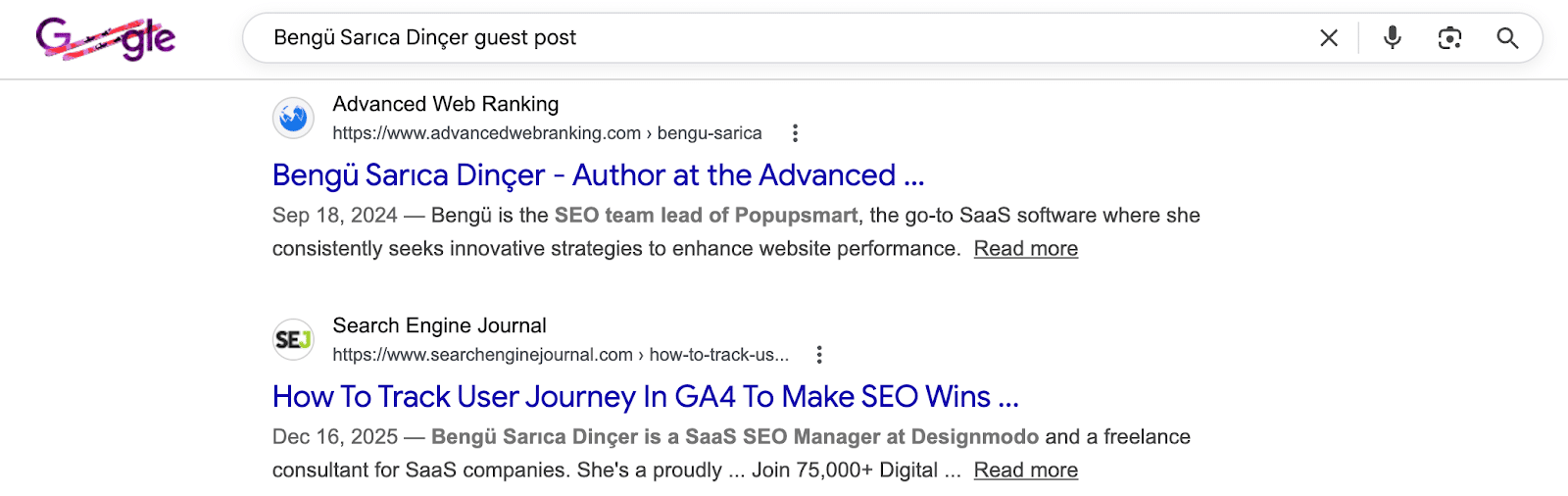
    ```json
{
  "alt": "Search results showing guest posts by Bengü Sarıca Dinçer on Advanced Web Ranking and Search Engine Journal.",
  "caption": "Discover insights from Bengü Sarıca Dinçer, as highlighted in her guest posts on Advanced Web Ranking and Search Engine Journal.",
  "description": "The image displays Google search results for 'Bengü Sarıca Dinçer guest post.' Two entries are shown: one from Advanced Web Ranking where she is noted as a team lead for Popupsamart, and another from Search Engine Journal discussing user journeys and SEO. Each entry includes publication dates, links, and snippets of her contributions. Her expertise in SEO and consulting for SaaS companies is emphasized, appealing to digital marketing enthusiasts. Keywords: SEO, guest post, Bengü Sarıca Dinçer."
}
```

    Once you’ve compiled a list of potential sites, assess them against your website quality criteria, considering factors such as niche, top pages, organic traffic trends, and authority scores. Automation tools can optimize this step for efficiency.

    Step 2: Find the Right Contacts

    Successful guest post outreach hinges on contacting the right individual. Most emails get ignored if irrelevant, so identifying the appropriate contact is crucial.

    To find the right person, start with LinkedIn:
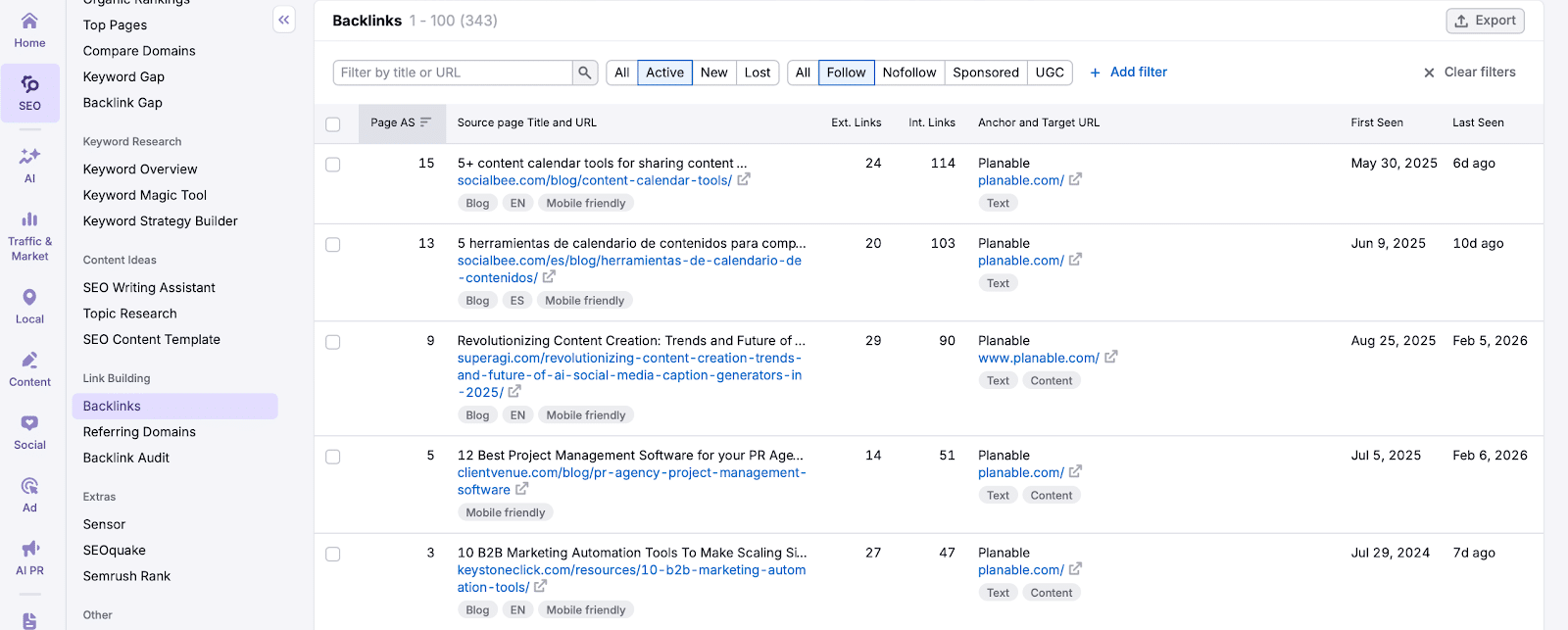
    ```json
{
  "alt": "SEO backlink analysis dashboard displaying a list of backlinks, source pages, and link details.",
  "caption": "Dive into the data with this SEO backlink dashboard, showcasing detailed insights into the sources and metrics of various backlinks.",
  "description": "The image captures an SEO backlink analysis dashboard. It displays a table listing backlinks, source page titles, and URLs, along with external and internal link counts. The dashboard allows filtering options and shows backlink details such as first seen and last seen dates, page authority scores, and source languages. This tool aids in understanding backlink sources and tracking SEO performance."
}
```
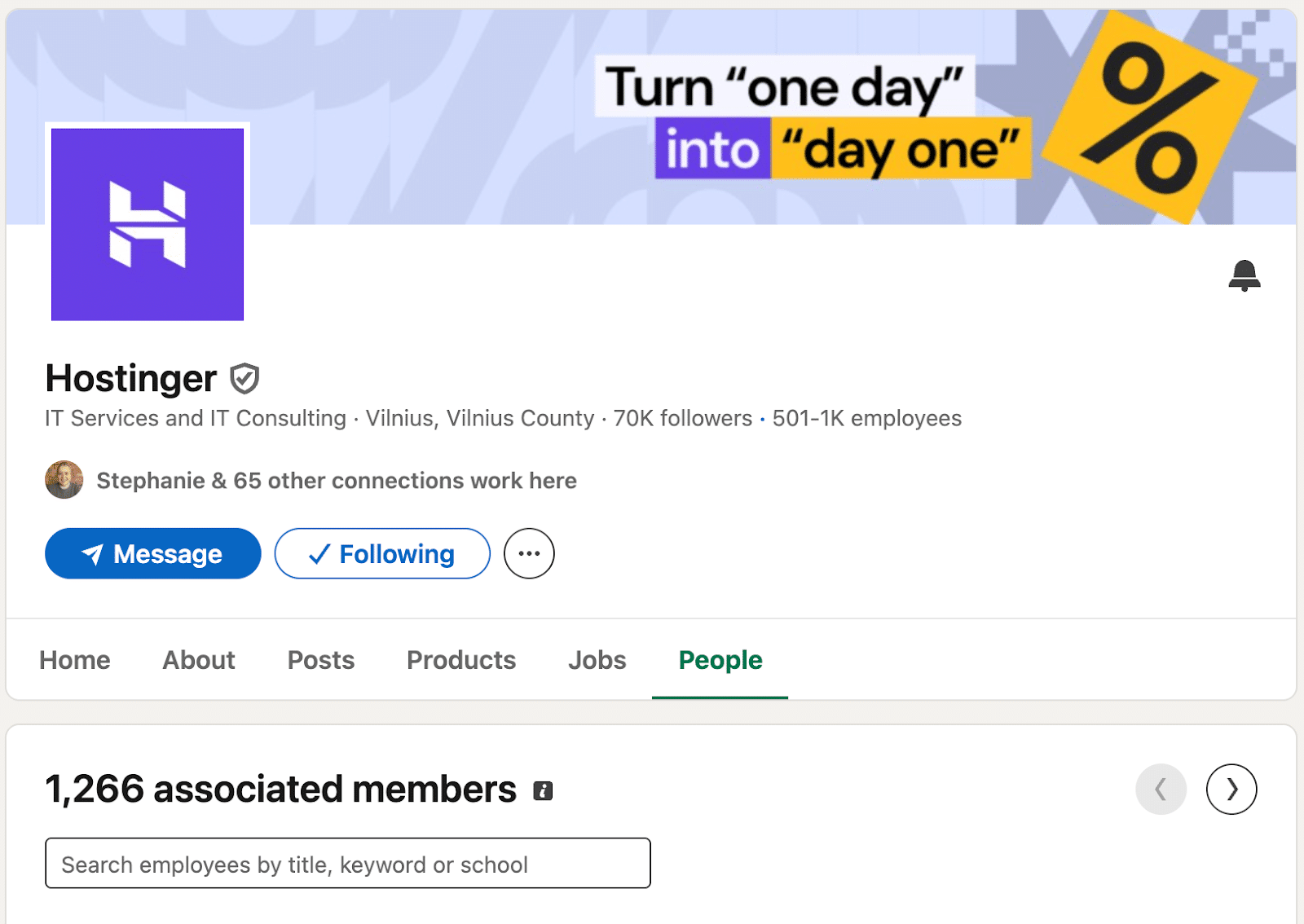
    • Visit the company profile and navigate to the People tab.

    Filter profiles using relevant keywords to find someone responsible for content decisions, typically a content manager or editor.

    In smaller organizations, targeting individuals with “marketing” or “growth” roles can be effective, sometimes the founders in micro companies.

    • Use tools like Apollo or Hunter to locate the work email of your identified contacts.
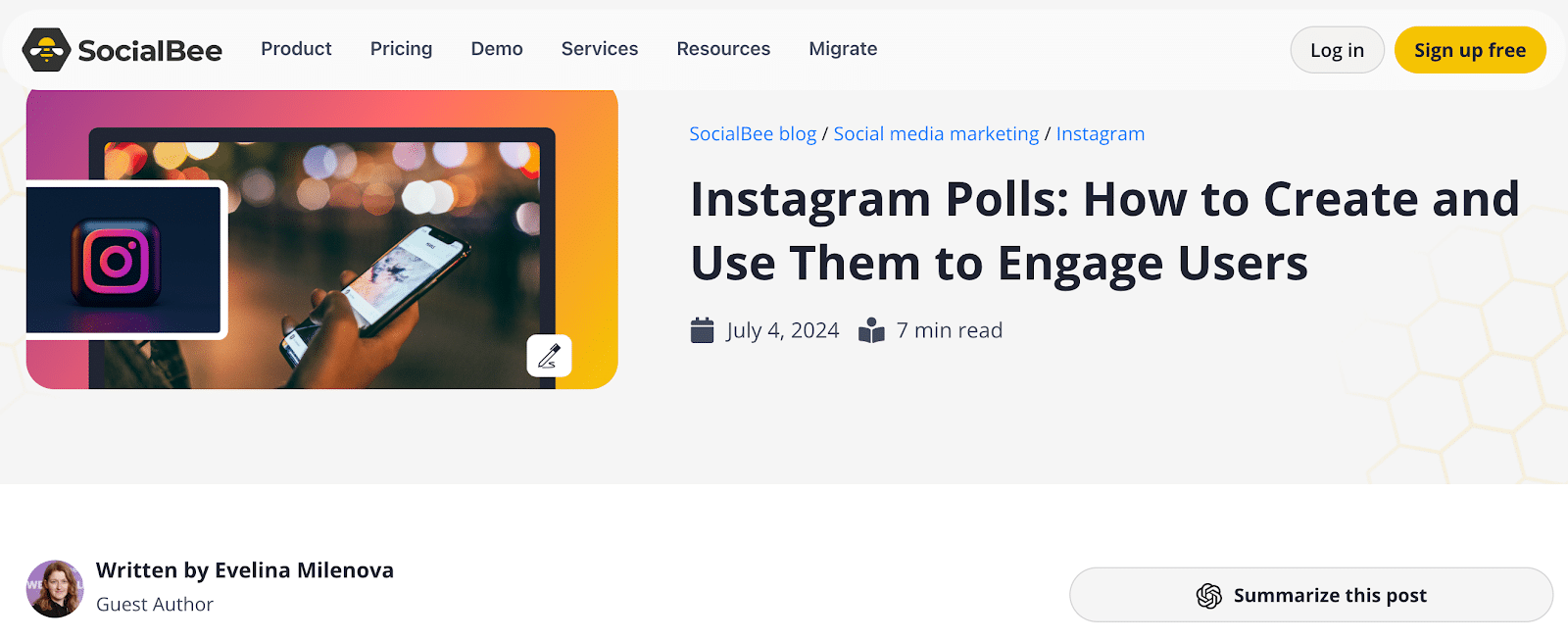
    ```json
{
  "alt": "SocialBee article on creating Instagram polls to engage users with a featured image of a smartphone showing Instagram.",
  "caption": "Unlock user engagement: Discover how to create captivating Instagram polls that captivate your audience with this insightful SocialBee guide.",
  "description": "This SocialBee webpage focuses on crafting Instagram polls to boost user interaction. Set for July 4, 2024, the article by guest author Evelina Milenova is to be a 7-minute read. The header image shows a smartphone displaying Instagram against a blurred, bokeh background, highlighting the app's icon. Perfect for those diving into social media marketing strategies."
}
```

    Occasionally, you might only find generic emails like contact@ or support@, which can still be suitable in certain niches, especially in B2C contexts.

    • Verify all email addresses to maintain a good sender reputation and ensure inbox deliveries.

    Step 3: Choose Your Outreach Approach

    When it comes to guest posting outreach, you can take one of two primary approaches.

    ```json
{
  "alt": "The CapmatchOne logo with a gradient circle and bold text.",
  "caption": "Discover innovation with the CapmatchOne logo, featuring sleek typography and a modern gradient circle.",
  "description": "The CapmatchOne logo features bold, modern typography coupled with a gradient circle, symbolizing connection and innovation. The sleek design conveys a sense of progress and creativity. This image can be used for branding or promotional purposes, appealing to audiences interested in innovative solutions and forward-thinking designs."
}
```

    Send Out a Generic Email Template with Basic Personalization

    This involves asking whether the website accepts guest contributions, allowing you to focus primarily on building your outreach list without extensive personalization.

    Emails here are minimally personalized, usually only including the recipient’s name and company, resulting in moderate reply rates.

    To be effective, a large list is crucial since you need a 3% to 5% reply rate to secure enough opportunities.
    ```json
{
  "alt": "Hostinger LinkedIn profile overview with followers and messaging options.",
  "caption": "Explore Hostinger's LinkedIn profile, showcasing their influence with 70K followers and a vibrant community of IT professionals.",
  "description": "This image displays the LinkedIn profile overview of Hostinger, an IT Services and Consulting company based in Vilnius. The profile highlights include 70K followers, a message option, and 1,266 associated members. The banner reads, 'Turn one day into day one,' capturing the essence of forward-thinking. Hostinger is involved in IT services, boasting a workforce of 501-1K employees. The visual is an engaging representation of their professional network presence."
}
```

    Hyper-Personalize Your Emails

    This approach offers distinct propositions to each company, requiring more time for research but yielding a higher reply rate—around 19%, from my experience.

    It’s best when dealing with a concise outreach list or when contacting high-profile sites.

    Step 4: Research the Right Topics
    ```json
{
  "alt": "Website section detailing types of posts accepted, focusing on Experiments and Canonical posts.",
  "caption": "Discover the types of posts embraced by this platform, featuring in-depth analyses and canonical guides designed to educate and engage.",
  "description": "A section from a website elaborating on the accepted post types: 'Experiment/Analysis' and 'Canonical'. It encourages submissions of marketing experiments and thorough educational content backed by data and examples. The content aims to provide actionable insights and detailed guides. The page also includes navigation links like Products, Solutions, and Pricing for seamless user experience. Keywords: marketing, content creation, data analysis, educational posts."
}
```

    Regardless of your approach, pitching the right topic is paramount. Basic personalization involves suggesting topics post-reply, while hyper-personalized emails propose them from the get-go.

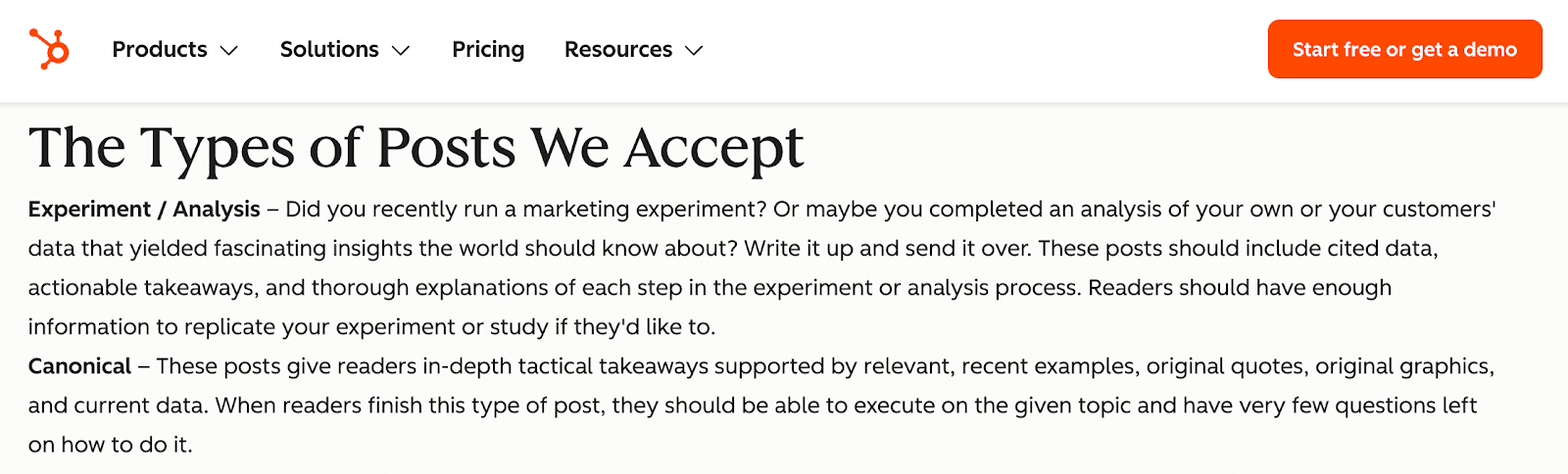
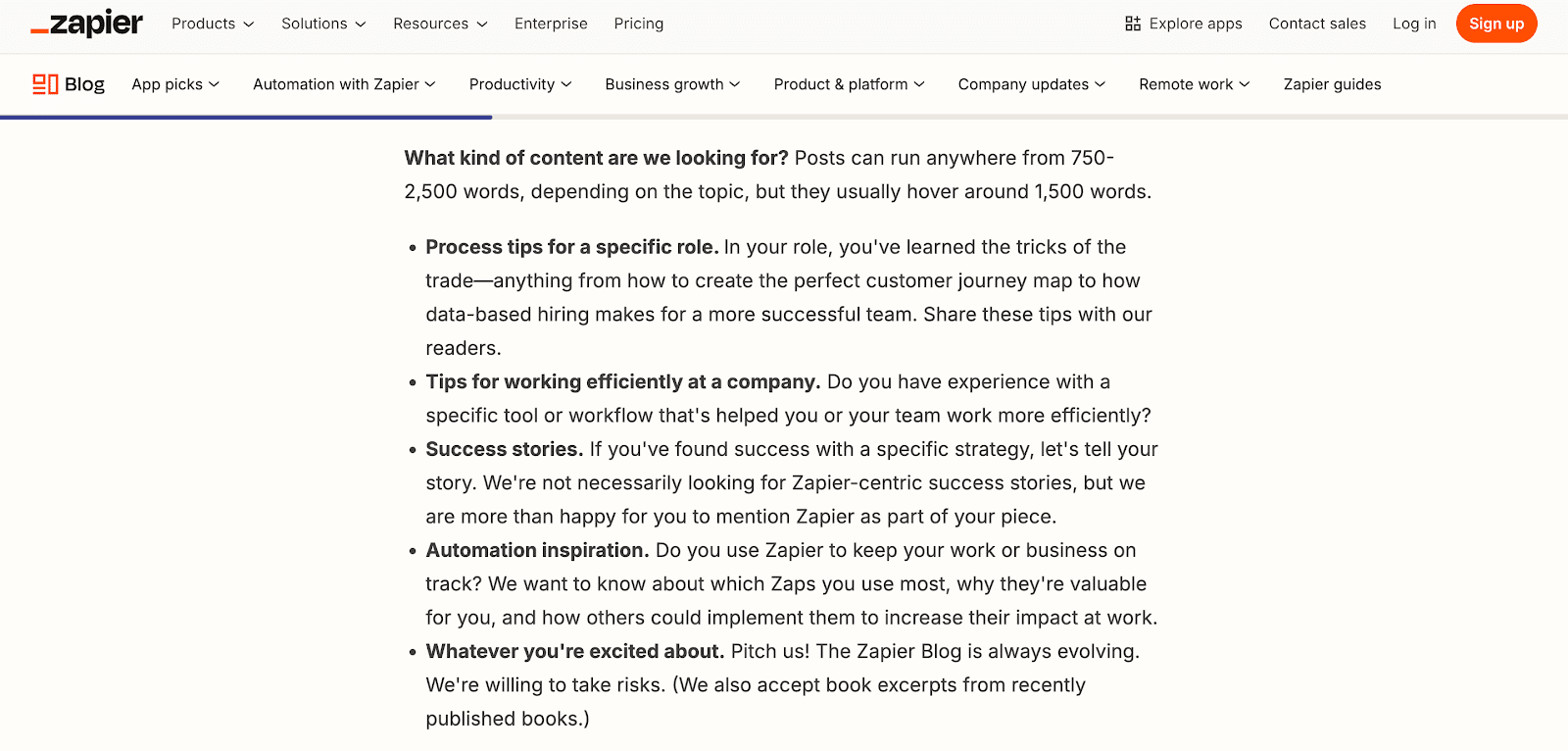
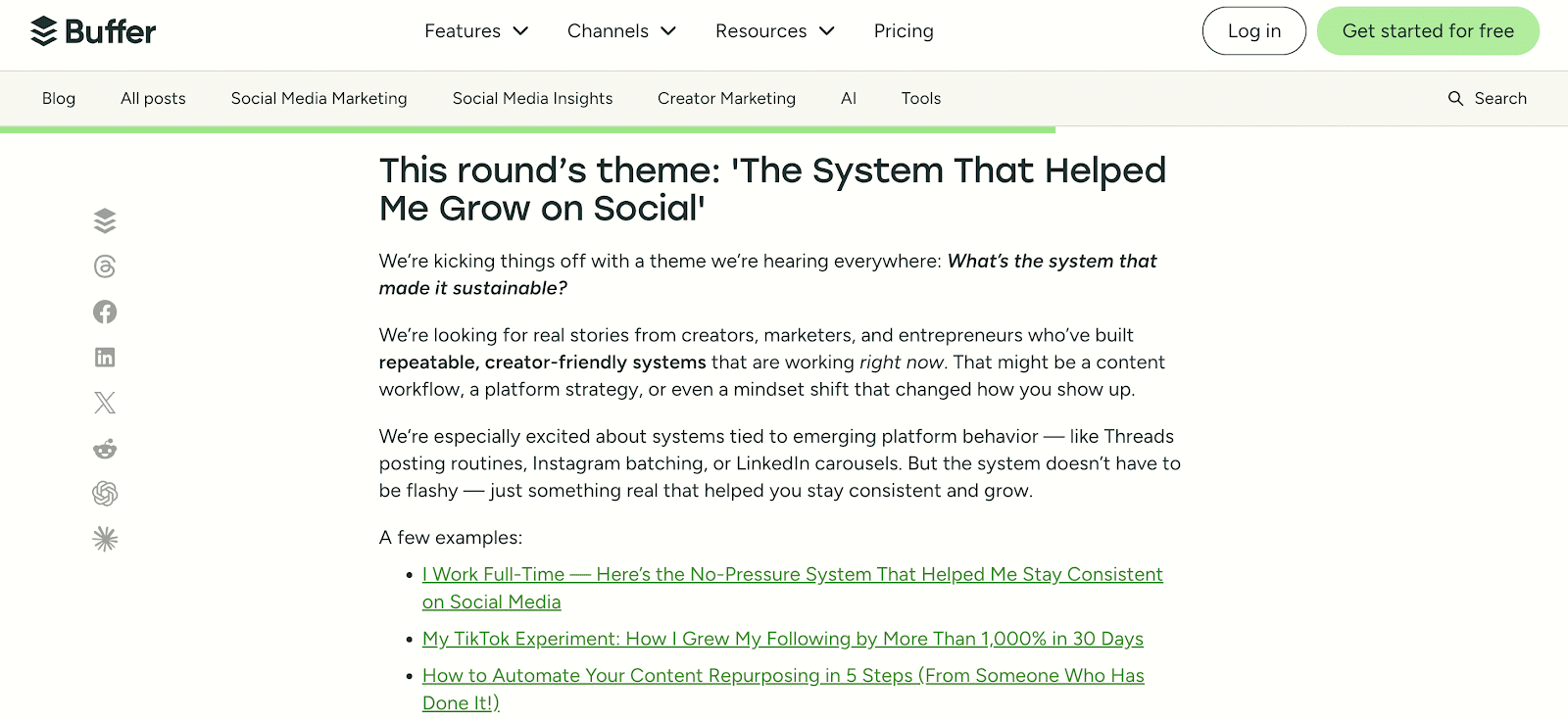
    Top-tier sites have stringent requirements; finding their editorial guidelines is crucial to align your pitch.

    For instance, HubSpot only accepts content like marketing experiments or in-depth guides. Meanwhile, Zapier demands industry-specific experience for contributions.

    Moreover, Buffer opens guest posting rounds for specific themes, streamlining their editorial process. Adhering to such criteria significantly improves your pitch’s success rate.
    ```json
{
  "alt": "Screenshot of Zapier blog detailing types of content they seek for publication.",
  "caption": "Explore what Zapier's blog is looking for, from process tips to success stories. Whether you're a seasoned expert or a fresh voice, pitch your unique insights.",
  "description": "This image is a screenshot from Zapier's blog outlining the kinds of content submissions they're interested in. It details various types, including process tips, company efficiency advice, success stories, automation inspiration, and general exciting ideas. The guidance suggests articles typically range from 750 to 2,500 words, emphasizing the preference for practical and insightful contributions. This provides a useful overview for aspiring contributors looking to share their expertise and stories on the Zapier platform."
}
```

    Keep in mind that some editors maintain a list of sought-after topics, which they might share with potential contributors.

    How to Do a Keyword Gap Analysis with Semrush

    If I aim to pitch to monday.com, here’s my approach:

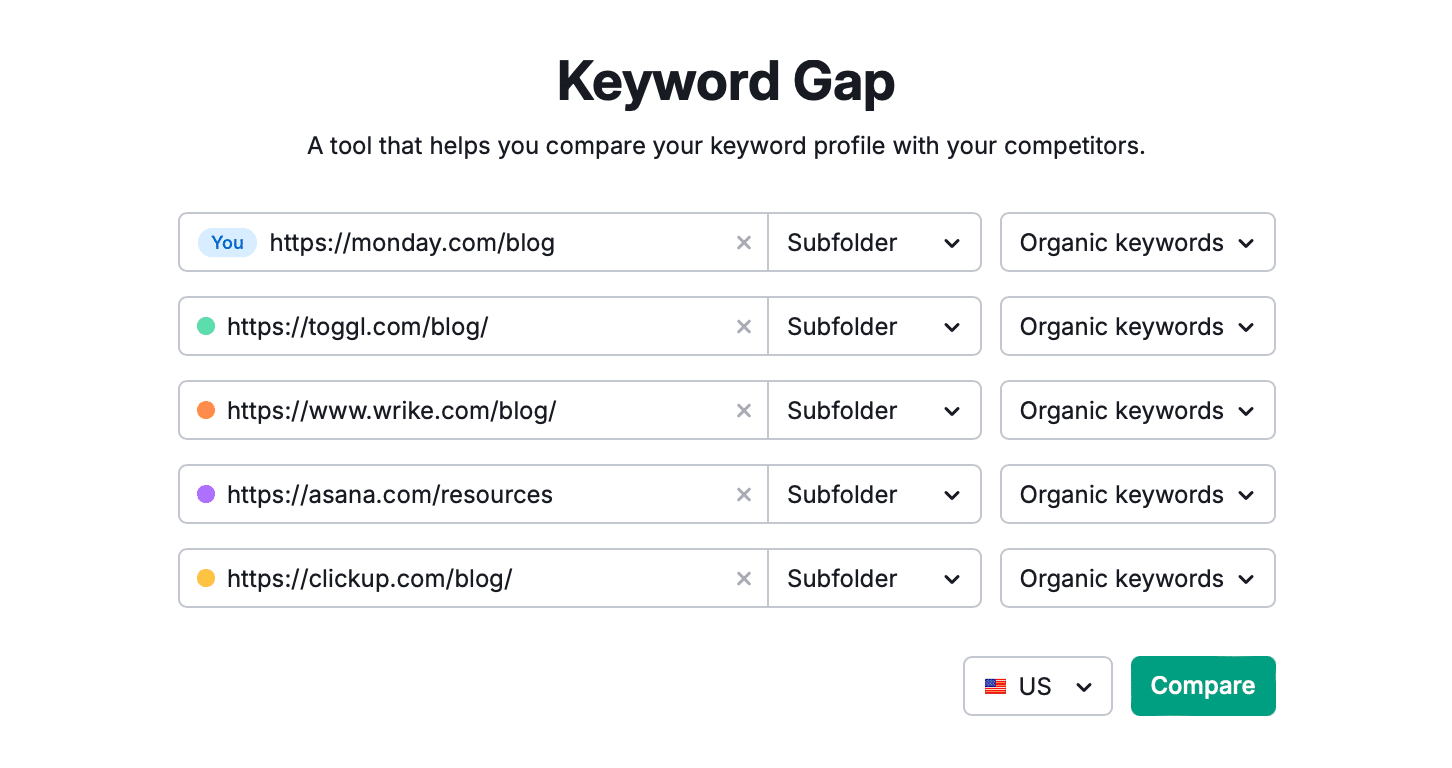
    • Open Semrush’s SEO tools and go to Keyword Gap. Enter the URL of monday.com’s blog along with competitors’ URLs, and hit Compare.
    ```json
{
  "alt": "Buffer website article about systems for social media growth, titled 'The System That Helped Me Grow on Social'.",
  "caption": "Discover how creators and marketers are leveraging unique systems to sustainably grow on social media with Buffer's latest insights.",
  "description": "This image shows an article on Buffer's website titled 'The System That Helped Me Grow on Social'. The content seeks real stories from creators, marketers, and entrepreneurs about effective systems they use for social media growth. It emphasizes repeatable, creator-friendly systems and provides examples of successful strategies. Icons for various social media platforms are displayed on the side for easy sharing."
}
```

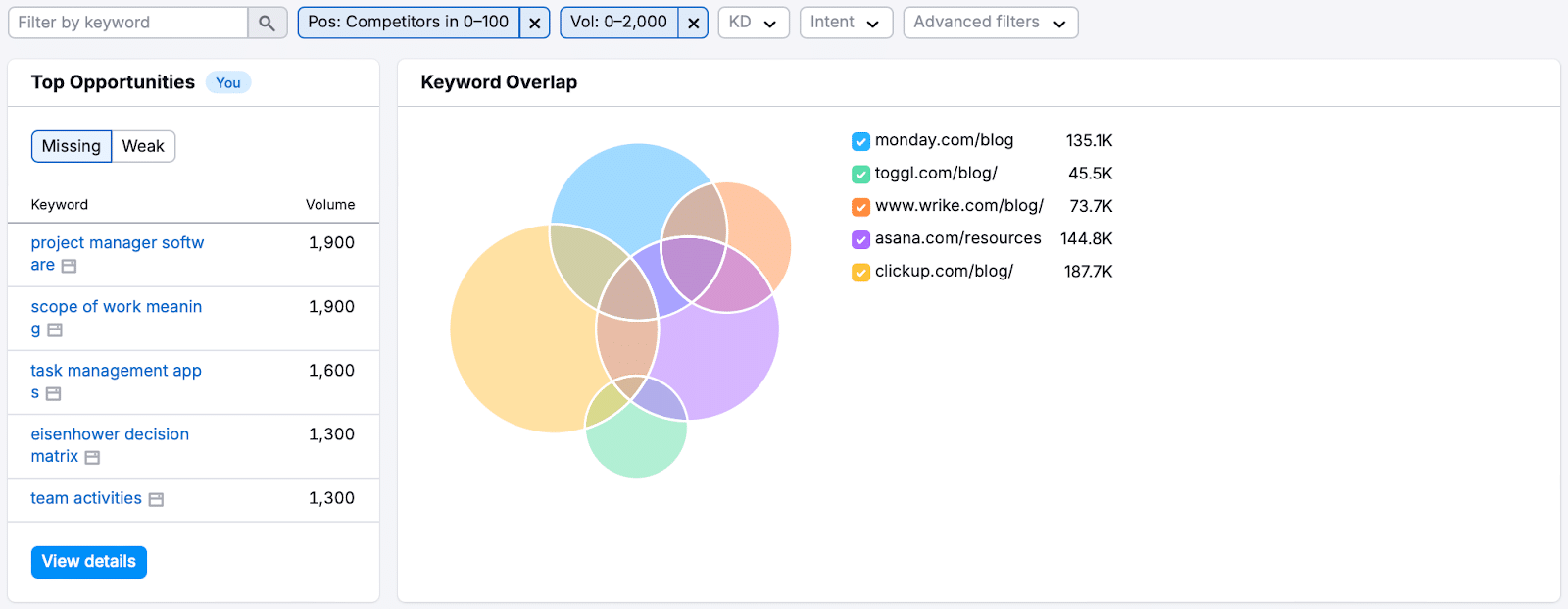
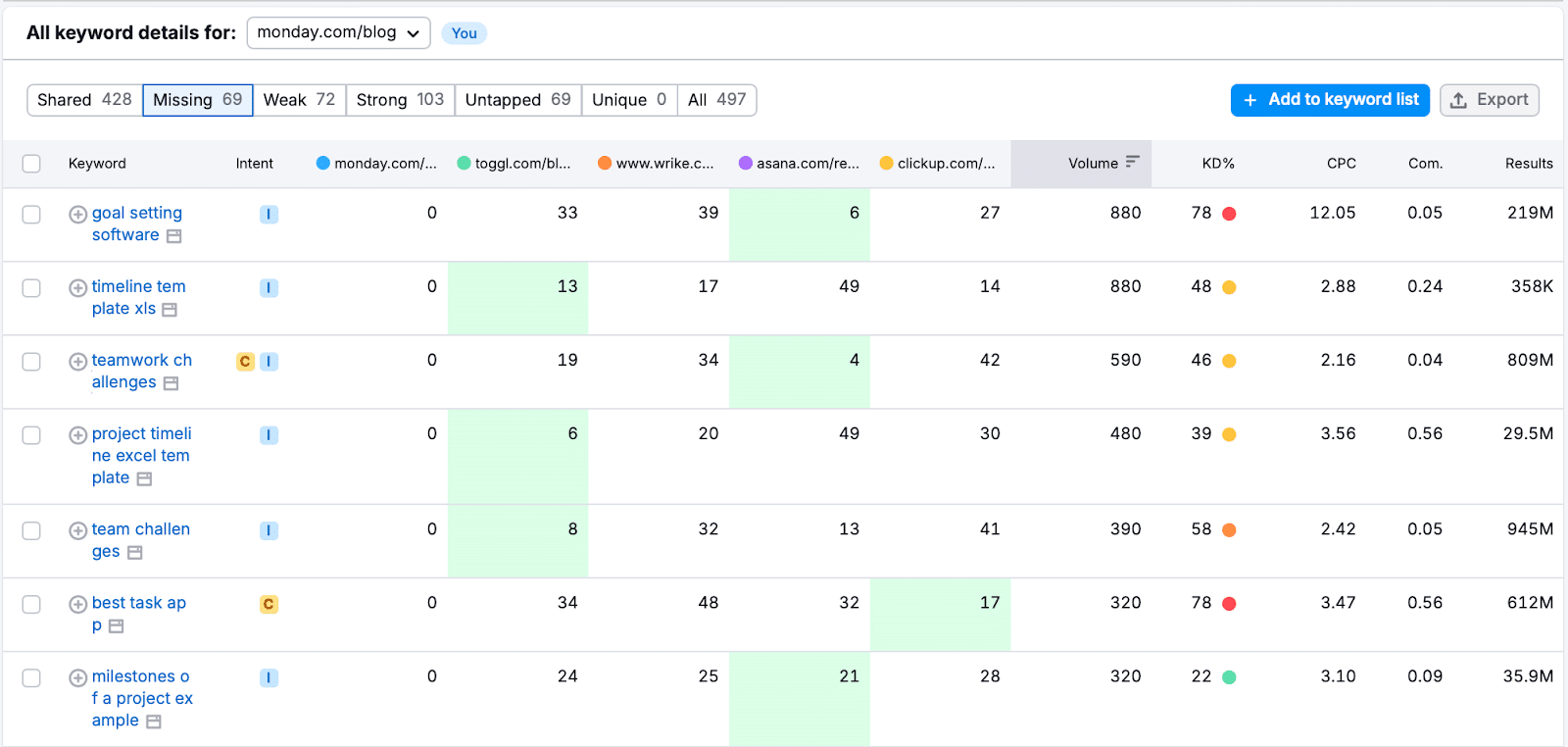
    Filter these keywords to spot ones where competitors rank in the top 100 but your target doesn’t, revealing gaps you can fill.

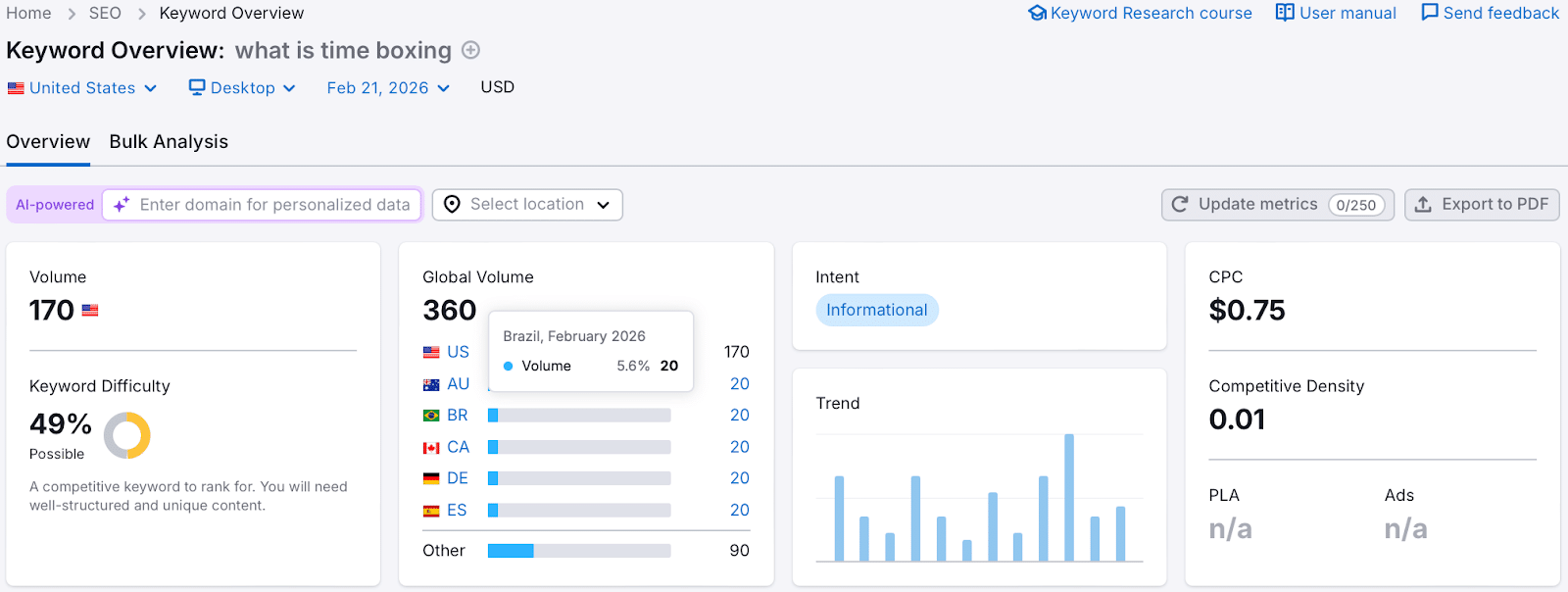
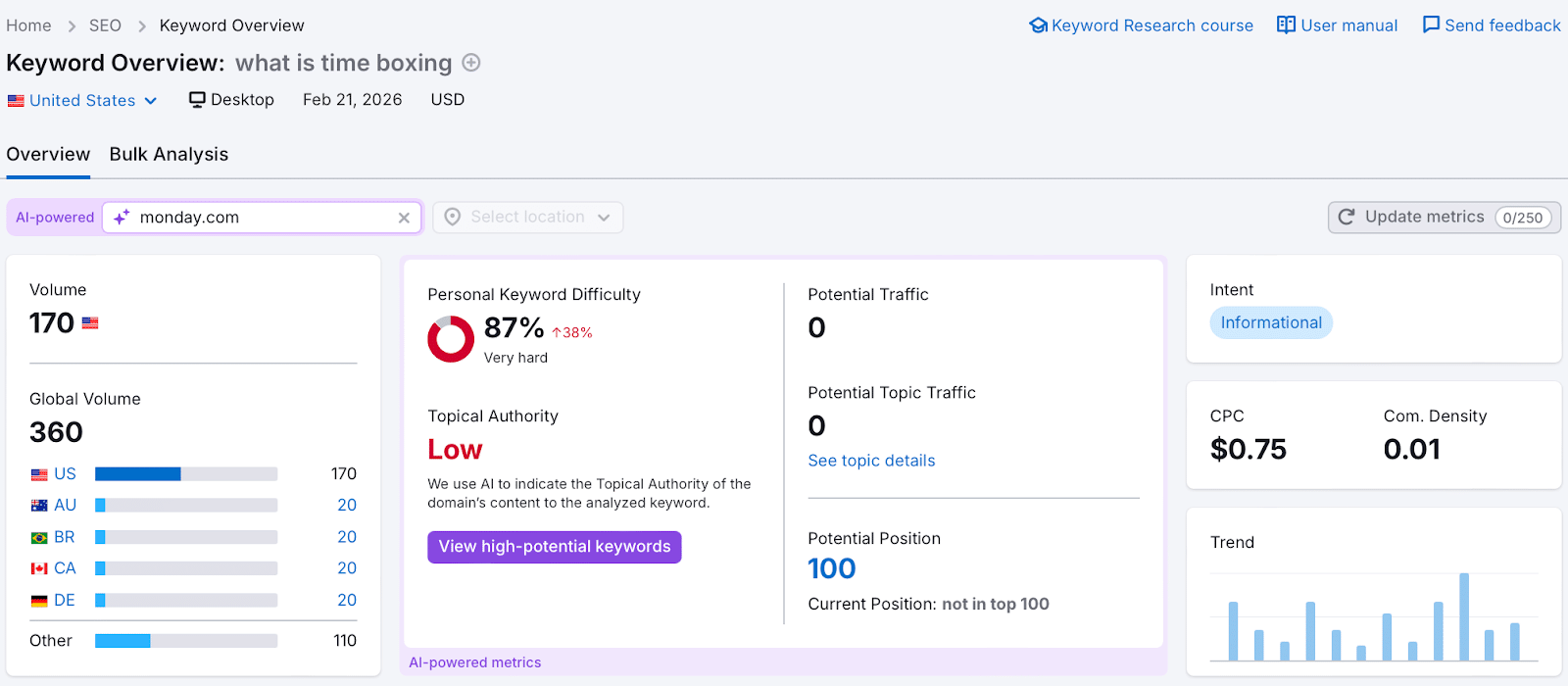
    Assess the relevance and complexity of these keywords against your expertise. For example, “what is time boxing” might be too competitive, but less contested terms could present viable opportunities.

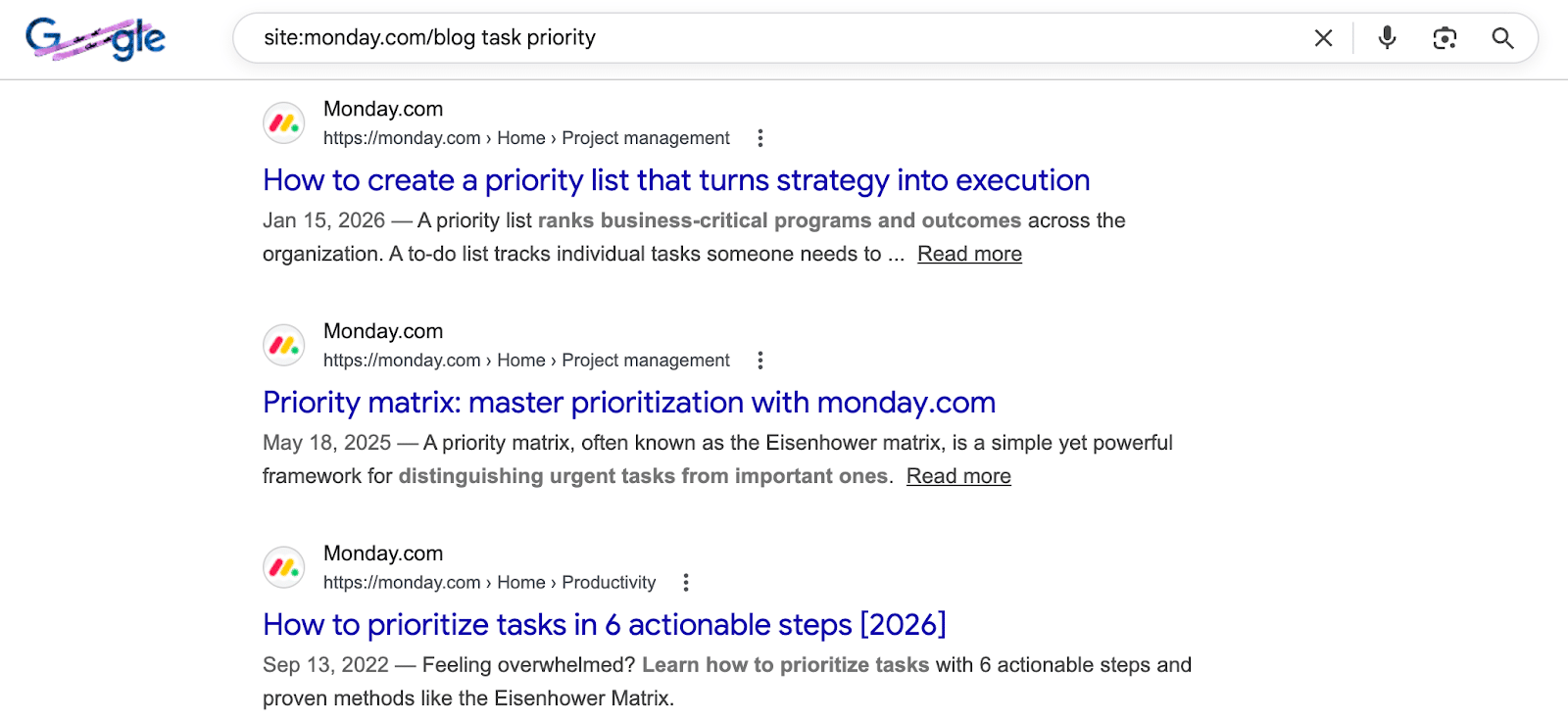
    Check if the target site is already optimizing for your chosen keywords by using the “site:” search operator in Google.

    • Propose 3-4 varied topics to ensure one aligns with the editor’s needs. A diverse proposal increases your acceptance odds.
    ```json
{
  "alt": "Screenshot of a Keyword Gap tool showing URLs from different competitors.",
  "caption": "Discover your keyword strengths and improve SEO strategy with the Keyword Gap tool!",
  "description": "This image shows a screenshot of a Keyword Gap tool interface. URLs from five different websites are listed, with each site having options for Subfolder and Organic keywords. The tool allows users to compare keyword profiles against competitors, with a 'Compare' button for analysis. The image is set for US-based analysis and helps SEO strategists identify keyword opportunities."
}
```

    Step 5: Create Your Extra Value Proposition

    Your additional value proposition is about showcasing what else you bring to the table, beyond content.

    • Have you authored notable industry content?
    • Can you promote content to a substantial social media following?
    • Do you manage a newsletter with a relevant audience?
    • Are you part of a community interested in the topic?

    For instance, I might mention my 11,000 LinkedIn followers, predominantly industry professionals, when pitching to a project management blog, highlighting the relevance of my audience.
    ```json
{
  "alt": "SEO keyword report with top opportunities list and keyword overlap Venn diagram.",
  "caption": "Explore key SEO insights with a detailed keyword overlap diagram and top opportunity list for strategic content planning.",
  "description": "This image displays an SEO analysis with a top opportunities list featuring keywords like 'project manager software' and 'scope of work meaning,' alongside their search volumes. On the right is a colorful Venn diagram representing keyword overlap among different blogs, including monday.com/blog and clickup.com/blog, highlighting their SEO competition metrics."
}
```

    Step 6: Prepare Your Emails

    Crafting your outreach emails involves attention to the subject line, email body, and follow-ups.

    The subject line entices recipients to open your email; the body secures replies, and follow-ups increase your chances of a response.

    BuzzStream suggests a few best practices for subject lines:
    ```json
{
  "alt": "SEO keyword analysis table for monday.com blog, displaying keyword strength, competition, and search metrics.",
  "caption": "Dive into the SEO dynamics of the monday.com blog with this detailed keyword analysis, highlighting opportunities and competition.",
  "description": "This image showcases an SEO keyword analysis table for the monday.com blog, featuring columns such as keyword intent, strength across various platforms like Toggl and Wrike, search volume, keyword difficulty percentage, cost per click, competition, and results. The table includes keywords like 'goal setting software,' 'timeline template xls,' and 'teamwork challenges,' offering insights into their search metrics and competitiveness."
}
```
    • They should contain 9-13 words and over 71 characters.
    • Emojis can enhance engagement.
    • Mentioning the website, not the person, proves effective.
    • Title case outperforms sentence case.

    Email bodies should be concise and easily digestible since editors favor brevity due to their busy schedules.

    Follow-ups are critical; data show that follow-up emails generally increase overall response rates significantly. Limit yourself to two follow-ups to avoid being perceived as too pushy.

    Step 7: Send Your Outreach Emails
    ```json
{
  "alt": "SEO keyword overview for 'what is time boxing' showing search volume, global volume, and intent.",
  "caption": "Insightful SEO keyword overview detailing the search volume and competitive dynamics for 'what is time boxing', highlighting its informational intent.",
  "description": "This image presents an SEO keyword overview for the phrase 'what is time boxing'. It includes a search volume of 170 in the United States and a global volume of 360. The keyword difficulty is marked at 49% possible. The overview specifies an informational search intent, a CPC of $0.75, and a competitive density of 0.01. The chart and data suggest a targeted approach for content creation, emphasizing keyword competitiveness and search trends."
}
```

    It’s finally time to dispatch your emails. Here’s what you need to know:

    Send Days 

    Research shows the best day to send emails is Monday, followed by Tuesday and Wednesday due to higher open and response rates.

    Send Times
    ```json
{
  "alt": "SEO keyword analysis for 'what is time boxing' with metrics such as volume, difficulty, and CPC.",
  "caption": "Explore the challenges of ranking 'what is time boxing' with high difficulty and low authority in SEO analysis.",
  "description": "This image displays a keyword analysis for 'what is time boxing' using an SEO tool. It shows a US search volume of 170, global volume of 360, and a personal keyword difficulty of 87%, labeled as 'very hard'. The topical authority is low, with potential traffic and topic traffic both at zero. The CPC is $0.75, and the competitive density is 0.01. Intended as informational, the analysis predicts a potential position of 100, with the current position not in the top 100. Useful for understanding SEO challenges and strategy.",
  "keywords": "SEO, keyword analysis, time boxing, search volume, keyword difficulty, CPC, topical authority"
}
```

    Aim to dispatch emails before 12 p.m. local time for your recipient, aligning your timing with their work schedule.

    Unsubscribe Option

    Always include a clear way for recipients to opt out. This will help maintain a good sender reputation and avoid being marked as spam.

    Step 8: Track and Adjust
    ```json
{
  "alt": "Keyword overview for cost management in project management, showing metrics like volume, difficulty, and potential traffic for February 21, 2026.",
  "caption": "Explore detailed keyword insights for 'cost management in project management,' including volume, trend analysis, and competitive positioning as of February 2026.",
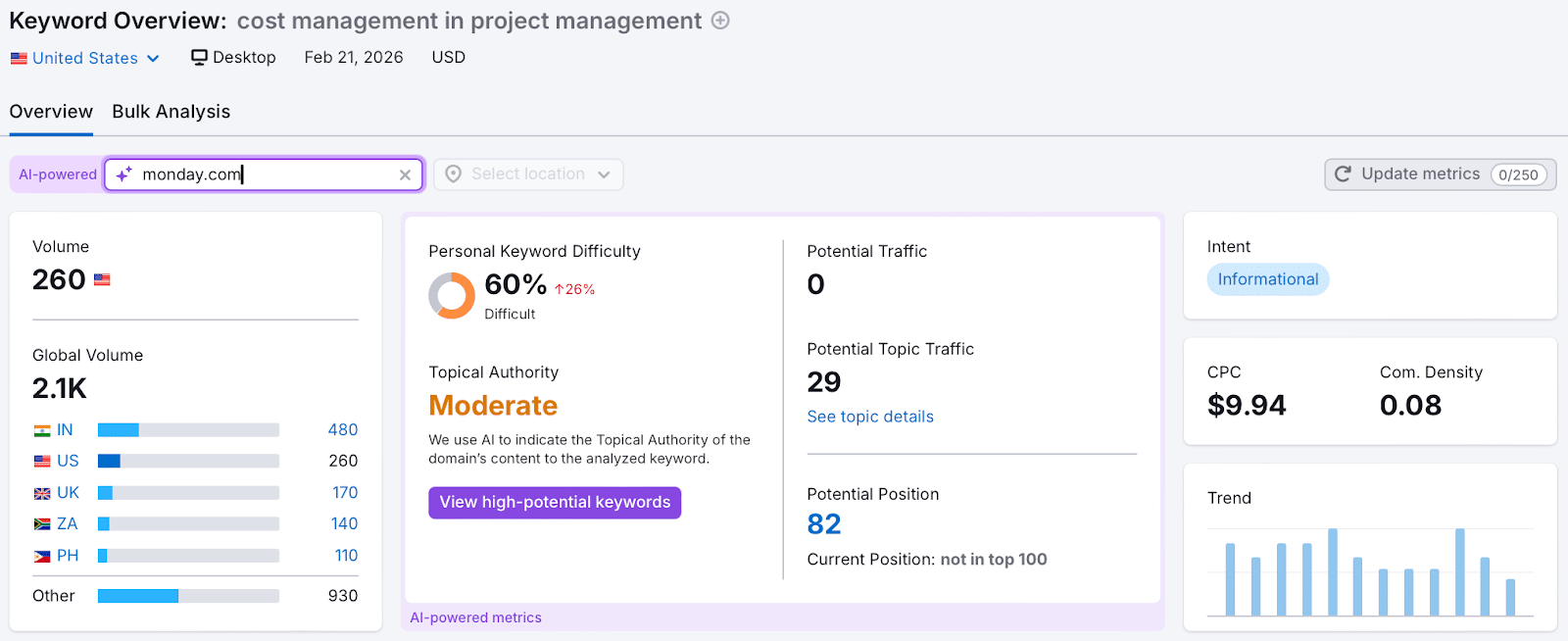
  "description": "This image displays a keyword overview for 'cost management in project management.' Key metrics highlighted include a personal keyword difficulty of 60%, a global search volume of 2.1K, and a moderate topical authority. The potential traffic is shown as zero, with a potential topic traffic of 29. Also included are CPC at $9.94 and competition density at 0.08, with an informational intent. The data is current as of February 21, 2026, in USD for desktop users from various countries including the US and India."
}
```

    Utilize outreach tools to track open, reply, and success rates, offering insights into your campaign’s effectiveness.

    • Open rate shows how many recipients opened your emails, influenced by your subject line and sender reputation.
    • Reply rate indicates the percentage who responded, driven by your email’s relevance and content.
    • Success rate tracks emails leading to published guest posts, dependent on topic selection and following editorial guidelines.

    Run A/B tests to explore what works best. Keep variables minimal to accurately measure impact—adjustments can lead to better success rates.

    Step 9: Build Relationships with Editors
    ```json
{
  "alt": "SERP analysis showing top domains for project cost management with metrics like domain authority and backlinks.",
  "caption": "An insightful glance at SERP analysis for project cost management domains, highlighting top-performing websites and key metrics for SEO.",
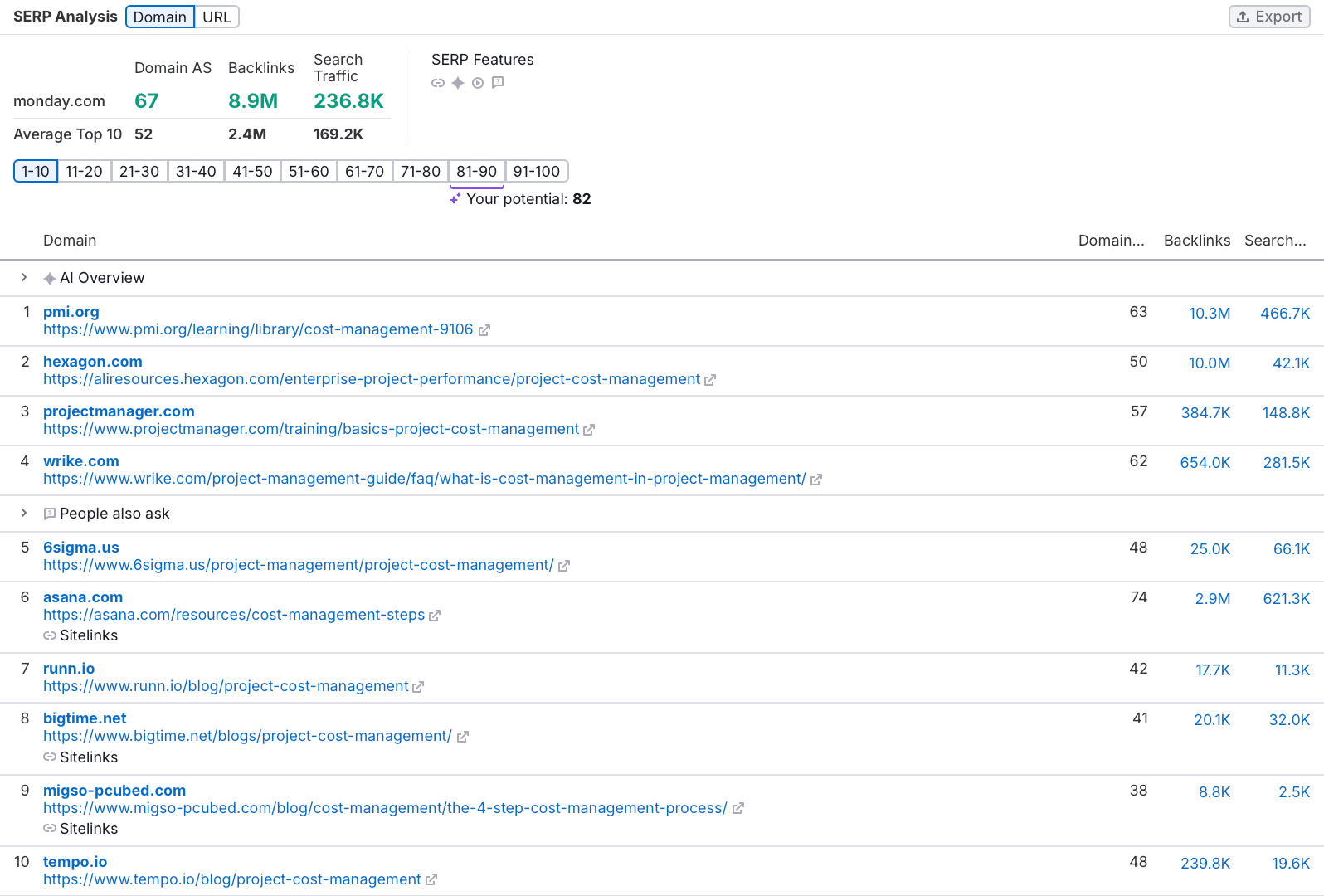
  "description": "This image presents a SERP analysis focused on project cost management. The list includes top domains such as pmi.org and hexagon.com with metrics like domain authority, backlinks, and search traffic. The analysis helps in understanding the SEO performance of these sites, featuring additional details like domain AS and SERP features, providing valuable insights for digital marketers."
}
```

    I’ve published over 350 guest articles, many through building and maintaining strong relationships with editors. Quality work fosters ongoing collaborations.

    I use keyword gap analysis to ensure proposed topics offer potential for traffic, simplifying future pitches.

    To secure lasting editor relationships:

    • Deliver exceptional content: Meet search intent with original visuals and expert quotes.
    • Support post-publication: Promote through your channels and link to it in other works.
    • Be reliable: Communicate clearly, respect guidelines, and meet deadlines consistently.
    ```json
{
  "alt": "Google search results displaying monday.com blog articles on task priority.",
  "caption": "Explore monday.com's insights on task prioritization with these informative blog entries retrieved from a Google search.",
  "description": "This image shows a Google search results page for 'site:monday.com/blog task priority.' It features three articles from monday.com. The first article, dated January 15, 2026, discusses creating a priority list for strategy execution. The second article, from May 18, 2025, explores the use of a priority matrix. The third, dated September 13, 2022, offers steps for task prioritization. These results highlight monday.com's expertise in productivity and project management. Keywords include task priority, blog, monday.com."
}
```

    My Guest Posting Email Template with an 18% Success Rate

    This template has been pivotal to my success:

    Subject: Fresh content ideas for [Company Name]

    Hi [First Name],

    My name is [Your Name], and I’m the [Your Job Title] at [Your Company].

    I’d love to contribute articles to [Company Name]’s blog. I have extensive industry experience from projects with [Brand 1] and [Brand 2].

    Topic Ideas:

    [Proposed Article Title 1]: keyword, US search volume [volume]

    [Proposed Article Title 2]: keyword, US search volume [volume]

    [Proposed Article Title 3]: keyword, US search volume [volume]

    View my LinkedIn for more on my expertise or check my work published by [Publication 1], [Publication 2], [Publication 3].

    Upon publication, I can promote it to my audience of [audience size or description].

    Looking forward to hearing your thoughts.

    [Your Name]

    Guest Blogging Caveat

    Your author profile significantly impacts your success rate. Newcomers should start with smaller industry blogs to build a portfolio, making later pitches more enticing to editors.

    As your portfolio grows with contributions to recognized sites, your credibility and success rates naturally improve.

    Ultimately, investing in your author profile is the key to thriving in guest blogging.


    Inspired by this post on Search Engine Land.


    crushpress.ai community screenshot