As someone deeply invested in the world of AI and SEO, I’ve seen firsthand how important it is to optimize brand visibility in AI-generated responses. More and more, people are leaning on these AI models to get answers, recommendations, and even travel tips.
Imagine if your brand isn’t popping up in these responses? It’s a bit worrying, right? But here’s the big question—can we actually sway these outcomes? And, crucially, what strategies can improve your brand’s presence and visibility?
This is where structured experimentation truly shines. Unlike haphazard strategies, prompt-level SEO demands repeatable testing frameworks to pinpoint what really drives those AI responses.
Build prompt-level SEO tests with a hypothesis framework
There are no shortages of tips on boosting your brand’s AI presence. However, experimentation is the only way to find what truly resonates with your industry and your brand.
To this end, I use hypothesis-driven testing to structure experiments for my brands. It’s a systematic approach, one we can replicate across various tests and scenarios.
This structure breaks down into three parts: if, then, because.
If: Establish your hypothesis: what action will be taken?
“If we include more granular product specifications in our content.”
Then: Predict the result of executing the hypothesis.
“Then we anticipate our brand appearing in more product-specific prompts.”
Because: Lay out why you believe this outcome will happen.
“Because AI models prioritize detailed and specific information in their responses.”
By sticking to this framework, you not only think through each test carefully but can later verify if specific elements have been previously tested, what theories were applied, and what results emerged. It’s beneficial, especially as the AI landscape evolves.
After all, as the AI model world changes, the validity of the test elements may merely shift—altering the “because” portion of our framework.
Key considerations before running prompt-level SEO tests
Before jumping into best practices for testing, here are some essential considerations for running these experiments:
Model updates: AI models are frequently updated. As models transition from versions like 4.1 to 4.2, revisit your results—understand how these updates affect both inputs and outputs.
Prompt drift: Have you ever rerun an identical prompt twice on the same day? Often, the outcomes vary. Repeating prompts consecutively helps establish a real baseline. It’s quite similar to the variability seen in personalized search results. While brands adjust to this variance, certain averages become the benchmark, and prompt testing functions much the same way.
With the framework in mind, let’s explore the core elements of tests applicable to prompt-specific scenarios.
How to isolate variables: A methodological approach
Creating reliable prompt-level SEO experiments involves isolating a single causal variable. This ensures that any changes in AI responses are confidently linked to a particular action.
1. Content changes
When you’re experimenting with content modifications, ensure the changes are precise. A common mistake is updating too much simultaneously (for example, changing a product description while altering the page’s schema).
Best practice — The single-paragraph swap: Focus on changing a single, specific piece of text on the page, such as a product description or an FAQ answer.
Methodology: For proper isolation, conduct A/B testing with a control page that holds the original content and a test page with the modified content. Design the prompt to target the changed information. Track the brand’s inclusion rate and response position over a set period, like seven days.
2. Structured data
Structured data, or schema, delivers clear signals to search engines and AI models. Testing this means isolating the schema update as the only change to the page.
Variable isolation: Experiment by adding new properties (such as brand, model, or offer details) without changing the visible HTML text, isolating the machine-readable layer’s impact.
Specific experiment — FAQ schema: A highly successful strategy involves adding FAQ schema to pages that already have Q&A sections in HTML, indicating the explicit schema markup’s effect on AI ingestion.
3. Before-and-after prompt testing
This method establishes a strict baseline, introduces a change, and then repeats the prompt query. It functions as a critical control technique when true A/B testing on the AI model isn’t feasible.
Protocol
Phase 1 (baseline): Execute 5-10 target prompts daily over seven consecutive days to develop a comprehensive average of inclusion and position-in-response, also accounting for prompt drift.
Action: Implement the isolated change, such as a content or schema update.
Phase 2 (measurement): Re-run the identical set of prompts daily over the next seven days.
Analysis: Compare the average inclusion rate and position from Phase 1 to Phase 2, a method essential for initial presence score analysis, such as using 25 keywords and prompts across three buckets totaling 75 queries.
Encouraging reproducible experiments
Given the rapid development of AI models and limited model insights, reproducibility can be a challenge. However, the aim is to transition from single successful experiments to constructing a durable methodology.
Mandatory frameworks
Ensure every test is meticulously documented using the “if, then, because” hypothesis structure. This process archives the premise, action, and expected result, enabling future teams to quickly assess a test’s ongoing relevance as AI models change and evolve.
Technical integrity
Version control: Record the specific model and version used in tests (e.g., “Gemini 4.1.2”), which simplifies comparison following a model update.
Prompt libraries: Maintain a well-organized, time-stamped collection of exact prompt queries used during baseline and measurement stages, tracking inclusion rate, position-in-response, and sentiment/framing for each inquiry.
Infrastructure consistency
Clearly define the testing environment (e.g., clear browser cache, no login state) and, whenever possible, use APIs or synthetic testing platforms to control for personalization and location bias, similar to managing personalized search results in traditional SEO.
The essence of effective prompt-level SEO lies in its rigorous methodology. By embracing a hypothesis-driven mindset, precisely isolating variables, and establishing robust before-and-after testing protocols, you can leave speculation behind.
Following these guidelines, we can pave a clear path toward significantly influencing AI model responses through controlled, thoroughly documented, and reproducible experiments.
If I hear “always be testing” one more time, I might just scream. It was excellent advice back in 2016, but in 2026, it’s more like watching your budget go up in flames.
Back then, with flexible budgets and forgiving platforms, chaotic testing methods were all the rage. Launching multiple audience tests at once or swapping several creative variables was the norm. Why not, right?
But times have changed. We’re dealing with tighter budgets, longer learning phases, and fragmented signals. Now, a poorly structured test can distort results for weeks, compounding your performance issues rapidly.
Modern experimentation has become both costly and risky. Instead of sticking with outdated practices, why not leverage agentic AI? I’m not talking about using AI as a quick fix to churn out more ad variants—that’s just burning budgets faster.
Instead, it’s time to employ agentic AI to craft smarter experimentation systems.
The Real Cost of Unstructured Testing
In the “always be testing” era, launching random tests was as common as Oprah giving away cars or Taylor Swift packing stadiums. We’d throw ideas around at the start of the week, hoping for a pleasant surprise by Friday.
These days, the costs are astronomical. Algorithms thrive on stability. Research shows that ad sets stuck in learning phases have CPAs 20-40% higher than stable ones.
Every significant change in creative, audience, or budget risks resetting this learning. Run overlapping tests that each cause resets? You’re essentially imposing a volatility tax on all your media spend.
Then there’s the issue of waste. Most A/B tests yield no significant lift. If you’re not discerning about what tests to run, you’re wasting resources to confirm that most ideas are inconsequential. Without proper guardrails, “always be testing” spirals into “always be destabilizing.”
From Random Tests to a Real Experimentation Engine
We’re shifting focus now. It’s no longer about “AI, write me 10 new headlines.” It’s about “AI, craft the most efficient next experiment within our budget, considering our risk tolerance and current learning status.”
This transition from just generating creatives to configuring a comprehensive experimentation framework is where the real advantage lies.
Here’s a seven-step guide to evolve testing from a mere habit to a strategic powerhouse.
Step 1: Set Hard Guardrails (Humans Draw the Lines)
Before integrating AI into your testing strategy, establish constraints. Without these, AI has no context. With them, it becomes a disciplined strategic ally.
Define and document five key constraints.
Budget allocation: Dedicate a fixed percentage, like 10%, exclusively for testing.
Maximum volatility: “Ensure no test increases CPA by more than 15% over five days.”
Learning phase sensitivity: Tailor reset criteria for each platform.
Leading indicators: Use early signals (CTR, engagement drops) to terminate underperforming tests before they impact significantly.
Brand risk: Define untested areas (like avoiding discount-heavy strategies in upscale markets).
Maintain these in a single document (e.g., experimentation-guardrails.md) to guide AI in ensuring test viability. Your AI agent must refer to this before suggesting any tests.
Step 2: Let AI Audit Your Experiment History
Most teams have amassed data over time but don’t utilize it effectively. Feed your last six months of test results into an AI system to analyze changes, duration, performance shifts, statistical relevance, and platform resets.
Have it spot patterns like:
Over-tested variables: Testing CTA buttons multiple times with negligible results? That’s not a useful variable.
False failures: Tests often fail due to lack of statistical significance. AI can verify statistical power and highlight inconclusive outcomes.
Volatility patterns: Your highest CPA weeks might not be market shifts or poor ads but the result of multiple simultaneous tests.
This is the essence of AI as your analytical partner.
Step 3: Write Real Hypotheses
Instead of jumping straight from concept to launch, let AI enforce hypothesis discipline.
Weak: “Let’s test a new headline.”
Strong: “Emphasizing ‘faster time-to-value’ over ‘ease of use’ could boost demo requests by 10-15% among mid-market companies, as analysis shows speed is crucial for them.”
Documenting hypotheses builds institutional knowledge. Later, when someone suggests retesting “speed messaging,” you’ll know past results and reasoning.
Step 4: Risk-Score Every Proposed Test
Budget and algorithm stability are limited. Your AI agent should evaluate proposed tests on five criteria, assigning a risk score.
Budget impact (e.g., less than 5% vs over 15%).
Algorithm disruption level (minor update vs new campaign).
Audience overlap.
Brand sensitivity.
Learning value.
High risk with low learning potential? Drop it. Low risk with high potential? Proceed.
Example: Testing a new positioning statement is risky in a paid campaign. Your AI might suggest verifying it with organic LinkedIn posts first. Low risk. High insight.
Step 5: Pre-test With Synthetic Audiences
This under-utilized AI application can simulate how varied personas might respond to messaging, saving real-world testing costs.
Research by Stanford and Google DeepMind has shown digital agents match human survey responses with 85% accuracy and mimic social behavior with 98% accuracy.
While not a replacement for actual data, synthetic audiences serve as a cost-effective early test.
Define demographic archetypes such as the Skeptical CMO, Growth-focused VP, and margin-driven CFO, and test their responses to messaging.
For example, you may find that phrases like “All-in-One” are seen negatively, prompting a shift to terms like ‘Integrated’.
Step 6: Sequence Tests, Don’t Stack Them
Tweaking audience, creative, and landing pages simultaneously teaches you nothing. Your AI should monitor campaigns to avoid conflicts and recommend proper test sequencing.
A sensible approach is to:
Weeks 1-2: Audience testing.
Weeks 3-4: Creative tests with the proven audience.
When unavoidable, establish clear control groups to maintain data integrity.
Step 7: Build A Living Knowledge Base
Treating tests as one-off experiments overlooks their value. Have AI summarize each test by assessing:
Success reasons.
The audience impacted.
Lift durability.
Variable interaction.
Over time, this database can provide unmatched advantages. Anyone can access the same audience targeting, but few have a database of 100+ customer insights.
The Bigger Shift: From Activity to Architecture
“Always be testing” may have worked in a growth-centric era, but in 2026, success comes from “always be compounding intelligence.”
Instead of maximizing tests, build a competitive edge through structured, risk-aware experiments that maintain algorithm stability and tie directly to revenue.
When asked why you’re not testing more, show your testing architecture and confidently say, “We’re building an intelligence engine, not just running experiments.”
The real insight is not just that Google cracked down on spam or that affiliate content marketing is less effective. It’s that businesses reliant on one easily mimicked distribution channel are vulnerable when that channel shifts.
The future of content will challenge businesses using search as their sole channel.
Instead of focus on broadly applicable topics, many within the industry are emphasizing verticalized research and benchmarks to inspire genuine community dialogues.
Content is evolving beyond simple pages meant to rank, becoming a blend of discovery, discourse, and thought leadership across various channels.
Discovery, discourse, and thought leadership
Hypothetical: Imagine running a SaaS company in the fintech domain, offering advanced financial forecasting.
Rather than creating landing pages targeting “best financial forecasting software” or its affordable counterpart, consider delving into insightful discussions with industry leaders imparts significant wisdom.
Leverage their expertise to pinpoint the most significant financial forecasting gaps in 2026 and verify: Does my offering genuinely address this?
If yes, you’ve likely found a perfect entry to the community.
If not, there’s your direction.
Utilize these insights to craft interactive assessment-based landing pages, supporting them with benchmarking reports derived from top-tier industry organizations.
The intent is for the content to aid organizations in understanding their present state and aims.
These assessments or studies may not dominate Google for high-volume queries, but leveraging owned channels, partnerships, paid media, and other strategies can ensure they reach ideal clients.
These insights act as a springboard for sharing authentic insights from unique dialogues, spanning multiple channels, amplifying your impact.
If executed effectively, you’ll not only enrich the community but also achieve previously elusive growth.
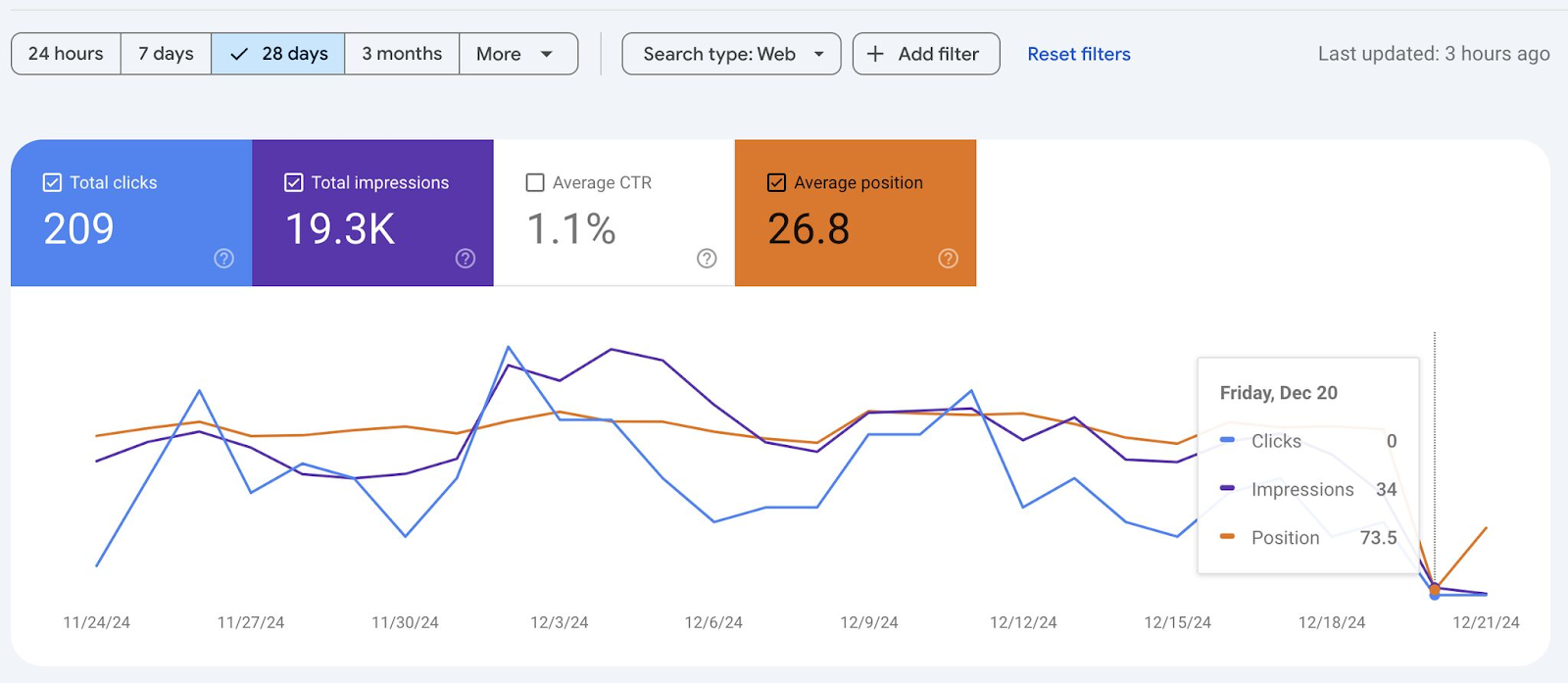
Indexation was swift, and pages appeared for long-tail queries surprisingly quickly.
Within a couple of months, each site was generating around 200 in-market clicks.
However, the December spam update changed the game as clicks dropped to zero.
I attempted data updates and performance-enhancing plugins, which proved futile.
While I can’t pinpoint any single tactic’s failure, collectively, they resulted in sites whose only merit was temporary ranking. Once Google no longer found that useful, the sites were left bare.
The lesson here isn’t the failure of these websites; it’s that Google allowed them just enough time to learn from them.
Does affiliate content marketing still work?
Affiliate content marketing remains a viable monetization strategy but not a growth engine on its own.
There are many websites that offer a valuable user experience, adhere to best practices, and successfully generate affiliate income.
For further guidance, consult Google’s information on creating helpful and people-first content to assess if your website is publishing content “created primarily for people, not to manipulate search engine rankings.”
“If the ‘why’ behind your content is to primarily draw search engine traffic, it’s not aligned with what our systems aim to reward. Using automation, AI-generated content to manipulate rankings violates our spam policies.”
Even with best practices, factors such as the rise of AIO and other disruptions have tempered affiliate marketing’s past successes.
The real insight is not just that Google cracked down on spam or that affiliate content marketing is less effective. It’s that businesses reliant on one easily mimicked distribution channel are vulnerable when that channel shifts.
The future of content will challenge businesses using search as their sole channel.
Instead of focus on broadly applicable topics, many within the industry are emphasizing verticalized research and benchmarks to inspire genuine community dialogues.
Content is evolving beyond simple pages meant to rank, becoming a blend of discovery, discourse, and thought leadership across various channels.
Discovery, discourse, and thought leadership
Hypothetical: Imagine running a SaaS company in the fintech domain, offering advanced financial forecasting.
Rather than creating landing pages targeting “best financial forecasting software” or its affordable counterpart, consider delving into insightful discussions with industry leaders imparts significant wisdom.
Leverage their expertise to pinpoint the most significant financial forecasting gaps in 2026 and verify: Does my offering genuinely address this?
If yes, you’ve likely found a perfect entry to the community.
If not, there’s your direction.
Utilize these insights to craft interactive assessment-based landing pages, supporting them with benchmarking reports derived from top-tier industry organizations.
The intent is for the content to aid organizations in understanding their present state and aims.
These assessments or studies may not dominate Google for high-volume queries, but leveraging owned channels, partnerships, paid media, and other strategies can ensure they reach ideal clients.
These insights act as a springboard for sharing authentic insights from unique dialogues, spanning multiple channels, amplifying your impact.
If executed effectively, you’ll not only enrich the community but also achieve previously elusive growth.
Indexation was swift, and pages appeared for long-tail queries surprisingly quickly.
Within a couple of months, each site was generating around 200 in-market clicks.
However, the December spam update changed the game as clicks dropped to zero.
I attempted data updates and performance-enhancing plugins, which proved futile.
While I can’t pinpoint any single tactic’s failure, collectively, they resulted in sites whose only merit was temporary ranking. Once Google no longer found that useful, the sites were left bare.
The lesson here isn’t the failure of these websites; it’s that Google allowed them just enough time to learn from them.
Does affiliate content marketing still work?
Affiliate content marketing remains a viable monetization strategy but not a growth engine on its own.
There are many websites that offer a valuable user experience, adhere to best practices, and successfully generate affiliate income.
For further guidance, consult Google’s information on creating helpful and people-first content to assess if your website is publishing content “created primarily for people, not to manipulate search engine rankings.”
“If the ‘why’ behind your content is to primarily draw search engine traffic, it’s not aligned with what our systems aim to reward. Using automation, AI-generated content to manipulate rankings violates our spam policies.”
Even with best practices, factors such as the rise of AIO and other disruptions have tempered affiliate marketing’s past successes.
The real insight is not just that Google cracked down on spam or that affiliate content marketing is less effective. It’s that businesses reliant on one easily mimicked distribution channel are vulnerable when that channel shifts.
The future of content will challenge businesses using search as their sole channel.
Instead of focus on broadly applicable topics, many within the industry are emphasizing verticalized research and benchmarks to inspire genuine community dialogues.
Content is evolving beyond simple pages meant to rank, becoming a blend of discovery, discourse, and thought leadership across various channels.
Discovery, discourse, and thought leadership
Hypothetical: Imagine running a SaaS company in the fintech domain, offering advanced financial forecasting.
Rather than creating landing pages targeting “best financial forecasting software” or its affordable counterpart, consider delving into insightful discussions with industry leaders imparts significant wisdom.
Leverage their expertise to pinpoint the most significant financial forecasting gaps in 2026 and verify: Does my offering genuinely address this?
If yes, you’ve likely found a perfect entry to the community.
If not, there’s your direction.
Utilize these insights to craft interactive assessment-based landing pages, supporting them with benchmarking reports derived from top-tier industry organizations.
The intent is for the content to aid organizations in understanding their present state and aims.
These assessments or studies may not dominate Google for high-volume queries, but leveraging owned channels, partnerships, paid media, and other strategies can ensure they reach ideal clients.
These insights act as a springboard for sharing authentic insights from unique dialogues, spanning multiple channels, amplifying your impact.
If executed effectively, you’ll not only enrich the community but also achieve previously elusive growth.
The real insight is not just that Google cracked down on spam or that affiliate content marketing is less effective. It’s that businesses reliant on one easily mimicked distribution channel are vulnerable when that channel shifts.
The future of content will challenge businesses using search as their sole channel.
Instead of focus on broadly applicable topics, many within the industry are emphasizing verticalized research and benchmarks to inspire genuine community dialogues.
Content is evolving beyond simple pages meant to rank, becoming a blend of discovery, discourse, and thought leadership across various channels.
Discovery, discourse, and thought leadership
Hypothetical: Imagine running a SaaS company in the fintech domain, offering advanced financial forecasting.
Rather than creating landing pages targeting “best financial forecasting software” or its affordable counterpart, consider delving into insightful discussions with industry leaders imparts significant wisdom.
Leverage their expertise to pinpoint the most significant financial forecasting gaps in 2026 and verify: Does my offering genuinely address this?
If yes, you’ve likely found a perfect entry to the community.
If not, there’s your direction.
Utilize these insights to craft interactive assessment-based landing pages, supporting them with benchmarking reports derived from top-tier industry organizations.
The intent is for the content to aid organizations in understanding their present state and aims.
These assessments or studies may not dominate Google for high-volume queries, but leveraging owned channels, partnerships, paid media, and other strategies can ensure they reach ideal clients.
These insights act as a springboard for sharing authentic insights from unique dialogues, spanning multiple channels, amplifying your impact.
If executed effectively, you’ll not only enrich the community but also achieve previously elusive growth.
Indexation was swift, and pages appeared for long-tail queries surprisingly quickly.
Within a couple of months, each site was generating around 200 in-market clicks.
However, the December spam update changed the game as clicks dropped to zero.
I attempted data updates and performance-enhancing plugins, which proved futile.
While I can’t pinpoint any single tactic’s failure, collectively, they resulted in sites whose only merit was temporary ranking. Once Google no longer found that useful, the sites were left bare.
The lesson here isn’t the failure of these websites; it’s that Google allowed them just enough time to learn from them.
Does affiliate content marketing still work?
Affiliate content marketing remains a viable monetization strategy but not a growth engine on its own.
There are many websites that offer a valuable user experience, adhere to best practices, and successfully generate affiliate income.
For further guidance, consult Google’s information on creating helpful and people-first content to assess if your website is publishing content “created primarily for people, not to manipulate search engine rankings.”
“If the ‘why’ behind your content is to primarily draw search engine traffic, it’s not aligned with what our systems aim to reward. Using automation, AI-generated content to manipulate rankings violates our spam policies.”
Even with best practices, factors such as the rise of AIO and other disruptions have tempered affiliate marketing’s past successes.
The real insight is not just that Google cracked down on spam or that affiliate content marketing is less effective. It’s that businesses reliant on one easily mimicked distribution channel are vulnerable when that channel shifts.
The future of content will challenge businesses using search as their sole channel.
Instead of focus on broadly applicable topics, many within the industry are emphasizing verticalized research and benchmarks to inspire genuine community dialogues.
Content is evolving beyond simple pages meant to rank, becoming a blend of discovery, discourse, and thought leadership across various channels.
Discovery, discourse, and thought leadership
Hypothetical: Imagine running a SaaS company in the fintech domain, offering advanced financial forecasting.
Rather than creating landing pages targeting “best financial forecasting software” or its affordable counterpart, consider delving into insightful discussions with industry leaders imparts significant wisdom.
Leverage their expertise to pinpoint the most significant financial forecasting gaps in 2026 and verify: Does my offering genuinely address this?
If yes, you’ve likely found a perfect entry to the community.
If not, there’s your direction.
Utilize these insights to craft interactive assessment-based landing pages, supporting them with benchmarking reports derived from top-tier industry organizations.
The intent is for the content to aid organizations in understanding their present state and aims.
These assessments or studies may not dominate Google for high-volume queries, but leveraging owned channels, partnerships, paid media, and other strategies can ensure they reach ideal clients.
These insights act as a springboard for sharing authentic insights from unique dialogues, spanning multiple channels, amplifying your impact.
If executed effectively, you’ll not only enrich the community but also achieve previously elusive growth.
Do you remember when partial-match domains and headings could easily rank for commercially intended search queries? I do, and those were simpler times.
With the right strategies and conversion-optimized widgets, I was able to quietly generate tens of thousands of dollars in affiliate revenue each month with minimal upkeep.
Maintaining success was as simple as updating articles for relevancy and freshness signals.
Pressure-testing Google’s spam update
Before launching the experiment, I dedicated several months to scaling an affiliate initiative on a revered website within a YMYL category.
We succeeded by hiring subject matter experts to craft informative content that genuinely educated our readers.
While the newly created content targeted keywords with commercial intent, it wasn’t the sole purpose of the website. We also featured thousands of pages of user-generated content that guided the new writing and encouraged conversions.
Our site boasted brand trust, original research, and expert insights—elements you’d anticipate from a reputable publisher.
This was a perfect combination: a legacy of verticalized user-generated content, numerous earned backlinks, and a commercial element that met existing demand while complying with industry practices. It provided a genuinely helpful user experience.
The experiment: Scaling AI without trust
The initial model was founded on trust and earned authority, but this new venture removed those signals entirely.
During this period, many LinkedIn influencers were employing AI to mass-generate pages by scraping, rewriting content, or programmatically collating public data.
Inspired, I scrounged a few dollars, purchased three domains, and tuned them to match these queries: “best welding schools,” “best plumbing schools,” and “best electrical schools.”
The objective? To test a collection of low-trust, high-scale strategies popular online and observe how long they’d last.
I used AI to enhance the websites visually, fetched public data through a vibe-coded Python API, and crafted templates for subheadings and paragraph text with ChatGPT based on what typically ranks online.
Within hours, thanks to liquid content, I published thousands of bottom-funnel pages across three websites. It allowed me to integrate public data, target specific program types and states with superlatives, and offer a directory with individual pages for each school.
I even utilized aggressive internal linking tactics that favored crawl coverage over user intent.
This arrangement ignored nearly every long-term trust signal, providing a valuable test of system reactions.
The real insight is not just that Google cracked down on spam or that affiliate content marketing is less effective. It’s that businesses reliant on one easily mimicked distribution channel are vulnerable when that channel shifts.
The future of content will challenge businesses using search as their sole channel.
Instead of focus on broadly applicable topics, many within the industry are emphasizing verticalized research and benchmarks to inspire genuine community dialogues.
Content is evolving beyond simple pages meant to rank, becoming a blend of discovery, discourse, and thought leadership across various channels.
Discovery, discourse, and thought leadership
Hypothetical: Imagine running a SaaS company in the fintech domain, offering advanced financial forecasting.
Rather than creating landing pages targeting “best financial forecasting software” or its affordable counterpart, consider delving into insightful discussions with industry leaders imparts significant wisdom.
Leverage their expertise to pinpoint the most significant financial forecasting gaps in 2026 and verify: Does my offering genuinely address this?
If yes, you’ve likely found a perfect entry to the community.
If not, there’s your direction.
Utilize these insights to craft interactive assessment-based landing pages, supporting them with benchmarking reports derived from top-tier industry organizations.
The intent is for the content to aid organizations in understanding their present state and aims.
These assessments or studies may not dominate Google for high-volume queries, but leveraging owned channels, partnerships, paid media, and other strategies can ensure they reach ideal clients.
These insights act as a springboard for sharing authentic insights from unique dialogues, spanning multiple channels, amplifying your impact.
If executed effectively, you’ll not only enrich the community but also achieve previously elusive growth.
Indexation was swift, and pages appeared for long-tail queries surprisingly quickly.
Within a couple of months, each site was generating around 200 in-market clicks.
However, the December spam update changed the game as clicks dropped to zero.
I attempted data updates and performance-enhancing plugins, which proved futile.
While I can’t pinpoint any single tactic’s failure, collectively, they resulted in sites whose only merit was temporary ranking. Once Google no longer found that useful, the sites were left bare.
The lesson here isn’t the failure of these websites; it’s that Google allowed them just enough time to learn from them.
Does affiliate content marketing still work?
Affiliate content marketing remains a viable monetization strategy but not a growth engine on its own.
There are many websites that offer a valuable user experience, adhere to best practices, and successfully generate affiliate income.
For further guidance, consult Google’s information on creating helpful and people-first content to assess if your website is publishing content “created primarily for people, not to manipulate search engine rankings.”
“If the ‘why’ behind your content is to primarily draw search engine traffic, it’s not aligned with what our systems aim to reward. Using automation, AI-generated content to manipulate rankings violates our spam policies.”
Even with best practices, factors such as the rise of AIO and other disruptions have tempered affiliate marketing’s past successes.
The real insight is not just that Google cracked down on spam or that affiliate content marketing is less effective. It’s that businesses reliant on one easily mimicked distribution channel are vulnerable when that channel shifts.
The future of content will challenge businesses using search as their sole channel.
Instead of focus on broadly applicable topics, many within the industry are emphasizing verticalized research and benchmarks to inspire genuine community dialogues.
Content is evolving beyond simple pages meant to rank, becoming a blend of discovery, discourse, and thought leadership across various channels.
Discovery, discourse, and thought leadership
Hypothetical: Imagine running a SaaS company in the fintech domain, offering advanced financial forecasting.
Rather than creating landing pages targeting “best financial forecasting software” or its affordable counterpart, consider delving into insightful discussions with industry leaders imparts significant wisdom.
Leverage their expertise to pinpoint the most significant financial forecasting gaps in 2026 and verify: Does my offering genuinely address this?
If yes, you’ve likely found a perfect entry to the community.
If not, there’s your direction.
Utilize these insights to craft interactive assessment-based landing pages, supporting them with benchmarking reports derived from top-tier industry organizations.
The intent is for the content to aid organizations in understanding their present state and aims.
These assessments or studies may not dominate Google for high-volume queries, but leveraging owned channels, partnerships, paid media, and other strategies can ensure they reach ideal clients.
These insights act as a springboard for sharing authentic insights from unique dialogues, spanning multiple channels, amplifying your impact.
If executed effectively, you’ll not only enrich the community but also achieve previously elusive growth.
The real insight is not just that Google cracked down on spam or that affiliate content marketing is less effective. It’s that businesses reliant on one easily mimicked distribution channel are vulnerable when that channel shifts.
The future of content will challenge businesses using search as their sole channel.
Instead of focus on broadly applicable topics, many within the industry are emphasizing verticalized research and benchmarks to inspire genuine community dialogues.
Content is evolving beyond simple pages meant to rank, becoming a blend of discovery, discourse, and thought leadership across various channels.
Discovery, discourse, and thought leadership
Hypothetical: Imagine running a SaaS company in the fintech domain, offering advanced financial forecasting.
Rather than creating landing pages targeting “best financial forecasting software” or its affordable counterpart, consider delving into insightful discussions with industry leaders imparts significant wisdom.
Leverage their expertise to pinpoint the most significant financial forecasting gaps in 2026 and verify: Does my offering genuinely address this?
If yes, you’ve likely found a perfect entry to the community.
If not, there’s your direction.
Utilize these insights to craft interactive assessment-based landing pages, supporting them with benchmarking reports derived from top-tier industry organizations.
The intent is for the content to aid organizations in understanding their present state and aims.
These assessments or studies may not dominate Google for high-volume queries, but leveraging owned channels, partnerships, paid media, and other strategies can ensure they reach ideal clients.
These insights act as a springboard for sharing authentic insights from unique dialogues, spanning multiple channels, amplifying your impact.
If executed effectively, you’ll not only enrich the community but also achieve previously elusive growth.
Indexation was swift, and pages appeared for long-tail queries surprisingly quickly.
Within a couple of months, each site was generating around 200 in-market clicks.
However, the December spam update changed the game as clicks dropped to zero.
I attempted data updates and performance-enhancing plugins, which proved futile.
While I can’t pinpoint any single tactic’s failure, collectively, they resulted in sites whose only merit was temporary ranking. Once Google no longer found that useful, the sites were left bare.
The lesson here isn’t the failure of these websites; it’s that Google allowed them just enough time to learn from them.
Does affiliate content marketing still work?
Affiliate content marketing remains a viable monetization strategy but not a growth engine on its own.
There are many websites that offer a valuable user experience, adhere to best practices, and successfully generate affiliate income.
For further guidance, consult Google’s information on creating helpful and people-first content to assess if your website is publishing content “created primarily for people, not to manipulate search engine rankings.”
“If the ‘why’ behind your content is to primarily draw search engine traffic, it’s not aligned with what our systems aim to reward. Using automation, AI-generated content to manipulate rankings violates our spam policies.”
Even with best practices, factors such as the rise of AIO and other disruptions have tempered affiliate marketing’s past successes.
The real insight is not just that Google cracked down on spam or that affiliate content marketing is less effective. It’s that businesses reliant on one easily mimicked distribution channel are vulnerable when that channel shifts.
The future of content will challenge businesses using search as their sole channel.
Instead of focus on broadly applicable topics, many within the industry are emphasizing verticalized research and benchmarks to inspire genuine community dialogues.
Content is evolving beyond simple pages meant to rank, becoming a blend of discovery, discourse, and thought leadership across various channels.
Discovery, discourse, and thought leadership
Hypothetical: Imagine running a SaaS company in the fintech domain, offering advanced financial forecasting.
Rather than creating landing pages targeting “best financial forecasting software” or its affordable counterpart, consider delving into insightful discussions with industry leaders imparts significant wisdom.
Leverage their expertise to pinpoint the most significant financial forecasting gaps in 2026 and verify: Does my offering genuinely address this?
If yes, you’ve likely found a perfect entry to the community.
If not, there’s your direction.
Utilize these insights to craft interactive assessment-based landing pages, supporting them with benchmarking reports derived from top-tier industry organizations.
The intent is for the content to aid organizations in understanding their present state and aims.
These assessments or studies may not dominate Google for high-volume queries, but leveraging owned channels, partnerships, paid media, and other strategies can ensure they reach ideal clients.
These insights act as a springboard for sharing authentic insights from unique dialogues, spanning multiple channels, amplifying your impact.
If executed effectively, you’ll not only enrich the community but also achieve previously elusive growth.