Tag: Core Update

  • Google’s May 2026 Core Update Completes with Major Impact

    Google’s May 2026 Core Update Completes with Major Impact

    I’ve been closely monitoring the latest from Google, and I’m excited to share that the Google May 2026 core update has been fully rolled out. This significant update, which began on May 21 and wrapped up by June 2, caused notable fluctuations in search rankings.

    This was the second major core update of 2026, following the March updates and the February Discover update. Google’s updates are always intriguing, and this one was no different in terms of impact and scope.

    Here’s what Google shared. I checked Google’s Search Status Dashboard where it’s officially stated: Released the May 2026 core update. Expect the rollout to take up to 2 weeks.

    On LinkedIn, Google emphasized that this update aims to prioritize relevant and satisfying content for searchers—it’s all about enhancing the quality of results.

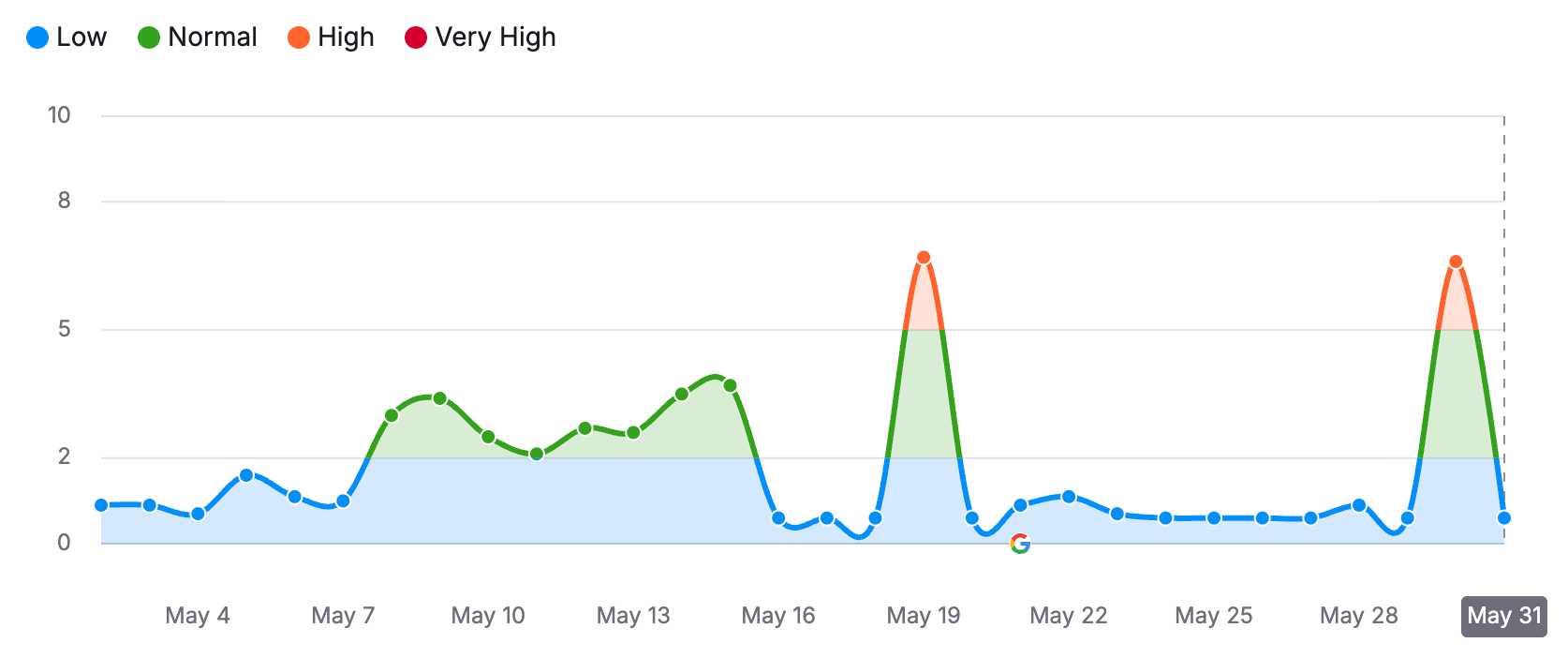
    Observations from the field. Almost immediately after the announcement, many of us in the industry felt its effects. By Saturday, May 23rd, significant ranking changes were noticeable, with continued fluctuations observed into the following week.

    I found a Semrush volatility chart illuminating, highlighting how dynamic the search landscape was over the 30-day period post-update.
    ```json
{
  "alt": "Line graph showing data trends with low to very high levels from May 1 to May 31.",
  "caption": "Explore the dynamic data trends from May, peaking dramatically mid and late month with varying levels from low to very high.",
  "description": "This line graph depicts data trends from May 1 to May 31, categorized as low (blue), normal (green), high (orange), and very high (red). The graph shows consistent low levels with significant spikes reaching high and very high levels around May 19 and May 31. This visualization provides a clear view of data fluctuations throughout the month, useful for analyzing trends and patterns."
}
```

    If you felt the impact. Google has reiterated there are no specific fixes if a site is negatively affected. Focus on the long-term goal of creating content that’s truly beneficial for users, not just search engines.

    For creators who feel their content isn’t ranking as desired, Google suggests reviewing their guidelines on creating helpful and reliable content.

    To expand your knowledge about these updates, Google provides detailed documentation on their core updates page.

    Reflecting on past core updates. Regular updates are the norm, with past changes in March, December, and June of 2025. These follow predictable patterns but carry unique impacts each time.

    Why this matters. If you’ve noticed changes to your site’s performance, it’s crucial to adapt by crafting quality content. In an era where AI interactiveness in search results is increasing, leading to potentially reduced site traffic, being in the top position remains indispensable.


    Inspired by this post on Search Engine Land.


    crushpress.ai community screenshot
  • Unveiling Google’s May 2026 Core Update: A New Era for SEO

    Unveiling Google’s May 2026 Core Update: A New Era for SEO

    Today, I’m excited to discuss the latest development in the world of search engines: Google has just rolled out the May 2026 core update. This follows the previous update we saw in March.

    I learned that the announcement was made by Google through their official status page. It’s a significant moment as it marks the second core update of the year after March’s update and the earlier Discover update in February.

    What Google is sharing. According to Google’s updated Search Status Dashboard, the rollout might take up to two weeks to complete. They also made a LinkedIn post explaining the aim is to enhance the visibility of relevant content.

    Core updates like these occur several times yearly. They bring broad, impactful changes to Google’s algorithms, and though they often aren’t announced, this one is attracted due attention.

    If you’ve noticed changes. Experiencing shifts in your site’s rankings? Google typically suggests focusing on producing quality content. Even if hit, it may not indicate problems with your pages.

    For further guidance, consider reviewing the questions Google advises if affected.

    ```json
{
  "alt": "The CapmatchOne logo with a gradient circle and bold text.",
  "caption": "Discover innovation with the CapmatchOne logo, featuring sleek typography and a modern gradient circle.",
  "description": "The CapmatchOne logo features bold, modern typography coupled with a gradient circle, symbolizing connection and innovation. The sleek design conveys a sense of progress and creativity. This image can be used for branding or promotional purposes, appealing to audiences interested in innovative solutions and forward-thinking designs."
}
```

    The main takeaway? Prioritize creating authentic and helpful content; let these guiding principles lead your SEO endeavors.

    For deeper insights, explore Google’s comprehensive documentation on core updates.

    Reflection on past updates. Looking back, we’ve seen similar significant updates like the March 2026 and December 2025 rollouts, each influencing search result dynamics differently. Will this update continue that trend? Only time will tell.

    Why this matters for us. Core updates can shake up the search engine landscape, causing noticeable volatility. It’s an opportunity for improved site visibility or a call to action to tweak your strategies if rankings dip. May this update bolster your SEO efforts, rewarding your dedication with increased organic traffic.


    Inspired by this post on Search Engine Land.

    crushpress.ai community screenshot
  • Discover Google’s Wild March Algorithm Update Impact

    Discover Google’s Wild March Algorithm Update Impact

    When the March 2026 Google core update hit, I couldn’t help but notice the dramatic shifts it created. Nearly 80% of the top search results were reshuffled. This update really boosted brands and official sites while leaving some aggregators scrambling to catch up.

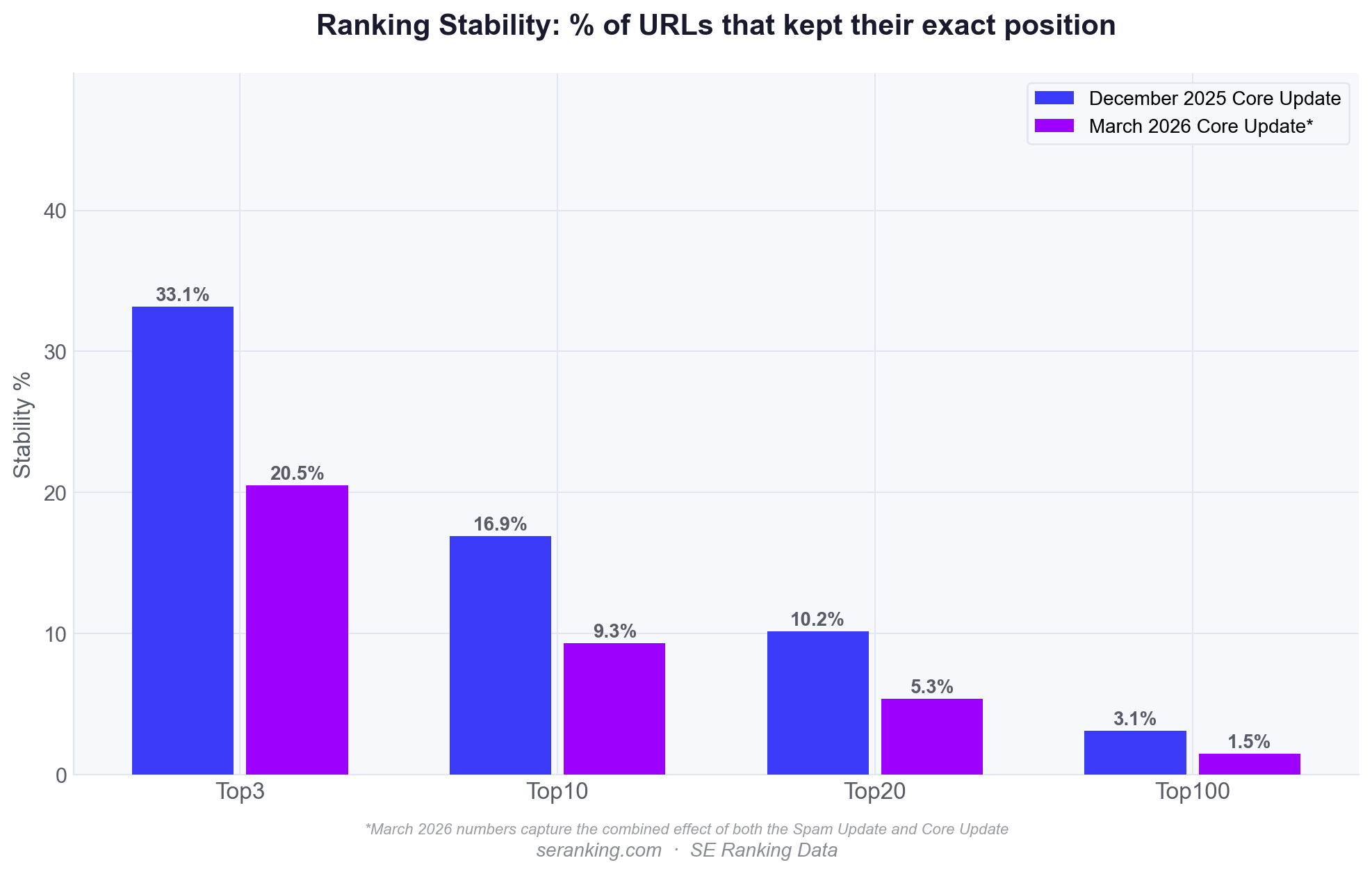
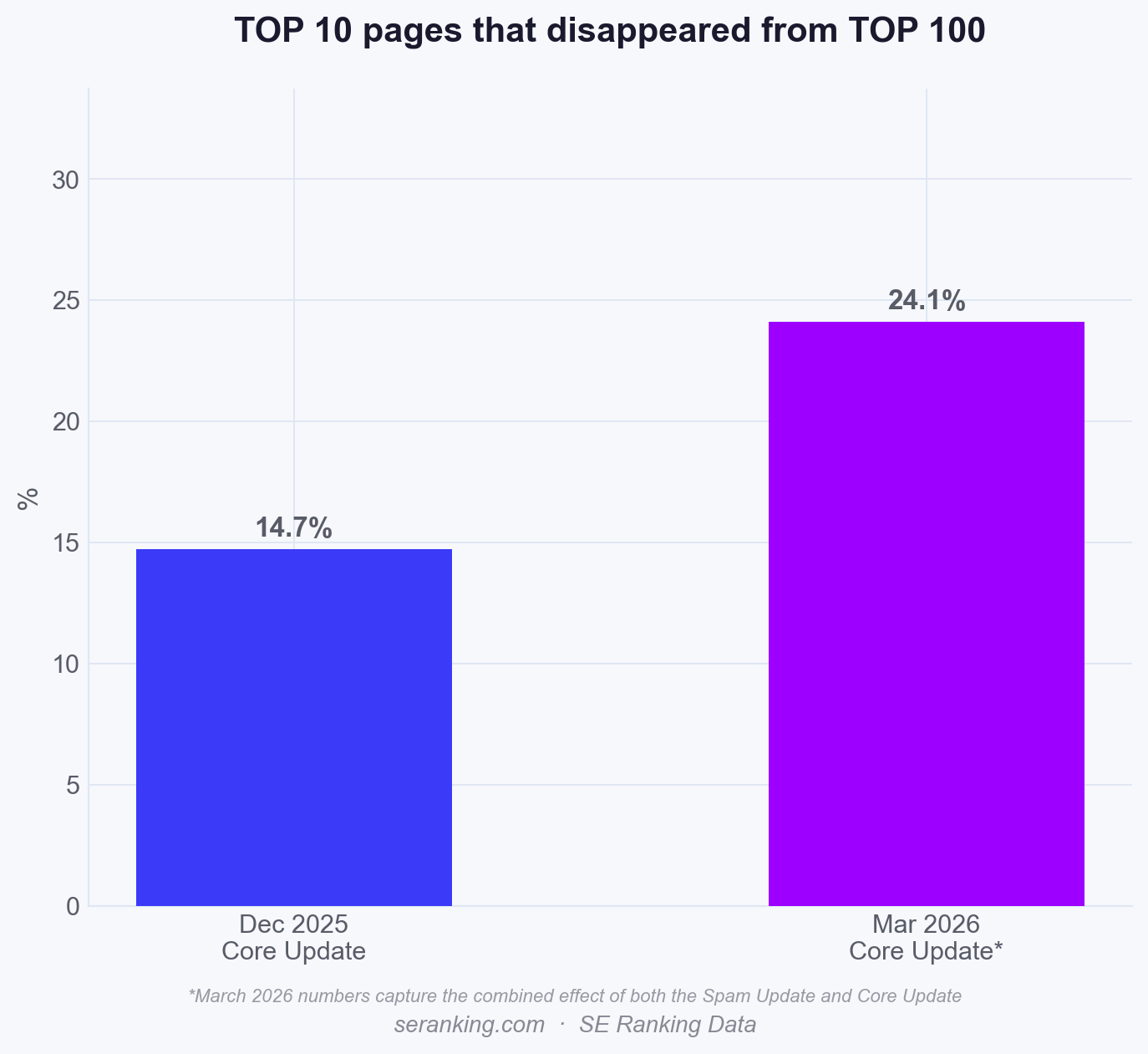
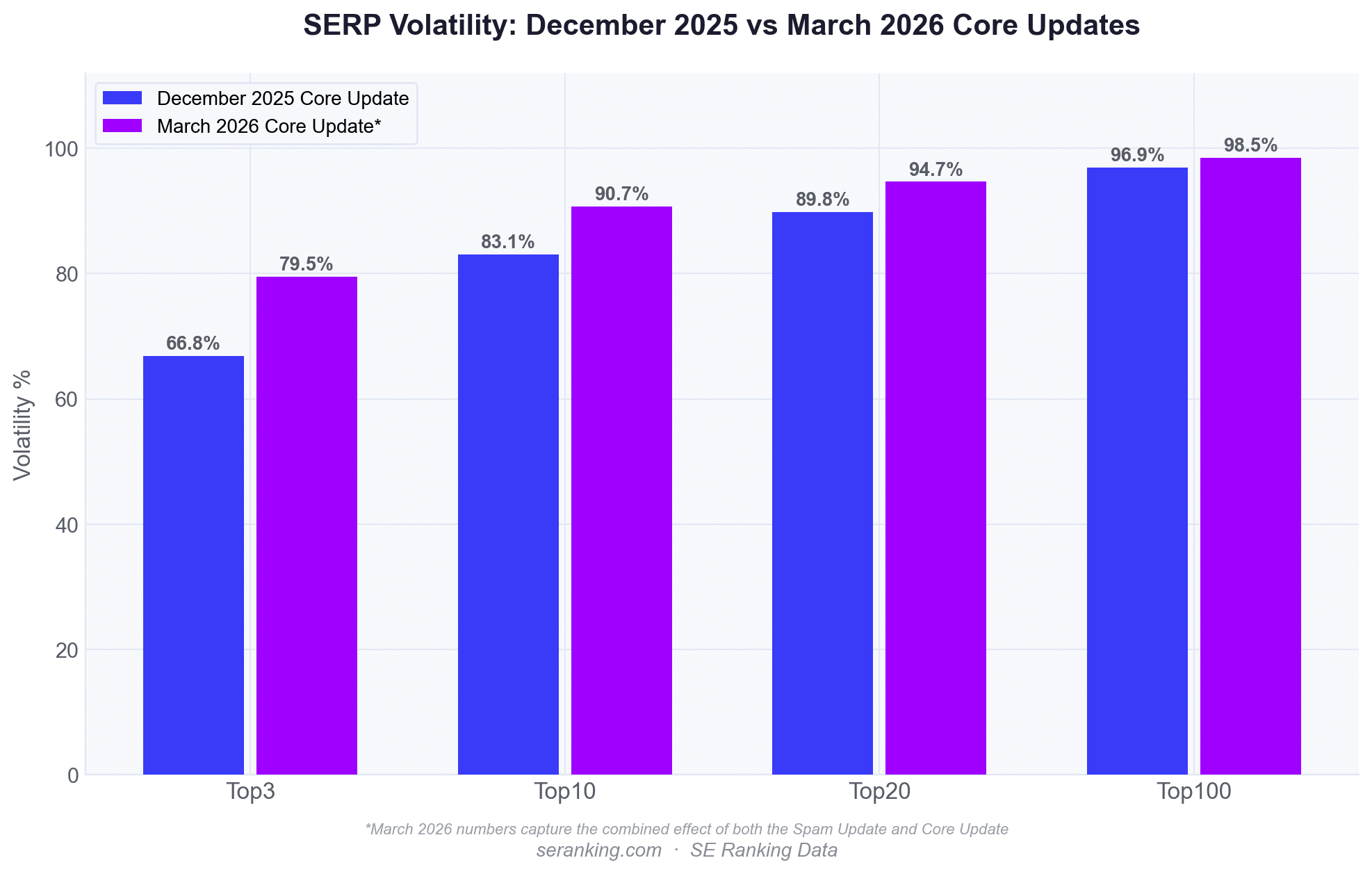
    I stumbled upon SE Ranking’s exclusive data, which highlighted how much more volatile the March update was compared to December 2025. Surprisingly, nearly one-in-four top-10 pages disappeared from the top 100 altogether!

    The data breakdown. I saw increased volatility across all ranking tiers.

    In the top 3, 79.5% of URLs changed positions, a notable jump from December’s 66.8%. Similarly, 90.7% shifted in the top 10, compared to 83.1% earlier.

    Stability? Well, it took a nosedive. Only 20.5% of top 3 URLs stayed put, down from 33.1%, and in the top 10, stability fell to 9.3%, down from 16.9%.

    ```json
{
  "alt": "Bar chart comparing SERP volatility for December 2025 and March 2026 Core Updates across various ranking segments.",
  "caption": "Explore the shifts in SERP volatility between December 2025 and March 2026 Core Updates, highlighting significant changes across top-ranking segments.",
  "description": "This bar chart illustrates the SERP volatility percentages for December 2025 and March 2026 Core Updates. The data compares volatility across four segments: Top 3, Top 10, Top 20, and Top 100. March 2026 data shows higher volatility, likely due to combined effects of spam and core updates. Blue bars represent December 2025, and purple bars represent March 2026, with corresponding volatility percentages, highlighting notable ranking shifts."
}
```

    Then there’s the churn: about 24.1% of pages in the top 10 vanished from the top 100, a significant rise from the 14.7% observed in December.

    It’s (sort of) complicated. As I delved into it, I realized the core update began just a day after a significant spam update concluded, which made pinpointing the source of changes tricky. However, most disruption seemed to stem from the core update, with the spam update adding more chaos.

    Diving deeper. Aleyda Solis’ analysis, using Sistrix data, revealed notable shifts from intermediary sites towards stronger, more authoritative sources. Sites that gained included:

    – Official and institutional sites.

    ```json
{
  "alt": "Bar chart showing ranking stability percentage for URLs after December 2025 and March 2026 Core Updates.",
  "caption": "Explore how URL ranking stability shifted between December 2025 and March 2026 Core Updates with this insightful bar chart.",
  "description": "This bar chart illustrates the percentage of URLs that maintained their exact ranking position in the top 3, top 10, top 20, and top 100 after the December 2025 and March 2026 Core Updates. The blue bars represent December 2025, while purple bars depict March 2026 updates. The data reveals significant changes in stability percentages across different ranking tiers, highlighting the impact of these updates on search rankings."
}
```

    – Specialist and niche sources.

    – Established brands.

    – Dominant platforms.

    On the flip side, aggregators, directories, and comparison sites saw declines.

    ```json
{
  "alt": "Bar graph comparing the percentage of top 10 pages disappearing from top 100 after core updates in December 2025 and March 2026.",
  "caption": "Significant shift: March 2026 core update sees 24.1% of top 10 pages vanish from top 100, a marked increase from 14.7% in December 2025.",
  "description": "This bar graph illustrates the impact of SEO core updates on the top 10 pages disappearing from the top 100 results. The December 2025 core update resulted in 14.7% of these pages dropping out, while the March 2026 update, which includes the effects of a Spam Update, saw a significant increase to 24.1%. The data highlights shifts in search engine rankings due to algorithm changes by SE Ranking, providing valuable insights for digital marketers."
}
```

    Winners and losers. Solis pointed out interesting shifts: dictionary and language sites fell while major platforms rose; job aggregators lost visibility, whereas employer-specific sites like USAJobs gained.

    Institutional sites saw fantastic gains on data-driven queries, with travel and real estate platforms shifting toward primary destinations. Health results were reordered with more emphasis on clinical and specialist sources.

    Interestingly, YouTube experienced the most substantial visibility drop in this dataset.

    Why it matters. From what I gathered, Google’s March update seems to have raised the ranking bar significantly. Strong brands and data-rich sources fared well, while intermediary sites are now more vulnerable.


    Inspired by this post on Search Engine Land.


    crushpress.ai community screenshot
  • Google Completes March 2026 Core Update: What’s Next for SEO?

    Google Completes March 2026 Core Update: What’s Next for SEO?

    I recently learned that Google’s first core update of 2026 has finally wrapped up after a 12-day rollout. Now, it’s time to understand its impact and refine our content strategies accordingly.

    Google confirmed the conclusion of this update at 06:12 PDT through their Search Status Dashboard. The changes began on March 27, affecting search rankings globally.

    Google described this as “a regular update designed to better surface relevant and satisfying content for searchers from all types of sites.”

    Initially, Google estimated that the update would take up to two weeks, starting on March 27 and concluding on April 8, lasting exactly 12 days and 4 hours.

    This update was the first of the year following the March 2026 spam update and the February 2026 Discover update. Core updates generally result in noticeable changes in search results due to broad alterations to Google’s ranking systems.

    If you’ve been affected by these changes, it’s important to remember Google’s standing advice: drops in rankings are not necessarily indicative of issues with your site.

    Recovery is often tied to future updates rather than immediate fixes. Try to focus on creating helpful, reliable, and people-first content.

    Google suggests referring to its comprehensive core update guidance and helpful content guidance for more insights on improving your site’s performance.

    With the rollout complete, I can now evaluate its impact with greater confidence. It’s time to analyze changes in rankings and traffic, pinpoint key changes, and adjust our content to align with what this update favors.

    Here’s a brief timeline of recent core updates for reference:

    The December 2025 core update started on Dec. 12 and ended on Dec. 29.

    The June 2025 core update started on June 30 and ended on July 17.

    The March 2025 core update began on Mar. 13 and concluded on Mar. 27.

    The December 2024 core update started on Dec. 12 and ended on Dec. 18.

    The November 2024 core update was on Nov. 11 and ended on Dec. 5.

    The August 2024 core update was on Aug. 15 and concluded on Sept. 3.

    The March 2024 core update started on March 5 and ended on April 19.


    Inspired by this post on Search Engine Land.

    crushpress.ai community screenshot
  • Unveiling Google’s March 2026 Core Update: What You Need to Know

    Unveiling Google’s March 2026 Core Update: What You Need to Know

    I just found out that Google has officially rolled out its much-anticipated March 2026 core update. This marks the inaugural core update of 2026, closely following the recent March 2026 spam update and February 2026 Discover update.

    Google made the announcement today, confirming the start of the rollout. They mentioned this process could stretch out over two weeks. I find it fascinating how these updates play a pivotal role in shaping search algorithms and ultimately influence how content is surfaced on Google.

    What Google is saying. In an update on their Search Status Dashboard, Google stated: “Released the March 2026 core update. The rollout may take up to 2 weeks to complete.” They also took to LinkedIn to emphasize that this is a regular update focused on showcasing relevant and satisfying content for searchers across various sites, reiterating the two-week completion window.

    About core updates. Google’s core updates happen several times annually and bring broad alterations to search algorithms and systems. While we expect some updates, they surprised us by adding some smaller, unannounced changes. The anticipation of frequent updates didn’t quite pan out as we thought.

    What to do if you are hit. If your site takes a hit from this core update, Google hasn’t provided any new guidance, but in previous instances, they’ve advised us to focus on creating helpful content. They stress there’s no specific action to swiftly rectify any negative impact; however, recovery could occur gradually with subsequent core updates.

    In summary, Google’s enduring guidance remains: create content for people, not just search engines. There’s nothing extraordinary creators need to do for this update as long as they provide gratifying content meant for users. If rankings slip, Google encourages looking through their helpful content guidelines.

    For comprehensive details about Google’s core updates, Google’s technical documentation provides in-depth information.

    Previous core updates. Let’s have a quick glance at some recent core updates. The December 2025 update began on December 11 and wrapped up by December 29. Similarly, the June 2025 update ran from June 30 to July 17. It’s intriguing to see these timelines and their impact on content visibility across Google’s domain.

    Why we care. Every core update brings a ripple effect to Google’s search results and rankings. I view these updates as opportunities—some of us might see a beneficial shift in rankings and search visibility, while others may need to adapt to new fluctuations. I sincerely hope this update benefits your efforts, boosting both traffic and conversions.


    Inspired by this post on Search Engine Land.

    crushpress.ai community screenshot