Tag: AI

  • Revamp Your Testing Strategy: Avoid Costly Mistakes in 2026

    Revamp Your Testing Strategy: Avoid Costly Mistakes in 2026

    If I hear “always be testing” one more time, I might just scream. It was excellent advice back in 2016, but in 2026, it’s more like watching your budget go up in flames.

    Back then, with flexible budgets and forgiving platforms, chaotic testing methods were all the rage. Launching multiple audience tests at once or swapping several creative variables was the norm. Why not, right?

    But times have changed. We’re dealing with tighter budgets, longer learning phases, and fragmented signals. Now, a poorly structured test can distort results for weeks, compounding your performance issues rapidly.

    Modern experimentation has become both costly and risky. Instead of sticking with outdated practices, why not leverage agentic AI? I’m not talking about using AI as a quick fix to churn out more ad variants—that’s just burning budgets faster.

    Instead, it’s time to employ agentic AI to craft smarter experimentation systems.

    The Real Cost of Unstructured Testing

    In the “always be testing” era, launching random tests was as common as Oprah giving away cars or Taylor Swift packing stadiums. We’d throw ideas around at the start of the week, hoping for a pleasant surprise by Friday.

    These days, the costs are astronomical. Algorithms thrive on stability. Research shows that ad sets stuck in learning phases have CPAs 20-40% higher than stable ones.

    Every significant change in creative, audience, or budget risks resetting this learning. Run overlapping tests that each cause resets? You’re essentially imposing a volatility tax on all your media spend.

    Then there’s the issue of waste. Most A/B tests yield no significant lift. If you’re not discerning about what tests to run, you’re wasting resources to confirm that most ideas are inconsequential. Without proper guardrails, “always be testing” spirals into “always be destabilizing.”

    From Random Tests to a Real Experimentation Engine

    We’re shifting focus now. It’s no longer about “AI, write me 10 new headlines.” It’s about “AI, craft the most efficient next experiment within our budget, considering our risk tolerance and current learning status.”

    This transition from just generating creatives to configuring a comprehensive experimentation framework is where the real advantage lies.

    Here’s a seven-step guide to evolve testing from a mere habit to a strategic powerhouse.

    Step 1: Set Hard Guardrails (Humans Draw the Lines)

    Before integrating AI into your testing strategy, establish constraints. Without these, AI has no context. With them, it becomes a disciplined strategic ally.

    Define and document five key constraints.

    • Budget allocation: Dedicate a fixed percentage, like 10%, exclusively for testing.
    • Maximum volatility: “Ensure no test increases CPA by more than 15% over five days.”
    • Learning phase sensitivity: Tailor reset criteria for each platform.
    • Leading indicators: Use early signals (CTR, engagement drops) to terminate underperforming tests before they impact significantly.
    • Brand risk: Define untested areas (like avoiding discount-heavy strategies in upscale markets).

    Maintain these in a single document (e.g., experimentation-guardrails.md) to guide AI in ensuring test viability. Your AI agent must refer to this before suggesting any tests.

    Step 2: Let AI Audit Your Experiment History

    Most teams have amassed data over time but don’t utilize it effectively. Feed your last six months of test results into an AI system to analyze changes, duration, performance shifts, statistical relevance, and platform resets.

    Have it spot patterns like:

    • Over-tested variables: Testing CTA buttons multiple times with negligible results? That’s not a useful variable.
    • False failures: Tests often fail due to lack of statistical significance. AI can verify statistical power and highlight inconclusive outcomes.
    • Volatility patterns: Your highest CPA weeks might not be market shifts or poor ads but the result of multiple simultaneous tests.

    This is the essence of AI as your analytical partner.

    Step 3: Write Real Hypotheses

    Instead of jumping straight from concept to launch, let AI enforce hypothesis discipline.

    • Weak: “Let’s test a new headline.”
    • Strong: “Emphasizing ‘faster time-to-value’ over ‘ease of use’ could boost demo requests by 10-15% among mid-market companies, as analysis shows speed is crucial for them.”

    Documenting hypotheses builds institutional knowledge. Later, when someone suggests retesting “speed messaging,” you’ll know past results and reasoning.

    Step 4: Risk-Score Every Proposed Test

    Budget and algorithm stability are limited. Your AI agent should evaluate proposed tests on five criteria, assigning a risk score.

    • Budget impact (e.g., less than 5% vs over 15%).
    • Algorithm disruption level (minor update vs new campaign).
    • Audience overlap.
    • Brand sensitivity.
    • Learning value.

    High risk with low learning potential? Drop it. Low risk with high potential? Proceed.

    Example: Testing a new positioning statement is risky in a paid campaign. Your AI might suggest verifying it with organic LinkedIn posts first. Low risk. High insight.

    Step 5: Pre-test With Synthetic Audiences

    This under-utilized AI application can simulate how varied personas might respond to messaging, saving real-world testing costs.

    Research by Stanford and Google DeepMind has shown digital agents match human survey responses with 85% accuracy and mimic social behavior with 98% accuracy.

    While not a replacement for actual data, synthetic audiences serve as a cost-effective early test.

    Define demographic archetypes such as the Skeptical CMO, Growth-focused VP, and margin-driven CFO, and test their responses to messaging.

    For example, you may find that phrases like “All-in-One” are seen negatively, prompting a shift to terms like ‘Integrated’.

    Step 6: Sequence Tests, Don’t Stack Them

    Tweaking audience, creative, and landing pages simultaneously teaches you nothing. Your AI should monitor campaigns to avoid conflicts and recommend proper test sequencing.

    A sensible approach is to:

    • Weeks 1-2: Audience testing.
    • Weeks 3-4: Creative tests with the proven audience.

    When unavoidable, establish clear control groups to maintain data integrity.

    Step 7: Build A Living Knowledge Base

    Treating tests as one-off experiments overlooks their value. Have AI summarize each test by assessing:

    • Success reasons.
    • The audience impacted.
    • Lift durability.
    • Variable interaction.

    Over time, this database can provide unmatched advantages. Anyone can access the same audience targeting, but few have a database of 100+ customer insights.

    The Bigger Shift: From Activity to Architecture

    “Always be testing” may have worked in a growth-centric era, but in 2026, success comes from “always be compounding intelligence.”

    Instead of maximizing tests, build a competitive edge through structured, risk-aware experiments that maintain algorithm stability and tie directly to revenue.

    When asked why you’re not testing more, show your testing architecture and confidently say, “We’re building an intelligence engine, not just running experiments.”

    Because intelligence compounds.


    Inspired by this post on Search Engine Land.


    crushpress.ai community screenshot
  • Boost Revenue with AI Max: Benefits and Challenges Uncovered

    Boost Revenue with AI Max: Benefits and Challenges Uncovered

    I’ve come across something intriguing in the world of digital advertising—Google’s AI Max. After *examining independent research and hearing straight from Google Ads Liaison, I’ve discovered some exciting yet intricate trade-offs with AI Max that you might want to know about. Let’s dive in!

    The first thing that caught my attention is how AI Max increases revenue while driving up costs. Mike Ryan from Smarter Ecommerce analyzed over 250 campaigns and noted this trend. It’s clear that while the outcomes can be promising, we still have a lot more testing to do.

    Why we care. Google’s introduction of AI Max isn’t just a minor upgrade. It’s a completely new approach to Search campaigns, shifting from traditional keyword syntax to intent matching. As someone who looks for growth opportunities, I see both potential benefits and risks involved in this shift.

    ```json
{
  "alt": "Bar chart displaying uplift and efficiency of AI Max, highlighting median changes in percentage for uplift, CPA, and ROAS.",
  "caption": "Discover the impact of AI Max with a median uplift of 13%, a 16% difference in CPA, and no change in ROAS, illustrating the efficiency of advanced AI solutions.",
  "description": "This image presents a bar chart titled 'Uplift and efficiency of AI Max', showcasing outcomes with median percentage changes. The chart features three bars representing metrics: a 13% median uplift, a 16% median percentage difference in cost per acquisition (CPA), and a 0% median difference in return on ad spend (ROAS). The chart, set against a purple background, is designed for analytical insights into AI efficiencies."
}
```

    By the numbers. After analyzing the data, here’s what emerged:

    • Median revenue increased by 13%
    • Median CPA rose by 16%
    • ROAS varied anywhere from a 42% increase to a 35% decrease

    According to Google, advertisers activating AI Max often notice a 14% boost in conversions or conversion value at nearly the same CPA or ROAS. If you’re relying on exact and phrase match keywords, this figure jumps to 27%.

    ```json
{
  "alt": "Table showing features of different Google advertising options including AI Max, PMAX, DSA, and Broad Match.",
  "caption": "Explore the features of Google advertising options: AI Max, PMAX, DSA, and Broad Match, compared across various targeting and reporting categories.",
  "description": "This image presents a table comparing features of different Google advertising options: AI Max, PMAX, DSA, and Broad Match. It categorizes features into targeting, creative, controls, and reporting. Each category includes specific capabilities, such as broad match keyword targeting and search term data, highlighting which options support each feature. The table uses checkmarks for visual clarity and includes branding by smec, offering insightful comparisons for marketers and advertisers. Keywords: Google ads, advertising options, PMAX, DSA, Broad Match."
}
```

    In my experience, turning on AI Max can feel like a gamble. While you might see an uplift in results, don’t expect a corresponding boost in efficiency, as Mike Ryan would agree.

    What AI Max actually is. Unlike previous iterations, Google is bringing PMax-style automation into traditional Search campaigns through AI Max. This transformation introduces three main features:

    ```json
{
  "alt": "Quote about moving DSA into AI Max by Google Product Ads Liaison, with a profile image.",
  "caption": "Discover the future of DSA and AI Max in search campaigns with insights from Google's Product Ads Liaison.",
  "description": "The image features a quote on a purple background discussing the integration of DSA into AI Max for search campaigns, aiming for parity with PMax Search. On the right is a portrait of a woman identified as Ginny Marvin, the Product Ads Liaison at Google. This image provides insights into Google's future goals for search campaign technology."
}
```
    • Search Term Matching, which includes broad match expansion and keywordless targeting
    • Text Customization through dynamic ad copy
    • Final URL Expansion for automated landing page selection

    Four pitfalls identified by Smarter Ecommerce:

    • Broad match cannibalization: Often recycling existing coverage instead of discovering new queries.
    • Competitor hijacking: In some cases, AI Max aggressively targets competitor brand terms, consuming significant Search impressions.
    • Reporting overload: The sheer volume of search term and ad combination reports can be overwhelming without automation.
    • Search Partner Network blowouts: Campaigns sometimes see disproportionate impressions on SPN with low conversion rates compared to standard Google Search.

    Between the lines. Interestingly, Google’s impressive 14% uplift statistic notably omits the retail sector—a critical exclusion for ecommerce advertisers, according to Mike Ryan. There’s also a nuanced irony here. If you’re already leveraging Broad Match, DSA, and PMax, you might be considering AI Max, but these accounts potentially benefit the least incrementally.

    ```json
{
  "alt": "Line graph showing the increase in search advertisers using AI Max from June 2025 to February 2026.",
  "caption": "Tracking the Rise: An upward line graph reveals the growth of search advertisers using AI Max over several months, showcasing a clear trend.",
  "description": "This image is a line graph illustrating the percentage of search accounts using AI Max from June 2025 to February 2026. The graph shows steady growth, climbing from under 5% in June 2025 to nearly 20% by February 2026. The data is based on 601 search accounts and highlights the increasing adoption of AI Max technology over time. The graph includes a yellow line to indicate the trend and is set against a purple background, with the source smec logo displayed at the bottom right."
}
```

    What’s next. I had a fascinating discussion with Google Ads Liaison Ginny Marvin, where she confirmed AI Max would eventually replace Dynamic Search Ads, although no official timeline exists. Historically, though, such changes take about a year post-announcement.

    Mike Ryan advises starting to incorporate AI Max’s keywordless features within your existing Search campaigns right now while gradually phasing out DSA instead of migrating to PMax.

    His take is one of cautious optimism. With about 16% of advertisers dipping their toes into AI Max, few have committed fully. If I could offer advice, it would be to begin small, audit thoroughly, and don’t let the fear of missing out on AI Overviews dictate your choices.

    The report. You can delve into The Ultimate Guide to AI Max for Google Search for more comprehensive insights.


    Inspired by this post on Search Engine Land.


    crushpress.ai community screenshot
  • Why AI Search Challenges Persist Across Industries: Insights and Solutions

    Why AI Search Challenges Persist Across Industries: Insights and Solutions

    For two decades, I’ve witnessed the web operate on a simple transaction: create content to fulfill needs, secure a high search ranking, attract traffic, and then monetize through various channels like products, services, or ads.

    However, zero-click answers and AI search are redefining this dynamic. The key question now is whether AI acknowledges you as a source and if that recognition translates into revenue.

    In my quest to understand this shift, I conducted over 200 AI visibility audits spanning ten industries.

    What I discovered was a pattern: most websites are easily scanned but rarely referenced. Surprisingly, those industries that depend most on organic traffic inadvertently make themselves the hardest to access.

    How I Conducted the Audit

    I executed 201 audits using a consistent rubric, generating an overall AI visibility score plus four detailed subscores:

    • Freshness.
    • Structure.
    • Authority and evidence.
    • Extractability.

    Spanning ten industries:

    • Coupons.
    • Affiliate reviews.
    • Travel booking.
    • Local directories.
    • Personal finance comparison.
    • Health information.
    • Legal directories.
    • Online courses.
    • Job boards.
    • Recipes.

    The dataset leaned heavily toward homepages, which are often more marketing-driven and less substantiated by concrete evidence.

    I also monitored access issues, finding that 38 of the 201 audits (18.9%) returned errors, indicating AI systems were obstructed or couldn’t reliably retrieve content.

    Eight more audits scored zero due to missing subscores, pointing to poor content extraction or problematic rendering styles that hinder accessibility.

    When analyzing score distributions, I focused on successful audits (163 sites) to differentiate between “unreachable” and “low quality.” Each industry’s error rate acted as a signal of whether AI systems could consistently use a site as a source.

    Where Industries Stand in AI Visibility

    The table below displays industry performance based on the audits conducted:

    RankIndustryError rateMedian overallMedian authorityMedian extractabilityAt risk
    1Travel booking and trip planning33.3%45.531.052.0High
    2Job boards and career marketplaces40.0%64.044.074.0High
    3Legal directories and lead gen35.0%63.044.074.0High
    4Coupons and deals20.0%62.036.074.0High
    5Local directories and lead gen5.3%64.038.074.0Medium
    6Online courses and learning marketplaces30.0%67.546.580.0Medium
    7Health info and symptom lookups15.0%69.052.080.0Low
    8Personal finance comparison5.0%67.052.078.0Low
    9Affiliate product reviews0.0%69.554.074.0Low
    10Recipes and cooking content5.0%75.055.581.5Low

    What the Audits Actually Revealed

    The findings illuminated that very few websites were consistently citation-friendly. Here are the critical insights:

    Access Issues Are Bigger Than Most Teams Realize

    A significant 18.9% of websites experienced access errors. In certain sectors, the issue intensified markedly: job boards (40%), legal directories (35%), travel booking (33%), and course marketplaces (30%).

    Therefore, a substantial section of these markets is essentially inaccessible to AI by default.

    Most Sites Are Caught in the Middle

    Looking at the 163 successful audits:

    • Average overall score: 61.6
    • Median overall score: 66
    • 70.6% fell into “Inconsistent visibility” (60 to 79)
    • Only 4.9% achieved “Strong foundation” (80 to 94)
    • 0% reached “Exceptional” (95 plus)

    Conclusion: Most brands aren’t constructed for predictable use and citation.

    The Gap Lies in Proof, Not Formatting

    Median sub-scores across the audits revealed:

    • Structure: 92
    • Extractability: 74
    • Authority and evidence: 48
    • Freshness: 45

    While pages are easily parsed, fewer justify citation. Key issues included:

    • 114 instances lacked a “last modified header,” demonstrating missing freshness.
    • Citations or outbound links were rare, appearing only 13 times.

    Rather than fearing traffic loss, the larger risk is exclusion from AI’s consideration set.

    Explore further: What AI Search Experiments Reveal About Attribution


    Industries disappear for specific reasons, fitting three failure modes:

    ```json
{
  "alt": "The CapmatchOne logo with a gradient circle and bold text.",
  "caption": "Discover innovation with the CapmatchOne logo, featuring sleek typography and a modern gradient circle.",
  "description": "The CapmatchOne logo features bold, modern typography coupled with a gradient circle, symbolizing connection and innovation. The sleek design conveys a sense of progress and creativity. This image can be used for branding or promotional purposes, appealing to audiences interested in innovative solutions and forward-thinking designs."
}
```

    1. Access Failure: AI Can’t Reliably Reach Your Content

    If AI agents can’t consistently access your material, they may bypass you, compensating with data from alternative sources.

    What access failure entails:

    • Strict bot protections or WAF rules treating agents as hostile entities.
    • App-like rendering prevents critical information from loading with initial HTML.
    • Barriers like popups or scripts impede content access.

    How this causes vanishing:

    • AI’s inability to extract makes citation impossible.
    • Other sources or AI-native solutions satisfy the user’s query instead.

    2. Trust Failure: AI Can Read You, But Can’t Justify Citing You

    Trust failure is subtle: your page is understandable, yet lacks authoritative proof for AI to source it.

    This was a common trend. In simple terms, the content reads well, but lacks defensibility.

    A telling observation compares page types:

    • Articles’ median authority score: 76
    • Homepages’ median authority score: 45

    A crisp homepage isn’t proof of authority. Citable proof resides in articles, policy pages, and similar in-depth resources.

    3. Utility Failure: Even If You’re Visible, the Click May Not Happen

    Utility failure is frustrating. You’re visible, potentially cited, but if your value is purely informative, AI creates an answer and the user never visits.

    Visibility dictates your role in discussions, but utility affects revenue realization.

    An applicable perception:

    • If your page answers the question, AI can replace it.
    • Where your product or service completes a user’s need, AI still requires you.

    Access issues leave you ignored, trust issues mean you’re bypassed, and utility failures get your content summarized.

    Why Certain Industries Are Vulnerable

    Examining access, trust, and utility together reveals why some industries appear particularly exposed.

    Categories repeatedly showing high risk in my findings shared three characteristics:

    • Inconsistent access due to blocking and extraction issues.
    • Content easily condensed into a single-answer format.
    • Limited business progression after the user obtains an answer.

    This is why travel booking, job boards, legal directories, and coupons emerged as the most exposed in my analysis.

    The larger implication is that while your business might thrive, your website might inadvertently be structured for exclusion.

    Explore deeper: Each AI Search Study Tells a Unique Story

    The Critical Point You Shouldn’t Overlook

    This transformation impacts some industries more than others. Websites sustained by high-volume searches face heightened zero-click risks. However, even in these realms, a singular focus on information is perilous.

    The misstep lies in equating AI search changes with ranking shifts; it’s truly an economic shift. From the audits, I realized:

    • Many industries render themselves inaccessible, ensuring models circumvent them.
    • Even when models interpret a page, lacking proof often prevents mentioning it.

    The danger is becoming invisible. Triumph doesn’t come from concealment; it comes from proving your worth and offering something indispensable post-answer.

    Trust combined with utility forms the new moat. Anything else remains outdated strategy.


    Inspired by this post on Search Engine Land.

    crushpress.ai community screenshot
  • Authenticity in PPC: Navigating AI-Driven Ad Creativity

    Authenticity in PPC: Navigating AI-Driven Ad Creativity

    As someone deeply involved in PPC advertising, I often wonder about the authenticity of our ads in this era dominated by AI creativity. With AI now capable of generating endless ad variations, the ethical landscape has dramatically shifted.

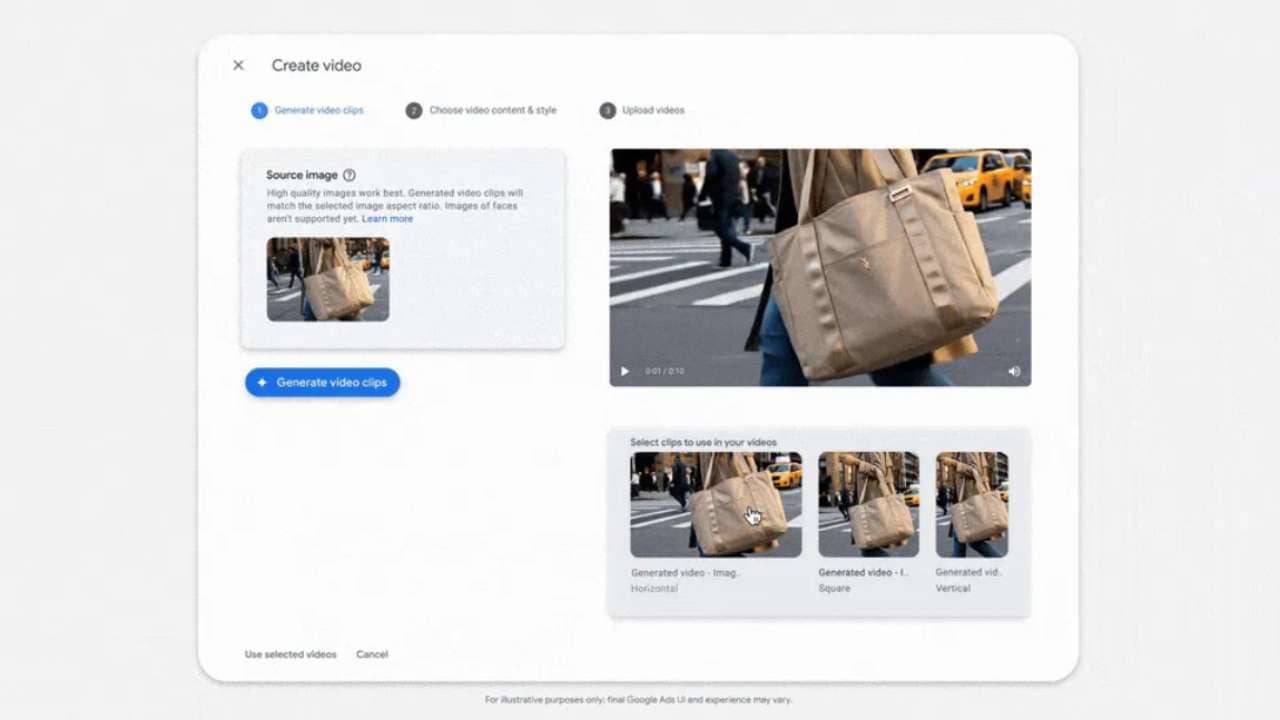
    PPC platforms today are hungry for assets. What used to be basic text ads and keyword bids has transformed into an AI-powered ecosystem. Tools in Google Ads can now remove backgrounds, create lifestyle scenes, and even generate synthetic humans within minutes. However, just because technology permits these capabilities doesn’t mean every brand should fully adopt them.

    These advancements force us, as PPC advertisers, to confront some tough questions:

  • Do we compromise authenticity for the sake of efficiency?
  • What should be the extent of AI’s role in our brand’s operations?
  • Would our clients maintain trust in us if they were aware of how we use AI in our processes?
  • ```json
{
  "alt": "The CapmatchOne logo with a gradient circle and bold text.",
  "caption": "Discover innovation with the CapmatchOne logo, featuring sleek typography and a modern gradient circle.",
  "description": "The CapmatchOne logo features bold, modern typography coupled with a gradient circle, symbolizing connection and innovation. The sleek design conveys a sense of progress and creativity. This image can be used for branding or promotional purposes, appealing to audiences interested in innovative solutions and forward-thinking designs."
}
```

    To navigate these decisions, a brand integrity hierarchy can be valuable. This four-level framework helps gauge how much AI manipulation your brand, industry, and audience can accept.

    Why PPC Demands Its Own AI Ethics Framework

    Current AI ethics guidelines don’t take into account the unique dynamics of paid search. PPC isn’t merely a brand storytelling channel; it’s a high-volume, fast-paced system requiring constant image production across various audiences, formats, and placements.

    ```json
{
  "alt": "Social media thread discussing ethical concerns of AI in advertising with various user comments.",
  "caption": "A lively discussion unfolds on social media about the ethical implications of AI in advertising, highlighting concerns over false advertising and the authenticity of AI-generated images.",
  "description": "This image shows a social media thread where users engage in a discussion about the ethical concerns surrounding AI-created images in advertising. The original post questions the potential issues, such as false advertising, with AI-generated visuals. User comments include concerns over the difference between fantasy and reality, and the ethical practices of AI tools, particularly Midjourney. The thread emphasizes the impact of AI on consumer trust and advertising practices."
}
```

    I face the challenge of creating fresh lifestyle images at a pace that traditional creative workflows simply can’t match. Simultaneously, platforms like Google and Bing enforce strict policies around accurate product representation, especially within Merchant Center, where even minor visual inaccuracies can lead to disapprovals or account risks.

    The pressure from platforms is immense. Google Ads, for instance, has introduced tools like Nano Banana Pro, making Asset Studio an AI co-creation environment. While these tools are promoted as ways to enhance performance, they also push us toward using AI-generated backgrounds and lifestyle images.

    Most brands can’t afford the necessary photoshoots to keep up with such demand, yet the constant need for images across channels is unavoidable if you want to remain competitive. This mix of policy risk, creative pressure, and platform-pushed tools is distinct to PPC, underscoring why the industry needs its own AI ethics framework.


    Inspired by this post on Search Engine Land.

    crushpress.ai community screenshot
  • Google Unveils Non-Skip VRC Ads for Global YouTube Reach

    Google Unveils Non-Skip VRC Ads for Global YouTube Reach

    I’ve recently discovered some thrilling news from Google — they’ve globally launched VRC Non-Skip ads, a fantastic way for advertisers to achieve AI-optimized, non-skippable reach on YouTube’s connected TV screens. This development is truly exciting!

    Google is broadening its horizons with VRC Non-Skip ads, enabling brands to effectively connect with TV audiences on YouTube. As someone passionate about advertising strategies, I’m keen to explore how brands can leverage this opportunity.

    What’s happening? VRC (Video Reach Campaign) Non-Skip ads are now accessible globally through Google Ads and Display & Video 360. Crafted specifically for the living room experience, these ads ensure seamless, non-skippable placements designed for connected TV (CTV) screens.

    Why we care. Considering that YouTube has been the top streaming platform in the U.S. for three years straight, the TV screen is now a pivotal arena for brand investments. With non-skippable ad delivery, advertisers can make certain their complete message is absorbed in a premium, laid-back viewing environment.

    AI in the mix. Google AI is here to dynamically optimize across various formats such as 6-second bumper ads, 15-second standard spots, and 30-second CTV-exclusive non-skippable formats. Instead of manually adjusting budgets per format, I’m finding it fascinating that brands can trust AI to allocate impressions optimally for maximum reach and efficiency.

    The bottom line. For advertisers like myself seeking guaranteed full-message delivery on the largest screen in the home, AI now offers a simplified path. Utilizing AI-driven solutions ensures maximum reach and efficiency across non-skippable formats without the hassle of manual management.


    Inspired by this post on Search Engine Land.


    crushpress.ai community screenshot
  • Unlock Google’s Universal Commerce Protocol for Seamless AI Checkout

    Unlock Google’s Universal Commerce Protocol for Seamless AI Checkout

    I came across an interesting update from Google, which released a new help page that explains its Universal Commerce Protocol (UCP). This guidance provides merchants with detailed directions on how checkout processes work across Google’s platforms, powered by AI-driven enhancements.

    Why It Matters. Google’s documentation illuminates how UCP and its associated checkout feature enable a native “Buy” button, which takes the transaction straight onto Google’s surfaces while still letting merchants stay as the seller of record. To leverage this feature, merchants need to implement the native_commerce attribute in the Merchant Center.

    Transactions flow through stored Google Wallet credentials, and payment processors are required to support Google Pay tokens. This seamless integration is designed to enhance the user experience.

    The Value for Merchants. Initially part of Google’s push for agentic shopping, UCP was later confirmed as a live feature in Merchant Center, promising to streamline the path from product discovery to purchase. By embedding checkout directly on Google surfaces, it could potentially uplift conversion rates, particularly in AI-enhanced experiences like Gemini and AI Mode.

    Additionally, the new documentation provides clarity on what’s needed for implementation, aiding merchants to adjust their feeds and payment systems to perfectly align with Google’s evolving commerce ecosystem driven by AI.

    The Larger Context. By centralizing the checkout process while maintaining merchants’ positions as the sellers of record, Google is making it easier for shoppers navigating AI-powered commerce. This strategic move by Google also tightens its grip over the transaction layer.

    Key Takeaway. With this fresh documentation, the concept of UCP transitions to an actionable playbook, marking a significant step for AI-driven, on-Google checkout as an integral element of Google’s commerce approach.

    Initial Discovery. This helpful document first came to light thanks to Hana Kobzova, founder of PPC News Feed.

    Further Reading. For a deeper dive, explore the full details about the Universal Commerce Protocol (UCP) and UCP-powered checkout on Google.


    Inspired by this post on Search Engine Land.

    crushpress.ai community screenshot
  • Transforming Ecommerce: Google’s New AI Commerce Strategies

    Transforming Ecommerce: Google’s New AI Commerce Strategies

    For years, I relied on a straightforward ecommerce model: Google attracted visitors to my site, where transactions were completed. Success was measured through rankings, clicks, and conversion rates. That scenario has drastically changed.

    With Google’s Universal Commerce Protocol (UCP) combined with AI Mode, it’s possible for Google to uncover, evaluate, and finalize purchases within its AI framework. The dynamic is shifting from merely directing traffic to facilitating transactions. Now, the visibility of my products hinges on whether Google’s AI includes my data in its algorithm.

    ```json
{
  "alt": "Illustration of a woman in a yellow dress using a smartphone, surrounded by shopping notifications and icons.",
  "caption": "Amidst digital notifications, a tech-savvy shopper in a vibrant yellow dress navigates her smartphone, embracing the seamless online shopping experience.",
  "description": "This illustration depicts a stylish woman in a yellow dress holding a smartphone, indicative of modern digital engagement. She is surrounded by various shopping-related notifications such as a price drop alert and product recommendations, portraying an integrated online shopping ecosystem. Icons for voice input and shopping assistance hint at tech-enhanced convenience. The visuals include gift boxes, adding a festive shopping element. Keywords: digital shopping, mobile user, online notifications, tech-savvy, digital illustration."
}
```

    When AI can recommend and close sales, the optimization challenge moves even farther upstream. The vital question now isn’t just about my ranking; it’s about whether my products get chosen by AI.

    ```json
{
  "alt": "Diagram showing the Universal Commerce Protocol connecting various companies like Google, Etsy, Shopify, Wayfair, and more.",
  "caption": "The Universal Commerce Protocol links major platforms like Google and Etsy, streamlining interactions and enhancing digital commerce for businesses worldwide.",
  "description": "This image illustrates the Universal Commerce Protocol at the center, with arrows connecting it to Google, Etsy, Shopify, Wayfair, Target, Walmart, and more. The connections symbolize integration and centralized data management, optimizing online retail operations. Key players like Google, Google AI, and financial services like Stripe and PayPal highlight the protocol's extensive reach. Keywords: universal commerce protocol, integration, e-commerce, retail, platforms, digital commerce."
}
```

    So, let’s explore these changes and what strategies those involved in SEO and AI optimization should adopt next.

    ```json
{
  "alt": "The CapmatchOne logo with a gradient circle and bold text.",
  "caption": "Discover innovation with the CapmatchOne logo, featuring sleek typography and a modern gradient circle.",
  "description": "The CapmatchOne logo features bold, modern typography coupled with a gradient circle, symbolizing connection and innovation. The sleek design conveys a sense of progress and creativity. This image can be used for branding or promotional purposes, appealing to audiences interested in innovative solutions and forward-thinking designs."
}
```

    On January 11, Google introduced the Universal Commerce Protocol, or UCP. This innovative open standard empowers AI agents to explore, assess, recommend, and purchase products seamlessly across the web within Google’s own AI settings.

    ```json
{
  "alt": "Candle attributes and AI-driven use cases for meditation and pet odor removal.",
  "caption": "Discover the perfect candle with traditional attributes like apricot scent and innovative AI-driven use cases for meditation and pet odor removal.",
  "description": "This image compares traditional candle attributes, such as apricot scent and glass jar packaging, with AI-driven use cases like meditation enhancement and pet odor removal. The left panel displays filtering options based on scent, color, size, and rating, demonstrating a selection with high customer ratings. The right panel features an illustration of a meditating person and a content cat. Useful for showcasing candle features and appealing to different consumer needs."
}
```

    What caught my attention was not just UCP itself but the entire ecosystem Google devised around it. UCP was created in collaboration with platforms like Shopify, Etsy, Wayfair, Target, and Walmart, with pre-existing payment networks incorporated. This level of planning signifies a long-term vision, rather than a fleeting experiment.

    ```json
{
  "alt": "Three smartphone screens showing a suitcase purchase summary and checkout process.",
  "caption": "Streamlined shopping: Easily purchase your travel suitcase with a simple step-by-step checkout experience.",
  "description": "This image displays a series of three smartphone screens illustrating the process of purchasing a Monos Carry-On Pro Suitcase. The first screen shows the product listing with details such as customer rating and price. The second screen features the checkout page with order summary, payment method, and delivery information. The third screen confirms the order completion, detailing the payment and delivery information. This offers a seamless and user-friendly shopping experience, emphasizing ease of navigation and secure payment options."
}
```

    Simultaneously, Google introduced three platform-level features that make this transformation tangible in everyday shopping experiences:

    ```json
{
  "alt": "Online jewelry store displaying various wedding rings with prices and ratings.",
  "caption": "Explore stunning wedding rings at our online jewelry store. Find your perfect ring with options for every style and budget, all rated by fellow shoppers.",
  "description": "The image shows an online jewelry store webpage showcasing a collection of wedding rings. Products are sorted by best selling and include details such as price, star ratings, and customer reviews. The sidebar offers filters by price, metal, stone, style, and rating to help refine the selection. Perfect for users looking to purchase wedding rings with ease and convenience."
}
```
    • Business Agent: Brands now have an AI-powered ambassador in Search and the Gemini app. Shoppers can inquire about products, compare choices, and receive brand-specific advice without the necessity to visit a separate site.
    • Direct Offers: This feature allows merchants to incorporate exclusive discounts directly into Google’s AI Mode, embedding promotions within the recommendation engine itself.
    • Checkout in AI Mode: Google now facilitates purchases directly within its interface, transitioning from a traffic broker to an integral transaction facilitator.
    ```json
{
  "alt": "Google Merchant Center automation options for product data optimizations.",
  "caption": "Explore how Google's automation can streamline product data updates in your online store, ensuring competitive pricing, availability, and condition management.",
  "description": "This image displays the automation options in Google Merchant Center for optimizing product data. It shows areas like price, availability, and condition updates that Google can automatically adjust to match your online store. The interface provides options to 'Turn on' and 'View details' for each optimization, allowing users to manage their product data effectively. Keywords: Google Merchant Center, product data optimization, automation."
}
```

    What’s even more remarkable is how Google transforms routine conversations into commerce. Instead of waiting for users to type product-related queries, Gemini can respond to natural language prompts like “help me plan a camping trip” or “what will get wine out of my couch” by sourcing up-to-date inventory, pricing, and availability from retailers, completing the transaction in the same interaction.

    Dig deeper: Are we ready for the agentic web?

    In the era where AI navigates the purchasing journey, brands must compete within the AI’s recommendation system, not just in search results.

    Throughout my career, ecommerce consistently functioned on a model where search engines, ads, and marketplaces aimed to divert users to my site, so it could handle the sales. UCP reshapes that perception entirely.

    Now, AI takes charge of the complete journey. It understands the customer’s needs, assesses different options, and can even finalize the purchase. Under this model, the quality of my website’s homepage or category page matters less if AI doesn’t prioritize my product at the outset.

    Candle traditional attributes and AI-driven use cases

    Inspired by this post on Search Engine Land.

    crushpress.ai community screenshot
  • Join Leaders at ‘Engage with SAP Online’ to Elevate Customer Engagement

    Join Leaders at ‘Engage with SAP Online’ to Elevate Customer Engagement

    I often find myself pondering the vital question every marketing leader should consider: How robust are our customer relationships? Not just the campaigns or channels but the genuine connections we forge with our customers.

    This question is more challenging than it seems. Over the past two decades, we’ve focused on building around specific channels.

    Every channel like email, social media, or ecommerce had its own team, its own metrics, and its own measure of success. From our perspective, it appeared as progress—after all, each team reached its goals.

    Yet, customers felt like they were dealing with multiple companies under one logo. Imagine receiving a heartfelt ‘We miss you!’ email the day after a frustrating customer support experience. Sales might not realize a demo had already been seen. In-store purchases could go unnoticed by the ecommerce team. There’s simply no unified memory or relationship there.

    On March 11, 2026, top minds in marketing, customer experience, and engagement, including those from BMW, Essity, and Sinch, will converge at Engage with SAP Online. This free, virtual event is essential for leaders ready to shift from isolated channel optimization to holistic customer relationship building.

    Who’s Speaking and Why It Matters

    The event kicks off with Sara Richter of SAP Engagement Cloud sharing insights from the SAP Engagement Index, a global study. But the real highlight is the presentations that follow.

    Mark Ritson, known for his no-nonsense marketing approach, will deliver the keynote on the trends reshaping customer experience. Expect a sharp analysis on the fast-changing customer behaviors and why loyalty needs to transcend marketing.

    Following Ritson, Jutta Richter from BMW will discuss modern customer journeys and brand relevance. Daniele Tedesco from Essity and Venky Naravulu from Sinch will share practical lessons on AI and connected systems.

    The discussions will focus on what’s effective, what’s not, and actionable steps to enhance engagement.

    The Backdrop: Why This Conversation is Urgent

    This event is critical as there’s a growing disconnect between customer expectations and organizational delivery capabilities, as highlighted by the SAP Engagement Index.

    SAP calls this the Engagement Divide, a widening gap that underscores the urgent need for a new operational model focused more on relationship management rather than isolated channel success.

    As businesses navigate this challenging terrain, the speakers at Engage with SAP Online are set to provide the strategies needed to organize around customer relationships effectively.

    Engage with SAP Online

    Date: March 11, 2026

    Time: 9:00 AM ET | 1:00 PM GMT | 2:00 PM CET

    Format: Free, virtual, half-day event Register now!


    Inspired by this post on Search Engine Land.

    crushpress.ai community screenshot
  • Boost Your eCommerce Success with AI Answer Engine Optimization

    Boost Your eCommerce Success with AI Answer Engine Optimization

    I recently discovered the transformative power of optimizing my eCommerce brand for AI answer engines. Engaging with platforms like ChatGPT and Google’s AI Overview can significantly enhance my brand’s visibility, trust, and ultimately drive more sales.

    Understanding how to tailor my content for these AI platforms ensures that my products appear as helpful, relevant answers to potential customers’ inquiries. It’s about more than just visibility; it’s about building a credible connection with my audience.

    By weaving in the best practices of AI Search and AI Optimization, I’ve begun to see a noticeable increase in brand engagement and authority. It’s a journey worth exploring for anyone looking to stay ahead in the competitive eCommerce landscape.


    Inspired by this post on HiGoodie Blog.


    crushpress.ai community screenshot
  • ChatGPT Surpasses 900 Million Weekly Users: What You Should Know

    ChatGPT Surpasses 900 Million Weekly Users: What You Should Know

    I’ve recently learned that ChatGPT has hit an extraordinary milestone: over 900 million active users every week. OpenAI proudly shared this achievement for the first time, and it’s nothing short of remarkable.

    Why It’s Significant. Our online habits are evolving, extending beyond conventional search methods. With so many users turning to ChatGPT weekly, it’s clear that interactions and discoveries are shifting to AI platforms. However, as users, we often still seek reassurance from traditional search engines.

    The Facts. OpenAI didn’t just stop at sharing user figures; they also unveiled a substantial $110 billion funding round. Additionally, they’ve gained over 50 million consumer subscribers and more than 9 million businesses are paying clients.

    What This Means for Us. ChatGPT isn’t just a chat tool; it’s a competitive landscape where search, intent, and brand visibility meet. Understanding how our content appears in AI-driven results is crucial for boosting conversions, even if these interactions aren’t traditional searches.

    OpenAI’s Announcement. For further insights, you can check out OpenAI’s official statement on Scaling AI for everyone.


    Inspired by this post on Search Engine Land.

    crushpress.ai community screenshot