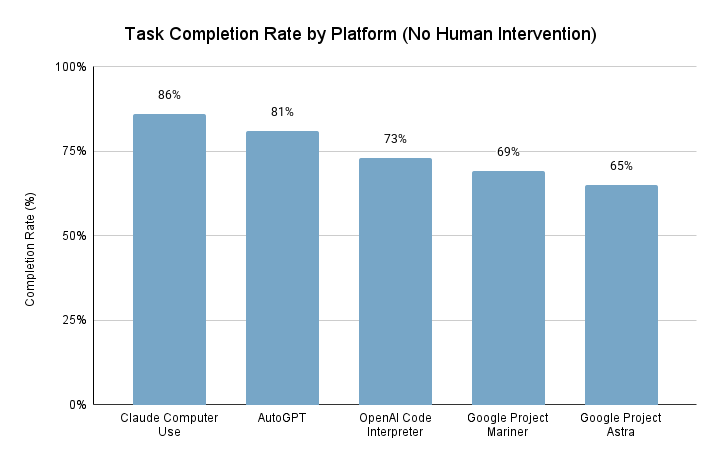
Recently, I had the opportunity to dive into an intriguing research study conducted by our agency, exploring the dynamic world of autonomous AI agents. The study sheds light on their diverse use cases, fascinating usage statistics, and a balanced view of their strengths and weaknesses.
As AI continues to evolve, I’m excited to see how these autonomous agents are transforming various sectors by performing tasks with remarkable efficiency and minimal human intervention. The findings paint a promising picture of technological advancement and its potential impact.
You can rank well in Google and still disappear when a buyer asks ChatGPT which provider, product, or approach fits their situation. The gap is usually not a missing AI trick. It is a content architecture problem: your site does not make the right entity, claim, evidence, and conditions easy to assemble into a reliable answer.
If you need ChatGPT visibility, work backward from the answer you want your brand to be eligible for. You will need clear positioning, evidence-bearing pages, consistent information beyond your website, and a measurement process based on real prompts rather than vanity checks.
Treat ChatGPT visibility as eligibility, not a fixed ranking
Traditional SEO asks whether a page can be discovered, understood, and surfaced for a query. ChatGPT optimization adds a different question: can information about your business be used to construct a useful answer for the situation described in the prompt?
That distinction changes the target. You are not trying to occupy a permanent position for a short keyword. You are trying to make your brand eligible for relevant ChatGPT recommendations when the user’s needs, constraints, and stage of decision-making match what you actually offer.
ChatGPT optimization sits inside generative-engine optimization, or GEO. GEO covers visibility across a broader set of generative AI search channels, so the durable assets are not tricks tied to a single interface. They are clear entities, answerable content, supportable claims, machine-readable relationships, and credible corroboration.
SEO establishes discoverability. Pages still need coherent site architecture, internal links, accessible content, and a clear purpose.
AEO improves answer extraction. Direct definitions, concise explanations, and well-structured question-and-answer material make a page easier to use when a system needs a specific answer.
GEO improves selection and representation. It connects your entity to the topics, audiences, use cases, qualifications, and evidence that determine whether mentioning you would help the user.
You do not need to choose between these disciplines. A page that is difficult to discover is a weak GEO asset, while a discoverable page full of vague claims gives a generative system little reliable material to use.
Define each target as a decision, not a keyword. A useful internal statement looks like this: For an audience with a particular job and set of constraints, this brand or offering is a credible option because of this verifiable reason. If your team cannot complete that sentence without using empty words such as leading, innovative, or best, the positioning is not ready for optimization.
Build a claim-and-evidence map before editing content
The fastest way to waste GEO work is to start by rewriting headings or adding schema. Begin with the decisions your audience is trying to make and the claims required to support those decisions.
Collect the decision questions. Pull them from sales calls, support conversations, on-site search, keyword research, community discussions, and competitor comparisons. Separate discovery questions from evaluation, validation, and implementation questions.
Identify the intended answer. State what a useful, accurate response should help the user understand. Do not insert your brand into a question when it would not genuinely belong in the answer.
List the required claims. Include identity, category, audience, capabilities, differentiators, prerequisites, limitations, availability, and fit. Use only the fields that affect the decision.
Attach evidence to each meaningful claim. Evidence may live in product documentation, policies, methodology pages, qualified author profiles, case material, public records, or clearly explained first-party data. A claim without support should be narrowed, qualified, or removed.
Assign a canonical page. Decide where each claim is maintained. Other pages may summarize it, but they should link back to the page responsible for the complete and current explanation.
Record conditions and exclusions. If an offering fits only certain markets, users, integrations, budgets, or operating models, say so. Suitability becomes more credible when the boundaries are visible.
Name the owner and review trigger. Pricing changes, product changes, policy changes, rebranding, acquisitions, and new market coverage can all make previously accurate content misleading. Give someone responsibility for updating the affected claims.
Your working map can use the fields decision question, intended answer, entity, claim, evidence, canonical page, conditions, and owner. That is enough to expose most gaps. A spreadsheet is useful; a complicated platform is not required.
Match the strength of the claim to the strength of the proof
Claims become harder to support as they move from identity to superiority. Saying what a product is requires clear first-party information. Saying what it supports requires documentation. Saying who it is suitable for requires explicit criteria. Saying it produces an outcome requires evidence that actually measures that outcome. Saying it is the best option requires a defensible comparison across a defined market and set of criteria.
Many brands skip directly to the strongest language because it sounds persuasive. For GEO, that creates a verification problem. Replace an unsupported superlative with a bounded, decision-relevant fact. Built for distributed finance teams that need approval controls is more usable than the world’s most advanced finance platform when the former is true and documented.
Do not begin with structured data. Schema can describe a relationship that exists in the visible content, but it cannot supply missing proof or rescue confused positioning. Create the claim map first, improve the canonical pages next, and encode the resulting meaning afterward.
Write pages ChatGPT can use without filling in gaps
A useful GEO page reduces the amount of interpretation required to answer a question accurately. It names the subject, gives the answer early, explains why the answer holds, and makes its limits visible.
Lead with a bounded answer
Put the direct response near the beginning of the relevant section. The answer should identify the audience, situation, conclusion, and important condition. Follow it with evidence and explanation.
A weak opening says that your solution transforms an industry. A useful opening says what the solution is, whom it serves, what job it performs, and when it is not the right fit. The second version gives ChatGPT material it can use in a recommendation without inventing the missing context.
Use this editorial pattern for important sections:
Answer: State the conclusion in plain language.
Scope: Name the audience, market, use case, or prerequisite to which it applies.
Reason: Explain the mechanism, capability, or distinction behind the conclusion.
Evidence: Link to the documentation, policy, methodology, or substantiated example that supports it.
Boundary: State an exception, limitation, or alternative when it would change the recommendation.
Next action: Tell the reader what to inspect, compare, configure, or ask before deciding.
Make the entity unmistakable
Use a stable canonical name for the organization, each product, and each service. Make the relationship among them explicit. If a product was renamed, if a business operates under another legal name, or if similarly named entities exist, publish the clarification on a canonical identity page rather than expecting a chatbot to reconcile scattered clues.
A compact identity statement can follow this structure: [Brand] is a [category] for [audience]. It provides [documented capabilities] in [applicable markets]. [Product] is its offering for [specific use case]. Treat this as a factual anchor, not a slogan.
Check the same facts wherever they appear: the About page, product pages, author profiles, contact information, support documentation, marketplace listings, social profiles, and relevant third-party directories. Natural wording can vary. Core facts should not.
Keep proof close to the claim
A citation is useful only when it supports the exact statement beside it. Linking a broad homepage after a precise performance claim does not make that claim verifiable. Send the reader to the documentation, methodology, policy, or data that carries the relevant detail.
Show dates where freshness affects the decision. Identify authors where expertise matters. Explain how a comparison was constructed. Distinguish measured outcomes from targets, projections, and testimonials. If evidence has important limits, keep those limits beside the result rather than hiding them in a general disclaimer.
Publish comparisons that support a real decision
Comparison content is most useful when it defines the choice before declaring a winner. Name the intended user, the job to be done, prerequisites, meaningful criteria, tradeoffs, and situations in which each option is appropriate. A table works when those fields genuinely apply across every option. Prose is better when the differences require context.
Do not manufacture weaknesses for competitors or create pages that differ only by replacing a company name. Thin comparison pages add little information and make your recommendation look predetermined. A credible comparison can acknowledge that another option fits a different situation better.
Use JSON-LD to confirm the visible meaning
Choose schema types that match the actual page and entity. An identity page may describe an Organization. An editorial page may use Article with a clearly identified Person as author. An offering may warrant Product or Service, depending on what it is. BreadcrumbList can describe site hierarchy, while FAQPage should be reserved for a page that visibly contains the corresponding questions and answers.
Use stable page URLs as entity identifiers where appropriate, connect related entities consistently, and ensure the structured values match what a visitor can read. Do not add awards, ratings, prices, locations, authors, or capabilities that are absent or contradicted on the page. Validate the syntax, then review the rendered page and JSON-LD side by side.
Structured data is clarification, not a guarantee of inclusion, citation, or recommendation. Its job is to remove ambiguity from truthful content, not to make promotional language authoritative.
Strengthen the facts beyond your own website
Your website can establish what you claim. It cannot make every claim independent. A recommendation becomes easier to justify when the same entity is identified consistently and relevant facts can be corroborated in places your audience already trusts.
This is where digital PR, expert contributions, partnerships, community participation, directory hygiene, and conventional authority building meet GEO. The goal is not to create a large pile of identical brand mentions. It is to build a coherent public record.
Correct identity conflicts. Update stale names, descriptions, locations, URLs, and product relationships on profiles you control.
Earn context-rich mentions. A brand name inside a relevant explanation is more informative than a detached logo or sponsor list.
Make expertise attributable. Connect substantive contributions to a real author or spokesperson whose role and qualifications are clear.
Create sourceable assets. Publish definitions, methodologies, technical documentation, original data, decision frameworks, or transparent policies that other people can reference because they solve an information problem.
Prefer independent wording. Repetition of the same press-release copy is not the same as independent corroboration.
Resolve material contradictions. When third-party information is wrong, correct the canonical page first, then request corrections where you have a legitimate route to do so.
Evaluate an external mention by asking whether it identifies the correct entity, supports a decision-relevant claim, appears in an appropriate context, and remains publicly accessible. Raw mention volume does not answer those questions.
The strongest sourceable material is useful even if no generative engine ever quotes it. Documentation helps customers implement a product. A transparent methodology helps buyers evaluate a claim. An original framework helps practitioners make a decision. GEO benefits from that utility; it does not replace it.
Measure responses with a repeatable prompt system
Typing your brand into ChatGPT and seeing it mentioned proves very little. Branded prompts already tell the system which entity to discuss, and an isolated output cannot show whether visibility is stable across wording, context, or user intent.
Build a prompt set from real audience language. Cover the decisions that matter:
Discovery prompts: ask how to solve the problem without naming a category or vendor.
Category prompts: ask for suitable approaches or providers within the relevant category.
Fit prompts: include audience characteristics, prerequisites, market, workflow, and meaningful constraints.
Comparison prompts: ask how options differ and what criteria should govern the choice.
Validation prompts: ask about a named brand’s capabilities, limitations, evidence, or suitability.
Follow-up prompts: continue from an initial answer to see whether the brand remains relevant when the user adds a constraint.
Keep the prompts stable enough to compare runs, but do not freeze the program around artificial wording. Add genuine questions when sales, support, or search behavior reveals a new decision pattern. Separate testing prompts from prompts designed only to force a mention.
Record the context with every result
Capture the date, exact prompt, ChatGPT product or mode shown, whether a search or browsing feature was active, language, relevant location, and conversation state. Use a fresh conversation when you want a clean discovery test. If personalization may affect the result, record that too.
Save the complete response, not just a screenshot of the favorable sentence. Score what actually happened:
Was the brand mentioned without being named in the prompt?
Was it recommended, listed as an alternative, used as an example, or ruled out?
Was the description factually accurate?
Did the response include the claims and differentiators that matter?
Were limitations and conditions represented correctly?
Was your site or another relevant page cited or linked?
Which alternatives appeared, and for which stated reasons?
Did the resulting visit, when measurable, lead to meaningful on-site behavior?
Repeat prompts enough to notice variation rather than treating the most favorable output as the baseline. Compare like with like. A response produced with search enabled should not be casually compared with a response produced in a different mode and treated as proof that a content edit caused the change.
Diagnose the stage that is failing
No unbranded visibility: review category association, audience fit, entity clarity, claim coverage, discoverability, and external corroboration.
A mention with the wrong description: look for inconsistent canonical facts, legacy pages, ambiguous names, and stale third-party profiles.
An accurate mention without a citation: inspect whether your pages offer a concise, directly supportable answer. Also remember that not every response presents citations, so absence alone does not identify a site defect.
A citation with no qualified visit: check whether the quoted context matches user intent and whether the landing page continues the answer instead of switching immediately to a sales pitch.
Qualified visits without business action: examine the offer, proof, user experience, and conversion path. More AI visibility will not repair a weak destination.
Track the full chain where your analytics allow it: response visibility, citation or referral, landing-page engagement, qualified action, and business outcome. Do not claim revenue impact from a mention unless you can connect the stages with appropriate attribution.
Key takeaways
ChatGPT optimization is a channel-specific part of GEO, not a replacement for technical SEO, useful content, or brand authority.
Target decision situations rather than isolated keywords, and define when your brand genuinely belongs in the answer.
Map every important claim to evidence, a canonical page, clear conditions, and an accountable owner.
Write bounded answers that identify the entity, audience, reason, proof, limitation, and next action without forcing the system to infer missing facts.
Use JSON-LD to confirm visible relationships and truthful attributes; never treat schema as evidence or a ranking guarantee.
Measure unbranded, fit, comparison, validation, and follow-up prompts under recorded conditions, then diagnose the specific stage that failed.
Start with the decision page closest to a meaningful customer action. Build its claim-and-evidence map, remove language you cannot support, clarify the intended audience and limits, align the structured data, and add the corresponding prompts to your baseline. Once that page tells a complete and verifiable story, move to the next decision instead of spreading shallow edits across the whole site.
Your customer may ask an AI assistant to define the problem, find suitable products, compare a shortlist, and check the final choice before your analytics records a visit. If your decisive information is vague, inconsistent, or trapped behind a sales conversation, the assistant has little reliable material with which to represent you.
The practical response is not to publish more generic AI content. It is to make each buying decision easier to answer, verify, and act on. That means choosing the right purchase questions, publishing concrete evidence, aligning your structured data with the page, and measuring influence beyond referral clicks.
Key takeaways
Organize your strategy around four customer jobs: problem solving, discovery, comparison, and validation.
Use industry adoption figures as a directional signal, then confirm the opportunity with your own customer, sales, search, and revenue data.
Give AI systems explicit facts about suitability, limitations, price basis, availability, location, and tradeoffs. Marketing adjectives cannot substitute for decision evidence.
Keep important claims consistent across visible content, structured data, product feeds, listings, and supporting pages.
Measure whether your brand is represented accurately and influences purchases, not merely whether an AI assistant sends a clickable referral.
Map the purchase job before you choose what to optimize
Generative AI does not have one fixed role in purchasing. A customer asking how to solve a problem needs a different answer from someone comparing two named options. Treating both prompts as broad product discovery produces shallow content and weak measurement.
A plain explanation of the problem, relevant options, constraints, risks, and the conditions under which each option makes sense.
Discovery
Which products, services, providers, or programs meet the requirements?
Explicit eligibility, use cases, location, schedule, availability, price basis, and other attributes that determine inclusion.
Comparison
Which shortlisted option offers the best fit?
Like-for-like criteria, measurable differences, tradeoffs, exclusions, and evidence for each material claim.
Validation
Is the preferred choice credible, current, and safe to act on?
Terms, limitations, proof, policies, implementation details, review dates, and a clear next step.
Start by collecting the actual questions customers ask in sales calls, support conversations, on-site search, search-query data, reviews, and post-purchase feedback. Label each question by purchase job. If one question spans two jobs, split it. A query about the best accounting platform for a construction company is discovery; a query comparing two named platforms for that company is comparison.
Industry figures can help you decide where this work deserves attention, but they do not replace first-party evidence. Among 3,161 people surveyed online about their behavior over the previous year, reported use varied substantially by sector. Responses were screened for consistency and weighted for demographic and industry representation, but the results remain self-reported and should be treated as directional rather than as a universal market benchmark.
Industry
Customers reporting AI use in the purchase journey
Industry fit, use cases, platform differences, requirements, limitations, and the facts needed to validate a shortlist.
Do not rank opportunities by adoption percentage alone. A modest-volume decision with high purchase value or severe consequences may deserve better content before a high-volume, low-value query. Prioritize the intersection of five conditions:
Customers already use AI, or are likely to use it, for the decision.
The decision has meaningful commercial value.
You possess reliable facts that can improve the answer.
An inaccurate answer could exclude your brand, mislead the buyer, or create safety, financial, or legal exposure.
Your offer has a real distinction that can be expressed as evidence rather than a slogan.
Be careful with revenue projections. The percentage of customers who used AI somewhere in a journey is not the percentage of revenue caused by AI. Multiplying an industry’s market value by an adoption percentage may describe a broad area of exposure, but it does not establish incremental sales, attribution, or return on optimization work.
Build an answer asset for each stage of the journey
A single commercial page rarely answers every purchase job well. The better approach is a connected set of answer assets, each designed around one decision and linked to the pages that supply deeper evidence.
Problem-solving content should diagnose the decision, not the person
Open with the situation in the customer’s language. Explain the available solution categories, the constraints that change the answer, and when your category is not appropriate. Only then connect the problem to a product or service.
A useful problem-solving page answers questions such as:
What is the customer trying to accomplish?
Which facts materially change the recommendation?
What are the plausible approaches?
Who is each approach suitable or unsuitable for?
What information is still required before someone can act?
Health, wellness, financial services, fintech, and insurance require stricter boundaries. Do not let educational content diagnose an individual, prescribe treatment, promise a financial outcome, or present an estimated insurance price as a guaranteed quote. State the limitation where the recommendation appears and direct individualized decisions to an appropriately qualified medical, financial, insurance, or legal professional.
Discovery content must expose the attributes that control fit
Discovery prompts are usually constraint problems in conversational form. The customer wants an option that works in a location, on a schedule, within a budget, for a use case, or with a required feature. If those attributes are missing, an AI system must omit the option or infer facts you did not provide.
Write the decisive attributes as clear text, not as implications. A school should state when and how a program is offered. A home-service provider should name the service area and explain the factors that change cost. A retailer should distinguish product variants and compatibility. A software company should define the supported use cases and material requirements. When a fact is unavailable, say that it is not published or requires confirmation; do not fill the gap with a guess.
Discovery content also needs honest exclusion criteria. A page that explains who should not choose the offer gives the buyer a usable boundary and makes the positive fit more credible.
Comparison content needs symmetry
Comparison fails when one option is described with detailed, current facts and another with vague or outdated language. Define the criteria first, use the same unit and scope for every option, and separate verified facts from editorial judgment.
A defensible comparison page should include:
The audience and use case for which the comparison is intended.
The criteria that materially affect the decision.
A like-for-like table with the same fields for every option.
Tradeoffs, missing information, and conditions that could change the conclusion.
Links to the evidence behind consequential claims.
A visible review date for facts that can change.
Do not manufacture a favorable winner by choosing irrelevant criteria or by asserting unpublished competitor details. If your product is not the best fit for a scenario, say so. The page becomes more useful because the recommendation is conditional rather than predetermined.
Validation content should remove the final uncertainty
Validation happens after the customer has a preferred option. The remaining questions concern trust, current terms, suitability, and execution. This is where unsupported superlatives are least helpful.
Connect the recommendation to primary evidence: current product or service details, documented policies, relevant qualifications, implementation requirements, limitations, and a clear path for confirming anything that depends on the individual buyer. Keep testimonials and reviews in their proper role. They can show experience, but they do not replace technical specifications, eligibility rules, contractual terms, or professional advice.
Use the same brief for every answer asset. Define the question, audience, direct answer, best-fit conditions, poor-fit conditions, comparison criteria, evidence, facts requiring regular review, and next action. That structure gives editors, subject-matter experts, SEO teams, and schema implementers a shared definition of completeness.
Make decisive facts extractable, consistent, and verifiable
Good prose and technical optimization solve different parts of the problem. The page must explain the decision to a person, while its facts must also be represented consistently enough for search engines and AI systems to retrieve and interpret them.
Put the direct answer and its qualifications in visible page text. Do not leave essential facts only in an image, downloadable document, configurator, or interactive element.
Use stable names for the organization, product, service, location, and plan. Avoid switching between labels in ways that make one entity look like several.
Present comparable attributes in predictable fields. Tables work well when every row uses the same definition, scope, and unit.
Link consequential claims to the page that proves or governs them. A summary page can simplify the decision without becoming the sole authority for every detail.
Add only the structured data that the page and business actually support. Markup should clarify visible facts, not introduce a second version of them.
Assign an owner to facts that change. When price, availability, schedules, coverage, terms, or eligibility changes, update the visible content, structured data, feeds, and supporting pages together.
For JSON-LD, choose the most specific applicable Schema.org type rather than the type with the most available properties. A product page may legitimately use Product and Offer information; a business entity may need Organization or an applicable LocalBusiness subtype. The correct choice depends on what the page actually represents. Do not mark up inferred ratings, generated testimonials, unavailable offers, or facts that users cannot verify on the page.
Structured data reduces ambiguity, but it does not guarantee an AI citation, recommendation, or ranking. It also cannot repair thin or contradictory content. Treat it as a machine-readable agreement with the visible page: the entity, attributes, offer, availability, and supporting evidence must tell the same story in both places.
Run a consistency check before publishing. Compare the answer asset with product pages, pricing pages, location pages, business listings, feeds, policy pages, and JSON-LD. A small factual mismatch can change the recommendation: a service area that differs between pages, a price with an unclear billing period, or a plan name that no longer exists.
Measure representation and purchasing influence, not just clicks
AI-assisted purchasing can occur without a conventional referral. A customer may read an answer, remember a brand, navigate directly, and buy later. Referral analytics therefore show one useful behavior, not the whole journey.
Measurement layer
What to record
What it helps you decide
Visibility
Whether your brand, product, or service appears for a controlled set of purchase prompts, and whether the answer cites one of your pages.
Which purchase jobs and answer assets have discoverability gaps.
Representation accuracy
Whether important attributes, limitations, prices, locations, and comparisons are stated correctly.
Which factual gaps or contradictions require correction before greater visibility is desirable.
Engagement
AI referral sessions when a referrer is available, landing-page behavior, qualified inquiries, and assisted conversions.
Whether visibility reaches the right page and produces useful customer action.
Purchase influence
Customer-reported AI use, the assistant used when remembered, the question asked, and the role the answer played.
Whether AI contributed to discovery, comparison, validation, or the final choice even when no referral was captured.
Build the prompt set from real customer language. Include the problem-led questions that open the journey, the category and local discovery questions that form a shortlist, named comparisons, and the validation questions that appear near conversion. Record the intended audience, location, constraints, and purchase stage so that a change in wording does not silently change what you are measuring.
Establish a baseline before editing. Save the answer, cited pages, brand inclusion, factual errors, and unsupported claims for each prompt. Then change a focused group of answer assets and repeat the same checks on a fixed cadence. AI responses can vary, so look for recurring representation patterns rather than treating one generated answer as a permanent ranking.
Add a direct attribution question to inquiry and post-purchase forms: Did an AI assistant help you research or choose? If the customer says yes, ask which part of the decision it influenced and provide an optional field for the question they asked. Keep an unknown option; forcing a precise answer creates cleaner-looking but less trustworthy data.
Your first move should be narrow. Choose one commercially important purchase job, publish the answer asset that resolves it, align its visible facts and schema, and instrument the conversion path for AI-assisted discovery. Expand only after you can see whether customers are finding the answer, whether your offer is represented correctly, and whether that representation helps a real purchasing decision.
You are not short of agencies claiming they can make your company visible in AI answers. The hard part is finding one that understands how your industry describes products, verifies claims, earns trust, and turns expertise into content an answer engine can use.
The field gets crowded quickly. In healthcare, 53 candidates were narrowed to eight. In SaaS, 47 became eight, while real estate produced its own eight-agency field. Those numbers do not tell you whom to hire. They tell you why logos, category labels, and polished case-study headlines are not enough. You need a selection process that tests the work underneath them.
Key takeaways
Industry specialization is valuable only when it changes the agency’s entity model, question strategy, evidence requirements, editorial workflow, and measurement plan.
Here, GEO means generative engine optimization. Local or geographic optimization may also matter in healthcare and real estate, but it is a separate requirement that should have its own deliverables.
Ask for working artifacts, not just client logos: an entity map, question portfolio, claim matrix, annotated content brief, technical specification, and query-level report.
Separate SEO, AEO, and GEO work in the scope. They overlap, but a conventional SEO package does not become a GEO program because the agency adds AI terminology to the proposal.
Establish a dated baseline before implementation. Record exact questions, answer surfaces, citations, factual errors, context, and destination URLs so later changes can be evaluated.
For regulated or high-stakes claims, the agency should design the review workflow, not replace the qualified people responsible for clinical, legal, financial, security, or product approval.
Industry specialization should change the operating model
A vertical label on an agency website is not proof of vertical expertise. A genuine specialist should be able to explain how information is created, reviewed, published, and corrected in your market. That knowledge should alter the campaign before anyone writes a page.
Start by clarifying the terms. AEO usually concentrates on making a clear, supportable answer available for a specific question. GEO addresses the broader task of helping generative systems retrieve, understand, connect, and accurately represent an organization and its claims. SEO supports discovery through crawlable, indexable, well-organized pages. One page can contribute to all three, but the deliverables and success signals are not identical.
You should also resolve an easy source of confusion: whether the agency uses GEO to mean generative engine optimization or geographic optimization. If you need both, require two named workstreams. A local visibility plan for clinics, offices, agents, or developments does not by itself establish that an agency can improve representation in generated answers.
Industry
Information model the agency should understand
Questions the strategy must cover
Claim controls that should shape production
Healthcare
Providers, services, conditions, locations, care pathways, and the relationships among them
What a service addresses, who provides it, where it is available, how options differ, and what a person should verify before acting
Clinical accuracy, scope-of-practice boundaries, current service details, privacy, and approval by designated qualified reviewers
Real estate
Professionals, brokerages, properties or developments, neighborhoods, service areas, and transaction stages
Local fit, availability, property or service differences, transaction processes, and the experience relevant to a particular market
Current listing and location facts, fair and supportable comparisons, and appropriate review of legal, regulatory, or financial statements
SaaS
Products, features, integrations, use cases, plans, versions, audiences, and implementation requirements
Compatibility, capabilities, limitations, alternatives, pricing or plan fit, security considerations, and implementation effort
Version control, product-owner approval, documented comparisons, current pricing or plan details, and accurate security claims
The vocabulary will differ, but the test is consistent. Ask the agency to name your essential entities, the relationships an AI system must understand, the questions buyers ask before they know your brand, and the people authorized to approve each kind of claim. A generic answer such as “we create authoritative content” does not demonstrate any of that.
Look for an explicit hierarchy of evidence as well. A product page may be the right authority for a current feature, while a location profile may be authoritative for an address and a qualified reviewer may control a clinical statement. When two pages disagree, the agency needs a correction process. Publishing more pages without resolving contradictions can make the organization harder, not easier, to represent accurately.
Verify vertical expertise with a live working test
Do not spend the entire selection meeting watching slides. Give each finalist the same small, non-confidential problem and ask the team that would actually serve your account to work through it. You are testing how they think, where they need evidence, and whether they recognize risk before proposing volume.
Choose one representative service, product, property type, or use case. Provide the intended audience, relevant region, and two or three public URLs. Do not provide patient information, customer records, unreleased product data, credentials, or other sensitive material during a sales exercise.
Ask the agency to map the principal entity, related entities, and five high-value questions. At least some questions should be non-branded so you can see whether the team understands discovery before brand preference exists.
Ask where the answer to each question currently lives, what evidence supports it, which contradictions or omissions need resolution, and who should approve a change.
Have the team sketch one content intervention and one technical intervention. They should be able to distinguish clearer copy, information architecture, internal linking, structured data, indexability, and third-party evidence instead of treating them as one vague optimization task.
Ask how the team would record the starting state and decide whether the interventions helped. The answer should reach the level of individual questions, claims, citations, and URLs rather than stopping at a sitewide visibility score.
The strongest output is usually a compact map, not a stack of speculative recommendations. It should show what the organization is, what it offers, who it serves, where its facts come from, which questions matter, and which information gaps block a reliable answer.
Request artifacts that reveal the actual method
An entity-and-relationship map from a comparable engagement, with confidential details removed
A question portfolio grouped by audience, intent, funnel stage, region, product, or service line
A claim matrix showing the claim, preferred evidence, factual owner, required reviewer, affected pages, and review status
An annotated brief showing how an answer, supporting explanation, proof, internal links, and conversion path fit together
A structured-data specification that identifies the eligible type, required properties, page source, validation step, and maintenance owner
A report that connects query-level observations to completed changes and the next action
Confidentiality can legitimately limit what an agency shares. It does not prevent the agency from showing a redacted template, a synthetic example, or its blank operating documents. If it cannot disclose prior work, commission a small paid diagnostic with defined outputs before considering a broader retainer. The diagnostic should leave you with usable artifacts even if you choose another partner.
Interrogate case studies without asking for a perfect attribution story
A case study is useful when you can separate the starting condition, intervention, observation, and interpretation. Ask what pages changed, what technical work shipped, what other campaigns ran at the same time, which answer systems were checked, how the prompts were recorded, and which outcome the agency directly observed.
Be cautious when several different signals are compressed into one success claim. A citation in an AI answer, a brand mention without a citation, an organic ranking, a referral visit, and a qualified lead are related possibilities, not interchangeable measurements. The agency should be willing to show the chain between them and identify where attribution becomes uncertain.
Reference calls should focus on operating behavior. Ask who did the work, how often the client had to rewrite it, how factual disagreements were resolved, what reporting changed in the next production cycle, what missed its expected date, and which assets remained accessible after the engagement. Those answers are harder to polish than a testimonial.
Put deliverables, measurement, and risk controls in the contract
A proposal built around “optimization,” “thought leadership,” or a monthly number of hours gives you little protection. Convert activities into inspectable outputs with an owner, acceptance condition, dependency, and approval path.
Define the outputs before agreeing to production volume
Baseline: a dated record of the agreed question set, named answer surfaces, exact prompt wording, locale, account state where relevant, brand presence, citations, factual errors, context, and cited URLs
Information foundation: the entity inventory, relationship map, canonical fact set, preferred evidence, contradiction log, reviewer matrix, and update owners
Content plan: prioritized questions, page-to-question mapping, briefs, refreshes, new pages, and explicit criteria for consolidation or removal
Technical plan: crawl and index checks, internal-link changes, structured-data specifications, validation results, and a process for keeping markup aligned with visible content
Evidence plan: the first-party facts and legitimate third-party corroboration needed to support important claims, with no promise that an external publisher or AI system will cite them
Reporting: query-level observations, completed changes, unresolved blockers, newly detected errors, and the next decisions required from your team
JSON-LD belongs in this scope when it accurately describes content that is actually present and when an appropriate schema type exists. It can clarify entities and relationships; it cannot manufacture expertise, repair an unsupported claim, or guarantee inclusion in a generated answer. Require the agency to identify where each property comes from and who maintains it when a product, provider, office, price, or policy changes.
Production responsibility must be equally clear. Name who interviews subject-matter experts, drafts, reviews facts, checks compliance, implements changes, validates markup, publishes, and monitors updates. If your developers or legal reviewers are dependencies, put that into the workflow so an agency does not report blocked work as completed optimization.
Measure a stable portfolio of questions, not one flattering screenshot
Generated answers can change with wording, context, system, location, and run. One screenshot is an observation, not a performance system. Keep a stable portfolio for trend measurement, and place newly discovered questions in a separate exploratory set until you intentionally add them to the baseline.
Question coverage: whether you have a suitable, current, approved destination for each important question
Brand presence: whether the organization appears in recorded responses and in what context
Citation presence: whether a response cites your domain, another source discussing you, or no visible source
Citation quality: which URL is cited and whether that page actually supports the generated claim
Factual accuracy: whether names, locations, features, eligibility details, prices, versions, or other material facts are represented correctly
Competitive context: which alternatives appear and what comparison criteria the answer uses
On-site outcomes: attributable visits, engaged sessions, inquiries, sign-ups, or other business actions when the available data supports that connection
Change history: what was published, corrected, consolidated, marked up, or technically repaired between measurement periods
Do not let a proprietary visibility score become the only measure. A score can summarize a dataset, but you still need access to the underlying questions, collection conditions, observations, and calculations. Otherwise, you cannot distinguish improved representation from a changed prompt set or reporting method.
Place high-stakes claims behind named approval gates
In healthcare, an agency should not independently approve clinical claims or change patient-facing guidance. Assign qualified clinical, privacy, and compliance reviewers appropriate to the material. In real estate, route legal, regulatory, fair-housing, and material financial statements to the professionals responsible for them. In SaaS, give product, security, pricing, and legal owners control over claims in their domains.
The contract should also address access and ownership. Use least-privilege accounts, retain administrative control of your analytics and publishing systems, and specify ownership of briefs, content, markup, entity maps, question sets, dashboards, and raw exports. Define what happens to access, pending work, and stored data at termination. If those rights have material legal or financial consequences, have the terms reviewed by the appropriate professional before signing.
Reject guaranteed rankings, citations, placements, or recommendations. An agency can control its analysis, implementation quality, evidence handling, and reporting. It cannot control how an independent search or generative system changes or composes every answer.
Choose with evidence instead of averaging away serious gaps
Use the same scorecard for every finalist. Score each criterion as 0 for absent, 1 for plausible but unproven, or 2 for supported by a relevant artifact, demonstration, or reference. Write the evidence beside the score while the meeting is still fresh.
Criterion
Evidence worth accepting
Warning sign
Vertical information model
A relevant entity map, question taxonomy, and explanation of industry-specific relationships
The same keyword template is used for every market
Answer strategy
Clear separation of AEO, GEO, SEO, local visibility, and the contribution of each
Every tactic is relabeled as AI optimization
Evidence and claim governance
A claim matrix, reviewer roles, contradiction handling, and correction workflow
The agency treats publication speed as more important than factual ownership
Technical execution
Page-level recommendations, structured-data specifications, validation, and maintenance ownership
Schema is offered as an automatic route into AI answers
Measurement
A reproducible baseline, stable question set, query-level evidence, and change log
Only a proprietary score or selected screenshots are available
Production capacity
Named delivery team, approval dependencies, quality checks, and usable sample outputs
Senior specialists sell the engagement but unidentified staff perform it
Commercial clarity
Deliverables, exclusions, tool costs, external spending, access rights, and exit terms are explicit
Hours and broad activity labels replace acceptance criteria
Learning process
Reporting leads to a documented content, technical, or evidence decision
Reports accumulate metrics without changing the work
Do not choose solely by adding the points. A zero in claim governance, measurement traceability, access control, or asset ownership can outweigh a high total because the downside is not compensated by strong presentation elsewhere. Treat those items as gates, especially in regulated or high-stakes markets.
Normalize price comparisons around the same scope. Separate strategy, production, implementation, software, media, public relations, and third-party costs. Confirm whether revisions, subject-matter interviews, developer support, schema deployment, and raw data exports are included. Two retainers that look similar can purchase materially different work.
If two agencies remain credible, start with one commercially important question cluster and a paid diagnostic or limited implementation. Require the entity map, baseline, claim workflow, proposed changes, and measurement specification before expanding. A partner that can make one bounded problem clearer, safer, and measurable has earned the right to handle the next one.
Your AI search dashboard can look healthy while telling you almost nothing. A brand mention is not a citation, a citation is not a visit, and a visit is not a business result. Some visits are also hidden inside direct traffic, so even the traffic line is incomplete.
You need a measurement system that keeps exposure, traffic, and outcomes separate until the evidence connects them. That gives you defensible reporting, reveals attribution gaps, and tells your content team what to improve next.
Measure visibility, traffic, and outcomes as separate layers
The first mistake is forcing AI search into a single channel metric. Conventional analytics starts when somebody reaches your site. AI visibility starts earlier, when an answer engine decides whether to mention your brand, cite your page, or use another domain instead.
Recognized AI referrals, landing pages, engagement, and unattributed visits kept in a separate uncertainty cohort
Which observable visits came from AI experiences?
Outcomes
Qualified actions, leads, sales, subscriptions, assisted conversions, or another result matched to the page’s purpose
Did the exposure or visit create value?
Do not add these layers into one score. They have different denominators and different blind spots. Report them together, but preserve the path from observation to result.
Keep individual surfaces separate as well. Google AI Overviews and AI Mode can be measured as distinct environments; the same principle applies whenever platforms offer materially different answer experiences. A combined “AI visibility” total can hide a gain on one surface and a loss on another.
Build a repeatable AI visibility panel
A visibility score only means something when it comes from a stable observation panel. If the prompts, locations, devices, or account conditions change between runs, a rising score may reflect a different sample rather than better performance.
Start with the questions that matter to the customer’s decision, not a large list of convenient keywords. Include the different jobs an answer engine may be asked to perform:
Problem discovery: questions describing the pain, task, or desired outcome before the customer knows the category name.
Category evaluation: requests for approaches, tools, providers, or methods that could solve the problem.
Comparison: prompts asking about differences, trade-offs, alternatives, or selection criteria.
Validation: questions about implementation, compatibility, limitations, trust, or evidence.
Brand and entity checks: prompts that test whether the system understands what your organization does and when it is relevant.
Group those prompts by topic and intent. Assign each prompt a permanent identifier so wording changes do not break the historical series. When you add, remove, or rewrite prompts, version the panel and mark the change on the dashboard.
For every observation, retain enough context to reproduce or explain it:
Platform and answer surface
Exact prompt and prompt identifier
Observation time
Country, language, device class, and account state when those conditions can affect the answer
Full answer or a durable capture of it
Whether the brand appears
Whether the brand is recommended, merely listed, or mentioned in another context
Every cited domain and URL
Whether an owned page receives a clickable citation
Competing brands and domains appearing in the same answer
Whether important claims about the brand are accurate, incomplete, or wrong
The raw observation is essential. A dashboard total cannot explain whether a lost citation resulted from answer variability, a changed prompt, a removed page, or a competitor becoming more useful for the question.
Use metrics with explicit denominators
Define every visibility metric in the measurement specification before publishing it. Useful definitions include:
Answer presence rate: observations in which the brand appears, divided by eligible observations in the tracked panel.
Citation rate: observations containing a link to any supporting page, divided by eligible observations.
Owned citation rate: observations citing an owned URL, divided by eligible observations.
Recommendation rate: observations that recommend or shortlist the brand, divided by observations in which a recommendation could reasonably occur.
Cited-page distribution: the owned URLs receiving citations and their share of all observed owned citations.
Accuracy rate: brand-containing observations without a material factual problem, divided by all brand-containing observations reviewed for accuracy.
Label these as observed rates within your tracked panel. They are not market-wide shares. A prompt set weighted toward your strongest topics will naturally produce a better result than one weighted toward unfamiliar categories.
Mentions and citations also need separate fields. A brand can be visible without receiving a link, while an owned page can be cited without the brand playing a prominent role in the answer. Treating both as “wins” prevents you from knowing whether to strengthen entity clarity, improve page-level evidence, or fix a specific claim.
Repeat observations under declared conditions and preserve the individual results. AI answers can vary, so one response should not become a permanent ranking claim. Any platform used to monitor brand visibility and authority in AI search should let you inspect the observations behind its aggregate score and export them for independent analysis.
Recover AI referral traffic without relabeling direct visits
Referral reporting gives you a useful lower bound, not a complete count. When an AI experience passes a recognizable referrer, analytics can map that visit into an AI referral channel. When it does not, the session may land in direct traffic.
This is particularly important on mobile: clicks from LLM apps such as ChatGPT can appear as direct traffic. That behavior creates an attribution gap, but it does not make every mobile direct visit an AI visit. Direct traffic also contains other sessions with missing or unavailable acquisition information.
Create a known AI referral channel
Build the channel from acquisition values you can actually observe. The implementation should be auditable:
Preserve the original referrer, source, medium, landing URL, device class, and timestamp before applying channel rules.
Maintain a version-controlled mapping of observed AI-related referrer hostnames and acquisition values. Record when each rule becomes active.
Normalize matching visits into a “Known AI referral” channel while retaining the original value for investigation.
Separate human referral sessions from crawler or bot requests. A request from an AI crawler is not evidence that a person saw or clicked an answer.
Review unmatched referrals and sudden direct-traffic changes as part of routine data quality work. Update the mapping only when the evidence supports the classification.
Never overwrite the raw acquisition field. Platform naming and referral behavior can change, and you will need the original value when rebuilding historical classifications.
Keep possible AI visits in an uncertainty cohort
You can create a diagnostic cohort for unattributed visits that have characteristics consistent with AI discovery. For example, a direct session may land on a deep informational page shortly after that page begins appearing as a citation in your visibility panel. That is a useful investigation signal, not proof of origin.
Name the cohort honestly, such as “Unattributed direct visits to AI-visible pages.” Show it beside known AI referrals, not inside them. Do not use the entire cohort as an upper estimate of AI traffic unless you have a validated model that accounts for the other reasons referrer data may be absent.
UTM parameters help only on links you control. Use consistent utm_source, utm_medium, and utm_campaign values in owned assistant experiences, profile links, campaigns, or other placements where you set the destination URL. You cannot reliably retrofit tracking parameters onto citations independently generated by a third-party answer engine.
This produces two honest traffic views: confirmed referrals and a separately labeled attribution gap. That is less dramatic than claiming every unexplained session, but it gives analytics, SEO, and leadership a number they can defend.
Connect AI exposure to business outcomes
Visibility is useful only in relation to the job the page and brand need to perform. An informational page may be expected to move a reader toward another resource. A product page may need to generate a trial, purchase, or sales conversation. A support page may need to resolve a task without creating another contact.
Assign a primary outcome to every URL that appears in the visibility panel. Then inspect the complete path:
Observed exposure: the brand or owned page appears in an answer.
Citation opportunity: the answer includes a clickable owned URL.
Attributable visit: analytics records a known AI referral.
Qualified action: the visitor completes the action appropriate to that page.
Commercial or operational outcome: the action becomes revenue, pipeline, retention, resolution, or another defined business result.
Preserve the denominator at each transition. Referral conversion rate uses known referral sessions, not all visibility observations. Citation click-through cannot be calculated unless you know both the eligible citation exposures and the resulting clicks. When the exposure count is unavailable, call the visit count a referral count rather than a click-through rate.
Use page and query cohorts when evaluating broader search effects. AI Overviews can affect website traffic, but a before-and-after change in total organic sessions does not isolate that effect. Rankings, demand, seasonality, site releases, measurement changes, and competing search features can move at the same time.
A more defensible impact analysis follows this sequence:
Define the event you are evaluating, such as an AI Overview beginning to appear for a tracked query group or an owned page gaining citations.
Freeze the affected query and landing-page cohort so its membership does not drift during the comparison.
Select a comparison cohort with similar intent or page type that did not experience the same observed change.
Compare trends by query group, landing page, device, and geography where the data supports those cuts.
Annotate ranking changes, content releases, tracking changes, campaigns, and demand shifts that could explain movement.
Report the result as an observed association unless the design supports a stronger causal conclusion.
Low traffic does not automatically mean low value. An unclicked mention can still influence later discovery, while a high referral count can fail to produce qualified actions. Keep brand representation, referral performance, and business contribution visible as separate outcomes.
Your operating dashboard should therefore include the panel version and observation conditions, mention and citation metrics, known referral sessions, the unattributed diagnostic cohort, landing-page outcomes, and annotations for material changes. Set alerts from your own historical variation rather than adopting a generic threshold that ignores the size and stability of your prompt panel.
Key takeaways
Measure AI visibility, referral traffic, and business outcomes as connected but distinct layers.
Use a fixed, versioned prompt panel and retain the raw answers behind every aggregate score.
Separate brand mentions, recommendations, citations, and owned-page citations because each calls for a different optimization decision.
Treat recognized AI referrals as a defensible lower bound. Keep suspicious direct visits in a clearly labeled uncertainty cohort rather than reclassifying them as confirmed AI traffic.
Evaluate traffic changes with fixed page and query cohorts, comparison groups, and annotations for other changes that could affect performance.
Start with a high-value topic cluster and write the measurement specification before building the dashboard. Capture the prompts, answer conditions, cited pages, known referrals, and page-level outcomes in the same workflow. Once that chain is visible, your next content decision will come from evidence instead of a single opaque AI visibility score.
You have a shortlist of AI visibility tools, but every dashboard appears to promise the same thing: better presence in AI-generated answers. The difficult part is determining whether a platform will help you make better decisions or simply give you another score to report.
The right choice starts with a narrower question: what must the tool help you observe, explain, or change? Once you define that job, you can test coverage, evidence quality, workflow fit, pricing, and business value without relying on a polished demo.
Key takeaways
Choose the primary job first: monitoring AI answers, diagnosing visibility gaps, or implementing content and product-data changes.
Require the underlying answer, citation, query, surface, and observation time behind every visibility score.
Keep mentions, citations, recommendations, sentiment, and factual accuracy as separate measures. They answer different questions.
Evaluate pricing against your actual workload: queries, AI surfaces, markets, observation frequency, users, exports, and implementation needs.
Run a controlled pilot on a fixed query set before committing. Measure both AI visibility signals and the business outcomes the work is supposed to support.
For ecommerce, test whether the platform can keep product pages, structured data, and commercial facts consistent across ChatGPT, Google, and Amazon workflows.
Match the tool to the job you actually need done
AEO now spans tools, software, and broader platforms. That wide label can hide important differences. A visibility monitor, a content recommendation system, and a product-page optimizer may all call themselves AEO tools, even though they solve different operational problems.
We find it useful to divide the market into three jobs:
Primary job
What the tool should produce
What should make you cautious
Observe
Captured AI answers, mentions, citations, linked domains, query context, and changes over time
A proprietary visibility score with no underlying responses
Explain
Query-level and page-level evidence showing where coverage, accuracy, authority, or content is weak
Generic advice that could apply to any page or brand
Act
Specific edits, structured-data changes, product-data corrections, workflow assignments, or implementation exports
Automated publishing without a preview, approval record, or rollback path
A single platform may do more than one job. That is useful only if each capability is strong enough for your workflow. A content optimizer with a small tracking widget is not automatically a robust monitoring system. A tracker that identifies a weak answer is not automatically capable of fixing the page behind it.
Write your primary use case in one sentence before you attend a demo. For example: “We need to see when our brand is cited for high-intent category questions, identify which competing domains are cited instead, and assign the affected pages to the content team.” That sentence gives you a testable requirement. “We need better AI visibility” does not.
Ask which surfaces are truly covered
Do not treat “AI search” as one channel. Name the surfaces that matter to your audience and ask the vendor to demonstrate each one. For an ecommerce company, that might include ChatGPT, Google, and Amazon. For another business, the relevant set may be different.
Which named AI experiences can the platform observe directly?
Does it store the complete generated answer or only a derived score?
Can you see the cited URL and domain, rather than a citation count alone?
Can results be segmented by brand, product line, market, language, and query group?
Does the tool distinguish a brand mention from a linked citation or explicit recommendation?
Can you export the observations and their metadata for independent analysis?
Ask the salesperson to run one of your real queries and open the evidence behind the result. If the platform cannot move from a summary chart to the captured answer, you will struggle to investigate changes or defend the number internally.
Normalize pricing to your workload
The practical buying decision includes both feature fit and pricing fit. Sticker prices are difficult to compare until you identify what consumes the allowance. A “query” might mean a saved prompt, one observation on one AI surface, or a recurring set of observations. Those are not equivalent units.
Build a workload estimate using the variables you control: your tracked query set, required AI surfaces, markets or languages, observation frequency, team seats, reporting needs, and implementation volume. Then ask for the cost of that workload, including exports, API access, onboarding, additional projects, and overages where applicable.
The least expensive plan can become the wrong choice if it forces you to remove important query segments or makes raw evidence inaccessible. The most expensive plan can also be wasteful if your immediate need is a focused baseline and a content workflow. Buy enough coverage to support a decision, not the largest dashboard available.
Require evidence you can audit and explain
A visibility score is a summary, not a fact by itself. Before you trust it, you need to understand the observations underneath it and the denominator used to calculate it.
At minimum, each observation should let you recover:
The exact query or prompt.
The AI surface on which it was checked.
The complete answer captured by the platform.
The brand, product, or entity detected in that answer.
Any cited or linked URLs and domains.
The time of the observation.
The market, language, and other execution context you asked the platform to control.
The rule used to classify the result.
This record matters because several different events are often compressed into the word “visibility.” Your brand can be mentioned without being cited. Your page can be cited without the answer describing your product accurately. Your competitor can appear more often while your own brand receives the stronger recommendation. One blended score can conceal all of those situations.
Define each metric before the dashboard defines it for you
You do not need an elaborate measurement model at the beginning. You do need stable definitions. A workable starting set is:
Mention rate: eligible observations in which the brand appears, divided by all eligible observations.
Citation rate: eligible observations that cite an owned URL, divided by all eligible observations.
Recommendation rate: eligible observations in which the brand is presented as a suitable choice, divided by all eligible observations.
Answer accuracy: assessed brand or product claims that match your approved facts, divided by all assessed claims.
Query coverage: tracked intents with usable observations, divided by the full query set you intended to monitor.
Cited-domain distribution: the domains receiving citations within each query segment, shown separately from brand mentions.
Document what “eligible” means for every measure. A navigational query containing your brand name should not be allowed to inflate performance for non-branded discovery questions. Likewise, a category query and a product-support question represent different jobs for the reader and should not be blended without segmentation.
Accuracy deserves its own review process. Automated classification can help sort a large queue, but a human should assess claims that could misrepresent the product, price, availability, compatibility, policy, or regulated information. A highly visible wrong answer is not a successful outcome.
Demand recommendations tied to evidence
A useful recommendation identifies the affected query, the observed answer, the competing or cited material, the relevant page, and the proposed change. “Add more authority” is not an actionable diagnosis. “Clarify the compatibility requirements on this product page because the tracked answer describes the supported model incorrectly” gives a team something it can verify and fix.
Apply the same standard to schema recommendations. The tool should identify the page, property, current value, proposed value, and reason for the change. Structured data must remain consistent with the information a visitor can see. Schema is not a safe place to insert claims that the page itself cannot support.
Run a controlled pilot before making the tool operational
A demo shows whether a platform can tell a convincing story. A pilot shows whether your team can use it to improve a real workflow. Keep the pilot narrow enough that you can trace an observation to a decision, an implementation, and a measured result.
Freeze the query set. Group questions by intent, such as category discovery, comparison, brand validation, product detail, purchase support, and post-purchase support. Keep branded and non-branded questions separate.
Capture a baseline. Store multiple observations before editing pages. Generated answers can vary, so a single before-and-after pair is weak evidence.
Select a focused page group. Choose pages connected to the tracked queries. Keep a comparable group unchanged where practical so normal movement is easier to distinguish from the effect of your work.
Change one class of problem at a time. Examples include correcting product attributes, making an answer explicit in visible copy, resolving conflicting descriptions, or aligning structured data with the page.
Record the implementation. Log the page, previous value, new value, publication time, owner, approval, and reason. Without that record, later movement is difficult to interpret.
Repeat the same measurement. Use the same queries, segments, surfaces, and review rules. Do not quietly replace difficult prompts with easier ones after the baseline.
Evaluate AI and business outcomes separately. Look at mentions, citations, recommendations, and accuracy, then compare those changes with the relevant onsite behavior or conversion measure available in your analytics.
Set the pass conditions before the pilot begins. A reasonable decision rule should specify which query groups matter, which visibility signals must improve, which accuracy checks must pass, and what workflow burden is acceptable. This prevents a vendor’s strongest dashboard movement from becoming the success criterion after the fact.
Do not call a pilot successful merely because the tool generated a long task list. Judge whether your team could understand the recommendation, approve the right change, publish it safely, and see the resulting evidence. A tool that creates more tickets without improving decisions is adding activity, not capability.
Check operational fit while the pilot is running
The best analysis still fails if it cannot enter your production process. During the pilot, ask the people who will use the platform to test the full handoff:
Can an analyst assign an issue to the correct page and owner?
Can an editor see the observed answer and the evidence behind the proposed change?
Can technical teams export or integrate the required data without rebuilding the report manually?
Can reviewers approve, reject, or amend generated recommendations?
Can the team see who changed what and restore the previous version?
Can reports preserve query segments instead of collapsing everything into one brand score?
These are not secondary conveniences. They determine whether insight survives the handoff from an SEO or AEO specialist to content, engineering, ecommerce, legal review, or product operations.
Ecommerce needs a product-data workflow, not just tracking
Ecommerce raises the cost of vague or stale information. A customer may ask about a product’s fit, specification, variant, availability, or use case rather than searching for the product name alone. The optimization workflow therefore has to connect AI observations with the product detail page and the system that owns each commercial fact.
For every product included in a pilot, review the information AI systems and shoppers are expected to reconcile:
Entity identity: the product name, brand, model, category, and relationship to variants or bundles.
Core attributes: dimensions, materials, compatibility, intended use, limitations, and other facts that affect the purchase decision.
Commercial facts: price, availability, shipping information, and return conditions, with clear ownership for keeping them current.
Variant boundaries: which attributes belong to the parent product and which change by size, color, model, region, or configuration.
Visible explanations: concise page copy that answers important product questions without requiring an inference from scattered fields.
Structured representation: schema and feed values that agree with the visible page and the approved product record.
Supporting evidence: documentation or approved internal material that lets an editor verify claims before publishing them.
Ask the tool to show how it handles a conflict. If the page description, structured data, and product feed disagree, does it identify the conflicting values and their locations? Can it route the problem to the owner of the authoritative product record? An optimizer that simply rewrites the description may make the conflict harder to detect.
Also test each target surface independently. Coverage in ChatGPT does not demonstrate coverage in Google or Amazon, and an improvement on one surface does not prove the same change caused movement on another. Keep observations segmented, then look for changes that improve product clarity everywhere without creating channel-specific contradictions.
Put guardrails around automated changes
Automation is most useful after your ownership and approval rules are clear. Require a preview or diff before publication, retain the previous value, and route high-impact fields through the appropriate reviewer. Price, availability, compatibility, safety language, policies, and regulated claims should not be silently rewritten from an AI recommendation.
Your next move is simple: write the one-sentence job for the tool, build a fixed query set around that job, and ask each shortlisted vendor to demonstrate the underlying evidence with your data. If it cannot connect an AI answer to a defensible action and a measurable outcome, remove it from the shortlist.
Your analytics may show almost no traffic from AI assistants even when buyers are using them to define their problem, compare options and build a shortlist. The reverse can happen too: an AI referral can reach your site without becoming a qualified customer.
If you are deciding whether AI search deserves time and budget, referral sessions alone will mislead you. You need an evidence chain that separates market adoption, answer visibility, identifiable visits, assisted influence and commercial outcomes.
Adoption, visibility, referrals and revenue answer different questions
AI search reporting becomes confusing when unlike metrics share one chart. Active-user growth and referral leadership are separate measures. A widely used platform may send little identifiable traffic to your site, while a smaller platform may produce a more noticeable referral stream.
The same discipline applies to market reports. Use statistics about user behavior, LLM adoption and industry forecasts to form hypotheses about where discovery is moving. Do not treat them as evidence that your audience uses a particular platform or that its traffic will convert.
Measurement layer
Question it answers
Useful evidence
What it cannot prove
Adoption
Are people using this platform or search experience?
Platform usage data, market reports and direct customer research
That your brand is visible or that users will visit your site
Visibility
Does your brand appear for relevant questions?
Mentions, citations and links across a controlled prompt set
That the appearance influenced a purchase
Referral
Did a recognizable AI surface send a visit?
Referrer data, landing pages and session-level events
Zero-click exposure or a later direct or branded visit
Qualified outcome
Did the visit produce a meaningful action?
Qualified leads, trials, purchases, bookings or other defined conversions
Revenue until the outcome has matured
Commercial impact
Did AI-related activity contribute to business value?
Opportunities, pipeline, revenue, retention and closed-won outcomes
The precise contribution of AI when several touches shaped the decision
Name the layer whenever you report a result. Say “recognized AI referral sessions,” not “AI performance.” Say “brand mentions in our tracked prompts,” not “AI market share.” This prevents a top-of-funnel signal from being mistaken for revenue.
Every rate also needs a visible numerator and denominator. A referral conversion rate should mean qualified conversions divided by recognized AI referral sessions. Visibility coverage should mean prompts in which the brand appeared divided by prompts tested. If the underlying counts are small, show them beside the percentage; otherwise one visit or one deal can create a dramatic but fragile change.
The AI-influenced journey rarely fits a last-click report
AI can shape discovery, decision-making and loyalty, not just the moment before a click. A useful journey map therefore starts before the website session and continues after the initial conversion.
Problem recognition: The buyer asks what is causing a problem, whether it matters and what kind of solution exists.
Category discovery: The buyer requests approaches, products, providers or a shortlist that fits stated constraints.
Evaluation: Follow-up questions test features, tradeoffs, pricing logic, integrations, risks and suitability.
Validation: The buyer visits websites, checks evidence, searches for the brand and verifies details supplied by the answer.
Conversion: The buyer purchases, signs up, books, applies or starts a sales conversation.
Experience and loyalty: The customer returns to AI or search for setup, support, troubleshooting, renewal and adjacent needs.
A buyer can move through several of those stages inside one conversation. Clicks, search refinements and feedback can help AI systems adapt their results, so the follow-up question matters as much as the opening prompt. Content that answers only a broad category question may earn awareness but disappear when the buyer asks about implementation constraints.
The surfaces also overlap. ChatGPT, Perplexity and Gemini can introduce or evaluate brands, while Google’s AI Mode brings an AI-mediated experience into Google search. A reporting model that defines everything from Google as traditional search and everything else as AI will miss that convergence.
A recognizable referral is only one observable path. An AI answer may influence a buyer who later types your URL, searches your brand, responds to an ad or talks to a salesperson. Standard last-click reporting will credit that later touch. That does not justify relabeling every direct or branded visit as AI-assisted; it means you need another evidence layer.
Add a short, optional discovery question to high-value forms and sales qualification: “Where did you first hear about us?” Include AI assistant as a distinct choice alongside search engine, social media, colleague, publication, event and other relevant channels. Follow it with an optional free-text question such as “What were you trying to find out?” Preserve the original response in your CRM. Use it as evidence of influence, not as a replacement for behavioral analytics.
Build a measurement chain from prompt to closed outcome
You do not need perfect attribution before you can make a better decision. You need consistent definitions and enough connection between discovery, visit and outcome to see where the chain breaks.
Choose the business outcome first. Define the action that matters: a qualified lead, completed purchase, activated account, booked appointment or another outcome your team already recognizes. Do not create an easier AI-only conversion definition.
Define the surfaces in scope. Name the assistants and AI-enabled search experiences you will monitor. ChatGPT, Perplexity, Gemini and Google AI Mode are valid starting points when they match your audience, but the list should come from customer behavior rather than platform publicity.
Create a fixed prompt library. We’d start with 30 prompts split across problem recognition, category discovery, comparison, requirements and branded validation. Thirty is a manageable operating set, not a representative estimate of the entire market.
Track recognizable referral traffic. Group known AI referrers in your analytics platform while preserving the raw source, landing page and conversion events. Keep this channel separate from organic search, direct and referral traffic so definitions do not drift between reports.
Connect visits to downstream outcomes. Pass the relevant session or lead identifier into your CRM or commerce reporting. Measure qualification, opportunity creation, pipeline, purchases, revenue and closed outcomes with the same definitions and maturation windows used for other channels.
Capture assisted influence. Combine voluntary discovery responses, sales notes and other documented customer evidence in a separate AI-influenced field. Never merge inferred influence into known referrals; report the two views side by side.
Use a prompt log you can rerun
For each prompt, record the exact wording, intended journey stage, audience, region, language, platform, date and any material session conditions. Then capture whether your brand appeared, whether it was linked or cited, which page was referenced, the surrounding claim, the competitors present and whether the answer represented your offer accurately.
Do not quietly replace weak prompts with easier ones. Maintain a stable core set for trend comparison and a separate experimental set for newly discovered questions. If you change the platform, wording, geography or evaluation criteria, annotate the change so a methodology shift is not reported as a visibility gain.
Keep one funnel, with clearly labeled AI signals
Prompt visibility coverage: tracked prompts with a brand appearance divided by prompts tested.
Linked visibility coverage: tracked prompts containing a link or citation to your domain divided by prompts tested.
Recognized AI referrals: sessions carrying a referrer that matches your documented AI channel rules.
AI referral qualification rate: qualified outcomes from those sessions divided by recognized AI referral sessions.
Known AI-sourced pipeline: opportunities and value attached to leads whose recorded source meets your AI referral definition.
Documented AI influence: outcomes with an explicit customer or sales signal showing that an AI tool contributed to discovery or evaluation.
Compare equivalent cohorts. A new AI referral cohort should not be judged on closed-won rate while an older organic cohort has had months to progress. Use the same qualification rules, sales stages and outcome windows. When counts remain low, inspect the individual journeys and report the uncertainty instead of declaring a winner.
Match content to the next decision the buyer must make
Measurement tells you where the gap is. Content should close that specific gap. Publishing more broad educational pages will not help if your brand appears during discovery but disappears when buyers ask who the product is for, what it integrates with or where its limits are.
For discovery: Give the problem and category a clear name. Answer the main question early, define necessary terms and explain the criteria a buyer should use to decide whether the category is relevant.
For evaluation: Publish concrete capabilities, requirements, tradeoffs, exclusions and implementation details. Organize comparisons around buyer criteria rather than unsupported claims of superiority.
For validation: Make authorship, evidence, update dates, policies, company identity and contact details easy to verify. Correct contradictions between product pages, documentation and third-party profiles.
For conversion: Align the landing page with the question that earned the visit. A buyer asking about compatibility should land on compatibility information with a relevant next step, not a generic homepage.
For retention: Keep setup instructions, troubleshooting, support policies and product facts current. AI-assisted customer journeys continue after acquisition, and inaccurate support information can damage trust as readily as an inaccurate recommendation.
Use structured data to clarify content that already exists. Select the most specific applicable schema types, such as Organization, Product, Service, Article or FAQPage, and make sure the JSON-LD agrees with the visible page. Connect the correct entities and identifiers. Do not mark up claims, reviews, prices or FAQs that users cannot see, and do not treat valid markup as a guarantee that an AI system will mention or cite the page.
Before publishing or refreshing a target page, ask five practical questions: Can a reader find the direct answer without decoding marketing language? Does the page say who the offer is and is not for? Are important claims supported on the page? Are names, attributes and relationships consistent across the site? Is the next action appropriate for the buyer’s current stage? A page that fails those checks is likely to create journey friction even if it earns a citation.
Key takeaways: your first 12 weeks
Measure adoption, prompt visibility, referrals, qualified outcomes and commercial impact as separate layers.
Use external adoption data to choose where to investigate, then validate the choice with customer and first-party evidence.
Track a stable prompt set and a separate experimental set so methodology changes do not masquerade as performance changes.
Keep recognized AI referrals separate from documented AI influence throughout analytics and CRM reporting.
Judge traffic on qualification, pipeline and mature outcomes, not visits or lead counts alone.
Build or improve the page that answers the buyer’s next decision, then rerun the relevant prompts and inspect downstream behavior.
We’d run the initial measurement system for 12 weeks. That is an operating window, not a universal performance benchmark. Establish definitions and a baseline in week zero, rerun the stable prompt set weekly, review referral and assisted-journey evidence every four weeks, and make the first allocation decision after week 12. If your sales cycle is longer, continue following the same cohorts until their outcomes are mature.
Let the location of the break determine the next action. Low visibility calls for better question coverage and entity clarity. Visibility without visits calls for stronger citation-worthy detail, relevant landing pages and better influence capture. Visits without qualified outcomes call for a prompt-to-page alignment and conversion review. Qualified opportunities without mature revenue call for patience, not a premature channel verdict.
Start by choosing one valuable journey, one defined outcome and one controlled prompt set. Once you can trace that chain honestly, you can expand the program without turning every unexplained customer touch into an AI success story.
I’m excited to introduce the Profound AEO Content Score, a groundbreaking metric powered by machine learning. This tool is a game-changer for marketers, helping us gauge how well our content is optimized for AI search results.
Leveraging data from millions of top-cited pages across AI platforms, the AEO Content Score evaluates the likelihood of your content being referenced in AI searches. This score lays the groundwork for our newest version of Content Optimization, offering real-time insights and benchmarks.
With clear recommendations to enhance your visibility in AI-generated answers, you’ll gain a competitive edge in the digital landscape. Let’s dive into how this powerful tool can propel your content strategy to new heights.
If you’re deciding whether Profound belongs in your AI-search stack, the funding number is the least useful place to stop. A financing round can give a vendor room to build. It cannot tell you whether its data is trustworthy, its package fits your application, or its integration is safe to run in production.
Read the $35 million as capacity, not product proof
Funding matters because software ecosystems require sustained investment. The core product is only one expense. A useful developer platform also needs documentation, integrations, package maintenance, support, security work, infrastructure, and compatibility testing.
Profound’s $35 million raise creates capacity for that work. It does not prove that every part has already been delivered, nor does it guarantee product quality, vendor longevity, or a particular roadmap. A financing event is not a service-level agreement.
Separate the headline from the evidence by keeping a simple evaluation ledger with three states:
Available: The vendor publicly offers the capability, package, or integration.
Verified: Your team has confirmed how it behaves in your own environment.
Unknown: The answer depends on documentation, testing, a contractual commitment, or a response from the vendor.
The funding belongs in the available column as evidence of new financial capacity. The Vercel integration and next-aeo package also belong there until you test them. Do not quietly promote an available feature to verified merely because installation looks simple.
When you evaluate what the funding could mean for your organization, look for release evidence in four areas:
Product delivery: Are analytics, integrations, and developer tools becoming usable parts of the same workflow?
Maintenance: Can you find version requirements, release notes, upgrade guidance, and a clear support path?
Operational depth: Are permissions, exports, retention, failure modes, and rollback procedures explained?
Developer adoption: Can an engineer install, inspect, test, and remove the tooling without relying on a sales demonstration?
This keeps the decision grounded. Capital can accelerate an ecosystem, but only maintained interfaces make that ecosystem useful to your team.
The ecosystem has three layers with different jobs
Profound’s current footprint spans company capacity, deployment distribution, and application-level tooling. Those layers answer different questions, so they should not be treated as interchangeable proof.
Layer
Verified public signal
What it helps you assess
What it does not establish
Company capacity
$35 million Series B funding
Access to new capital for expansion
Product accuracy, profitability, long-term availability, or service quality
Deployment distribution
Agent Analytics on the Vercel Marketplace with a one-click connection
Whether a supported installation path exists for a Vercel workflow
Production permissions, data handling, metric definitions, or setup after authorization
Application tooling
next-aeo as an NPM package for Next.js
Whether developers have a framework-specific AEO entry point
Exact output, version compatibility, ranking effects, or maintenance quality
The important question is whether these layers form a closed operating loop. Your application produces content and machine-readable signals. Analytics helps you observe how AI systems interact with the site. Those observations should lead to a specific content, code, or distribution decision. If your team cannot identify that final decision, the stack may create another dashboard without improving the workflow.
One-click installation is not one-click operation
The Vercel Marketplace integration is meaningful because it brings Agent Analytics into a deployment channel developers may already use. For a Vercel-based team, a marketplace connection can reduce custom setup work.
But one-click describes the start of the connection, not the quality of the outcome. Before calling the integration production-ready, determine:
Which Vercel projects, environments, accounts, and resources it can access.
Which credentials or tokens it creates, where they are stored, and how they are revoked.
What data leaves your environment and whether prompts, URLs, responses, or user-related fields can be included.
How an AI interaction is identified, filtered, deduplicated, and attributed.
What happens when the integration fails, is disconnected, or encounters a deployment change.
Whether data can be exported before you remove the integration.
Treat the marketplace listing as evidence of distribution maturity. Treat data quality, security, and operational fit as separate tests.
next-aeo moves AEO into the application layer
The next-aeo package targets Next.js developers and frames answer engine optimization as an implementation concern, not only an editorial checklist. That is useful because developers can potentially review AEO-related behavior alongside application code, dependencies, builds, and deployments.
Do not infer its exact behavior from the package name. Before adoption, inspect whether it changes rendered HTML, metadata, structured data, routes, configuration, server behavior, or the build pipeline. Establish which Next.js versions and routing models it supports. Check whether the package behaves differently with static generation, server rendering, incremental regeneration, or client-rendered content where those patterns exist in your application.
If next-aeo emits or transforms JSON-LD, inspect the final rendered markup rather than the source configuration alone. Look for invalid syntax, duplicate entities, conflicting identifiers, missing required properties, and differences between development and production builds. If it modifies metadata, compare canonical URLs, robots directives, titles, descriptions, and social metadata before and after installation.
AEO does not create a guaranteed position in an AI-generated answer. Use the package to improve implementation discipline only after you can explain what it produces and why that output should help answer-oriented systems understand the page.
Use a production-readiness checklist before connecting data
The fastest way to make a weak platform decision is to install first and define success later. Write the test contract before the package or integration changes your environment.
Define the measurement contract
Agent Analytics is intended to provide insight into AI interactions with a site. That description is a starting point, not a metric definition. Your team should be able to answer these questions before using the data for strategy:
What event qualifies as an AI interaction?
How are agents distinguished from ordinary browsers, crawlers, proxies, automation, and spoofed user agents?
Which fields are observed directly, and which are inferred?
How are repeated requests, retries, cached responses, and internal traffic handled?
Which dimensions are available for filtering and comparison?
How far back does the data go, and can a methodology change alter historical comparisons?
Can the underlying records be exported for independent validation?
Write the accepted definition beside every metric you plan to report. If a stakeholder asks what changed, you should be able to explain both the number and the collection mechanism. A polished dashboard label is not a substitute for a documented definition.
Test application compatibility at the rendered-output level
Record the exact Next.js version, router, rendering modes, deployment configuration, package manager, and existing SEO or schema tooling in the test environment. Then compare the application before and after installation at several points:
Dependency resolution and installation output.
Local and production-mode build logs.
Generated artifacts and server output.
Rendered HTML, metadata, response headers, and structured data.
Representative static, dynamic, localized, canonicalized, and authenticated routes used by your application.
Deployment logs, runtime errors, and page behavior after release.
Pin the version you test and preserve a rollback path. An automatic package upgrade can change sitewide output, so do not leave a production AEO dependency floating across unreviewed releases.
Review permissions and data handling before production
Do not connect a production project until you understand the integration’s access scopes, network destinations, credential lifecycle, retention behavior, deletion process, and administrative controls. If prompts, URLs, responses, or user-related fields can be collected, involve the people responsible for security, privacy, and consent before enabling that collection.
A mis-scoped credential can expose more infrastructure than the tool needs. Unexpected collection can create privacy or contractual exposure. Use a staging environment or a non-sensitive project while those questions remain unresolved, and grant the narrowest access that still supports the test.
Assign operational ownership
An ecosystem becomes expensive when every component exists but nobody owns the handoffs. Name the person or team responsible for each recurring task:
Reviewing package releases and compatibility changes.
Approving integration permissions and credential rotation.
Investigating analytics anomalies and methodology changes.
Turning observations into content or engineering work.
Maintaining documentation for installation, rollback, export, and removal.
Deciding whether the tooling still earns its place in the stack.
If these responsibilities fall between SEO, engineering, analytics, and security, the integration will eventually become unowned infrastructure. Resolve that before rollout.
Run a staged pilot that ends with a decision
Your first pilot should establish operational fit. Do not promise an AI-visibility lift before the implementation and measurement definitions are stable. A narrow, reversible test will tell you more than a broad installation with no baseline.
Name the decision. State whether you are evaluating Profound for measurement, application-level AEO implementation, or the combined workflow. Define what would lead to adoption, a hold, or rejection.
Capture the baseline. Record the application version, deployment settings, representative routes, current HTML and metadata, existing JSON-LD, current analytics, and known errors before making a change.
Review the artifacts. Check package requirements, permissions, data handling, release information, support paths, and removal steps. Put unresolved questions in the unknown column of your evidence ledger.
Use a non-production environment. Connect the Vercel integration only after reviewing its requested access. Scope the next-aeo change as narrowly as the package and application architecture permit.
Inspect every layer. Verify that the application installs and builds, that rendered output changes only as expected, and that analytics records can be explained using a documented definition.
Roll back and repeat. Remove the package or integration, confirm that the environment returns to its baseline state, and repeat the installation from written instructions. This exposes hidden manual steps and configuration drift.
Write the decision record. List what was verified, what remains unknown, who owns the workflow, and what would trigger reevaluation. Keep funding and roadmap expectations separate from tested behavior.
Use explicit gates for approval. A credible pilot should produce a repeatable installation, understandable data, no unexplained output changes, acceptable permissions, a named operational owner, and a tested exit path. If one of those is missing, document the gap instead of averaging it away with strengths elsewhere.
The combined stack earns a broader rollout only when the loop works: application changes are inspectable, analytics is explainable, and the resulting evidence leads to a concrete optimization decision. That is the difference between owning an ecosystem and merely accumulating tools.
Key takeaways
Profound’s $35 million Series B provides capacity to invest, but it does not validate product performance, security, or long-term fit.
The Vercel Marketplace integration reduces initial connection friction; one-click installation does not settle permissions, data quality, retention, or operational ownership.
The next-aeo NPM package gives Next.js teams a framework-specific AEO entry point, but you still need to verify compatibility and inspect its rendered output.
Evaluate funding, analytics, deployment integration, and application tooling as separate layers before testing whether they form a useful workflow.
Use a narrow staging pilot, written measurement definitions, pinned dependencies, and a tested rollback path before committing production data or sitewide output.
If Profound is on your shortlist, pair an engineer with the person who owns AI-search performance and complete the evidence ledger before procurement or production access. Let reproducible installation, explainable data, and safe removal make the decision.
Your page was cited in an AI answer during the last reporting cycle. Now it has disappeared, a competitor has replaced it, and nobody can tell you whether the content failed or the platform simply moved.
Do not rewrite the page yet. AI visibility is produced by several changing systems, so one lost citation is an observation, not a diagnosis. You need to identify where the movement occurred, measure it across a useful query set, and reduce the business impact of any single platform changing direction.
First, determine what actually changed
An AI citation is the end of a chain. Depending on the product and mode, that chain can include crawling, indexing, retrieval, ranking, answer generation, and citation presentation. A page can remain accurate and accessible while losing at the final selection stage. It can also keep appearing as an uncited influence, or retain a citation while the answer no longer communicates the claim you care about.
This variability is often called citation drift. Citation selections across major AI platforms have been found to fluctuate by up to 60% in a month. Treat that figure as an indication of how large the movement can become, not as a universal monthly rate for every query, brand, or platform.
The practical distinction is between platform volatility and asset deterioration. Platform volatility changes which eligible material gets selected. Asset deterioration makes your page less eligible or less useful because of a technical problem, a weaker answer, outdated information, or lost relevance. They require different responses.
Pattern you observe
Most useful working diagnosis
First check
One URL disappears for one prompt while the brand or related pages still appear
Possible citation drift
Repeat the observation with the exact prompt and its close variants; save the full answers and cited URLs
A whole query family changes on one platform, but remains stable elsewhere
Platform-specific retrieval or ranking movement
Compare the newly cited domains, page types, and claims before editing your own page
The same page declines across target platforms and related prompts
Possible page-level or site-level problem
Verify indexability, canonical handling, internal links, rendered copy, factual currency, and intent match
The brand remains in the answer but its citation disappears
Attribution weakness rather than complete visibility loss
Make the relevant claim explicit and place its supporting evidence beside it
Visibility falls after a template, migration, or publishing change
Possible technical regression
Inspect directives, canonicals, page rendering, structured data, and whether important text is still available in the primary HTML
Platform dependence can also sit upstream of the answer itself. In one observed change, ChatGPT showed greater alignment with Google results instead of Bing results. That makes Google indexing more consequential for teams pursuing ChatGPT visibility. It does not establish that ChatGPT depends exclusively on Google, that Bing no longer matters, or that the alignment will remain fixed.
That qualification should shape your response. Strengthen weak Google eligibility when you find it, but do not dismantle Bing optimization or build a strategy around one observed alignment. A provider can change its retrieval partners, ranking logic, model, browsing mode, or citation interface without asking you to approve the new dependency.
Measure a query portfolio, not a favorite prompt
A single prompt is a poor proxy for AI visibility. It mixes the strength of your content with the variability of the generated response. It may also hide a more important result: your brand could lose one phrasing while gaining visibility for another question with the same intent.
Build your monitoring set around query families. Each family should represent a real user need, such as understanding a problem, comparing approaches, validating a claim, or choosing a provider. Add natural phrasing variants, but label them as members of the same family so you do not mistake repeated wording for broader market coverage.
For every observation, retain enough context to reproduce and interpret it:
The exact prompt, including any constraints or follow-up context.
The query family and the user intent it represents.
The platform, interface, and visible model or mode.
The observation date and any controllable context, such as locale.
Whether the brand was mentioned.
Whether a citation was attached, and the exact cited URL.
Whether the answer expressed the claim accurately.
Which competing domains and page types were cited.
The page’s known crawl, index, canonical, and content status at the time.
The full response, not just a positive or negative score.
The full response matters because visibility has several states. A correct, cited recommendation is not equivalent to an incidental brand mention. An uncited mention is not equivalent to complete absence. A citation attached to a misleading claim can be worse than no citation at all.
Keep separate metrics for separate questions
Do not compress everything into one AI visibility score. Track measures that tell you what kind of change occurred:
Mention rate: the share of valid observations in which the brand appears, with or without a link.
Citation rate: the share in which an owned URL is explicitly cited.
Claim accuracy: the share of reviewed answers that represent your important facts correctly.
Query-family coverage: the intents for which you appear, rather than the raw number of prompt phrasings that mention you.
Platform concentration: the portion of positive observations supplied by the platform contributing the most visibility.
URL concentration: the portion of citations going to your most frequently selected page.
Concentration is a risk measure, not automatically a performance problem. If one platform or one URL supplies most of your visibility, the current result may look strong while remaining fragile. Compare concentration with your own baseline and business priorities instead of inventing a universal threshold.
Keep the observation schedule consistent with your normal publishing and reporting cycle. Changing prompts, modes, and sampling rules between reports creates measurement noise that can look like market movement. When you deliberately revise the method, preserve the old series and mark the break rather than pretending the numbers remain directly comparable.
Reduce dependence at the search, content, and business layers
You cannot remove AI search volatility, but you can stop one platform decision from controlling the entire outcome. The work belongs at three layers: technical eligibility, citable content, and business distribution.
Protect technical eligibility across search systems
If a platform’s alignment moves toward Google, pages missing or weak in Google’s index can lose downstream opportunities even when they remain available elsewhere. If the alignment changes again, a Google-only posture can become the new weakness. Maintain eligibility in both Google and Bing where those systems matter to your audience.
Your important answer pages should have stable canonical URLs, descriptive titles and headings, crawlable internal links, and critical copy available in the primary rendered page. Check that indexing directives agree with your intent. After a migration or template release, verify the output itself rather than assuming the content management system preserved those signals.
Use JSON-LD to make supported entities and relationships explicit where suitable schema types and properties exist. Keep the structured facts consistent with the visible page. Schema can reduce ambiguity for machines, but it is not a citation guarantee and should not be used to assert claims the reader cannot verify on the page.
Make the claim easy to extract and easy to attribute
A page can be comprehensive and still be difficult to cite. If the answer is buried under a long introduction, expressed only through marketing language, or separated from its evidence, a retrieval system has to do more interpretive work.
State the direct answer near the section heading that frames the relevant question.
Name the entity, product, method, or limitation instead of relying on ambiguous pronouns.
Place supporting evidence and qualifications beside the claim they support.
Separate durable facts from commentary that will age quickly.
Use tables only when the relationships are truly tabular; do not hide the main conclusion inside a decorative comparison.
Keep organization, product, and author identities consistent across visible copy, metadata, and structured data.
Update dates only when the substance changed, and make the changed information apparent to the reader.
The goal is not to write mechanically for an AI system. It is to reduce the distance between a user’s question, your supported answer, and the evidence that makes the answer attributable. That also makes the page easier for a person to scan and verify.
Do not let AI visibility become the business outcome
AI platforms control the answer interface, citation treatment, and referral path. You control the destination and what happens after a visitor arrives. A durable strategy therefore connects AI discovery to useful owned assets: a definitive page, a tool, documentation, a newsletter, a product workflow, or another appropriate next step.
Report brand mentions and citations as discovery indicators. Report qualified visits, sign-ups, inquiries, sales, or another relevant action as business outcomes. If citations rise while useful actions do not, the answer may be satisfying curiosity without reaching the audience or intent that matters. That is a positioning question, not merely an optimization problem.
Use a controlled response when visibility falls
Overreaction is one of the most expensive consequences of citation drift. A team sees a missing citation, rewrites a page that was working, changes its headings again in the next cycle, and loses the stable baseline needed to determine what happened.
Use the same response sequence for every material decline:
Confirm the scope. Check the exact prompt, its query family, the target platforms, mentions, citations, and claim accuracy. Determine whether the movement belongs to one response, one platform, one page, or the wider topic.
Rule out technical loss. Verify that the page remains crawlable, indexable where intended, canonicalized correctly, internally linked, and rendered with its important content present.
Inspect the replacement set. Record which pages replaced yours and what kind of pages they are. Look for changes in dominant intent, answer format, freshness, entity match, and evidence. Do not assume the replacement won because it repeated a keyword more often.
Select the smallest justified intervention. Fix a factual gap, unclear answer, missing qualification, ambiguous entity, or technical defect. If the evidence points only to isolated citation rotation, preserve the page and continue observing.
Validate against the portfolio. Recheck the affected query family and other pages that use the same template or content pattern. A change that helps one prompt but damages adjacent intent is not a clean improvement.
Record the change. Save what changed, why it changed, and the first observation made afterward. Do not stack another speculative rewrite on top before your normal measurement cycle can reveal the effect, unless you discover a factual error or technical failure that needs immediate correction.
This protocol also makes internal conversations more precise. Instead of saying that AI visibility is down, you can say that citations declined on one platform while mention coverage and cross-platform eligibility remained stable, or that the same URL lost visibility across its entire query family after a technical release. Those diagnoses lead to different work.
Key takeaways
A missing citation is an observation. Confirm whether the loss is isolated, platform-wide, page-wide, or topic-wide before changing content.
Citation selections can move substantially, so preserve exact prompts, full responses, cited URLs, platform context, and historical baselines.
Track mentions, citations, claim accuracy, query-family coverage, and concentration separately; one blended score hides the cause of change.
ChatGPT’s observed movement toward Google alignment increases the importance of Google indexing, but it does not justify abandoning Bing or assuming a permanent dependency.
Reduce risk by maintaining cross-platform technical eligibility, publishing explicit and well-supported claims, and connecting AI discovery to owned business outcomes.
Before your next AI visibility report, label every monitored prompt by query family and every loss by scope. Fix confirmed technical or content weaknesses, leave isolated drift alone, and preserve enough evidence to recognize the difference when the platforms move again.