Last updated: January 27, 2026
n nnnRecently, I

Inspired by this post on First Page Sage Blog.

Last updated January 2, 2026
n nnnIn this report, I unveil my findings on the leading real estate SEO agencies in 2026, evaluated based on their rich experience, specializations, notable clients, and overall size.
n
The criteria I considered are:
n
Year Established: Agencies with a long-standing presence have successfully navigated industry challenges, proving their capability to deliver top-notch services.
n
Founder Status & Leadership Experience Score: The leadership background shapes each agency

Inspired by this post on First Page Sage Blog.

I’ve come to understand that discovery now occurs even before search demand becomes visible on Google.
n nnnBy 2026, interest was already brewing across social feeds, communities, and AI-generated answers – long before it showed up as keyword search volume.
n nnnBy the time demand hits SEO tools, we might have lost our chance to shape how a concept is perceived.
n nnnThis presents a dilemma in traditional search marketing methods.
n nnnKeyword tools, search volume, and Google Trends often lag behind as indicators.
n nnnThey reflect what people were interested in yesterday, not what they’re beginning to explore today.
n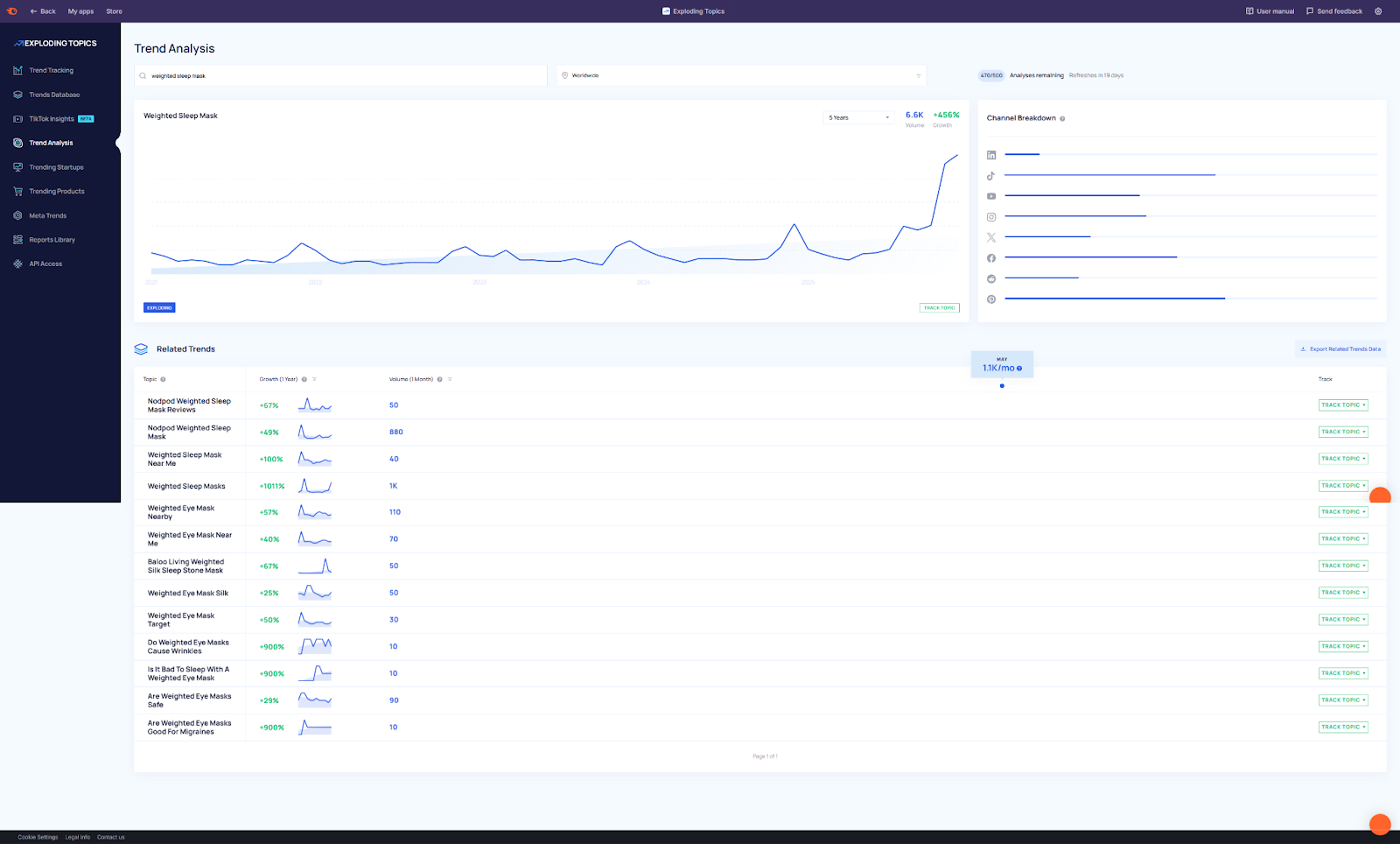
In an era shaped by AI Overviews, social SERPs, and shrinking organic real estate, arriving late means we risk competing within narratives already set by others.
n nnnExploding Topics stands upstream of this shift.
n nnnIt helps me uncover emerging themes, behaviors, and conversations while they are still forming – before they solidify into keywords, content clusters, and product categories.
n nnnWhen used effectively, it’s more than just a trend tool. It’s a strategic companion for planning SEO, content, digital PR, and social-led search guides.
n nnnThis article shares how I use Exploding Topics to pinpoint future entities, validate them through social search, and build search visibility before demand peaks.
n nn<!– wp:heading {Inspired by this post on Search Engine Land.
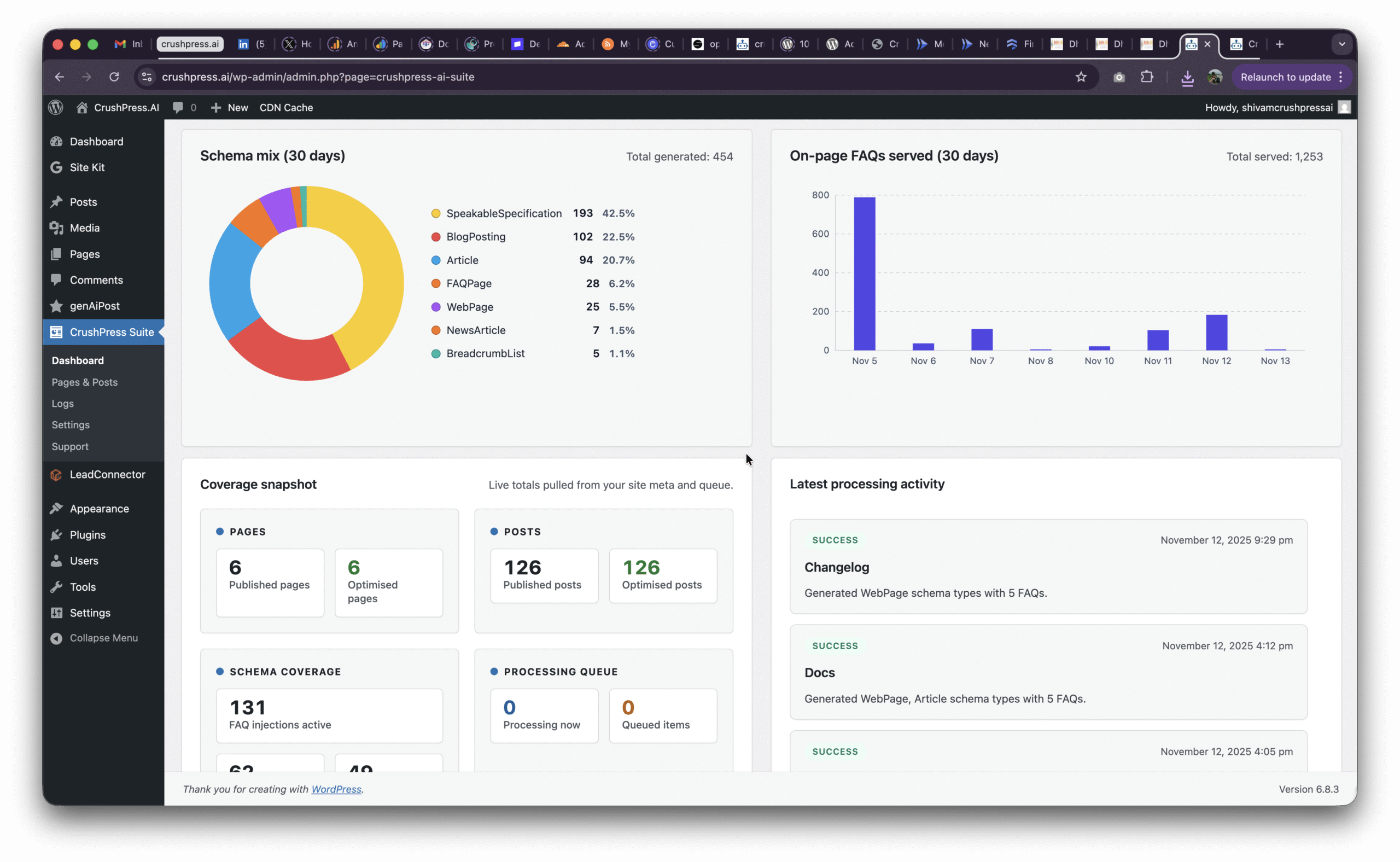
It auto-generates structured data (JSON-LD) that AI systems can reliably parse so your pages appear in AI answers (AEO) and generative summaries (GEO). It fixes the formatting issues most themes/plugins create.
No. SEO plugins optimize for Google SERPs. CrushPress optimizes for AI-powered engines (ChatGPT Search, Google AI Overviews, Bing AI, Perplexity). They work side-by-side.
AI search rewrites content. CrushPress ensures your content is machine-trustworthy so AI engines quote it instead of skipping or paraphrasing it.
All schema.org JSON-LD types, including Article, BlogPosting, LocalBusiness, Product, FAQPage, HowTo, Review, Organization, Service, and more — automatically.
No. CrushPress safely merges, extends, or replaces broken schema depending on your site’s state. It never duplicates.
No. The plugin is lightweight, server-side rendered, and optimized for high-traffic environments.
It dynamically generates schema on request, supports caching, and is stable for very large sites or multisite networks.
Yes. There are agency/host plans specifically designed for bulk usage.
Yes — automatically. It detects CPTs, taxonomies, and custom fields.
Yes. Gutenberg, Elementor, Divi, WPBakery, Oxygen, Bricks — anything that outputs HTML.
Yes — Product, Offer, Review, AggregateRating, Brand, etc are auto-generated.
CrushPress repairs the schema, fills gaps, removes duplicates, and ensures compliance.
Every output is validated against schema.org and Google Rich Result standards.
Yes. You can override templates, disable types, and map custom fields to schema.
Yes. CrushPress outputs the content structures Google’s AI Overviews prefer.
No. JSON-LD is recommended by Google. CrushPress follows safe guidelines.
Yes. It supports WHMCS, provisioning scripts, multisite installs, and silent activation.
Yes. Agency/host plans include priority support and onboarding.
You get significantly higher probability because your content becomes structured, trustworthy, and machine-readable.
No customer content is stored. All schema is generated on your server.
Yes — WP-JSON endpoints expose structured data.
No. Most pages are handled automatically. You can override if needed.
Yes. CrushPress parses the page and generates proper machine-readable schema.
Yes — WPML, Polylang, Weglot.
One plugin → activate → done. No complicated setup.

I’ve learned that documenting an SEO strategy is vital for success. It
Inspired by this post on Search Engine Land.

I’m excited to introduce the Profound AEO Content Score, a groundbreaking metric powered by machine learning. This tool is a game-changer for marketers, helping us gauge how well our content is optimized for AI search results.
Leveraging data from millions of top-cited pages across AI platforms, the AEO Content Score evaluates the likelihood of your content being referenced in AI searches. This score lays the groundwork for our newest version of Content Optimization, offering real-time insights and benchmarks.
With clear recommendations to enhance your visibility in AI-generated answers, you’ll gain a competitive edge in the digital landscape. Let’s dive into how this powerful tool can propel your content strategy to new heights.
Inspired by this post on Try Profound Blog.