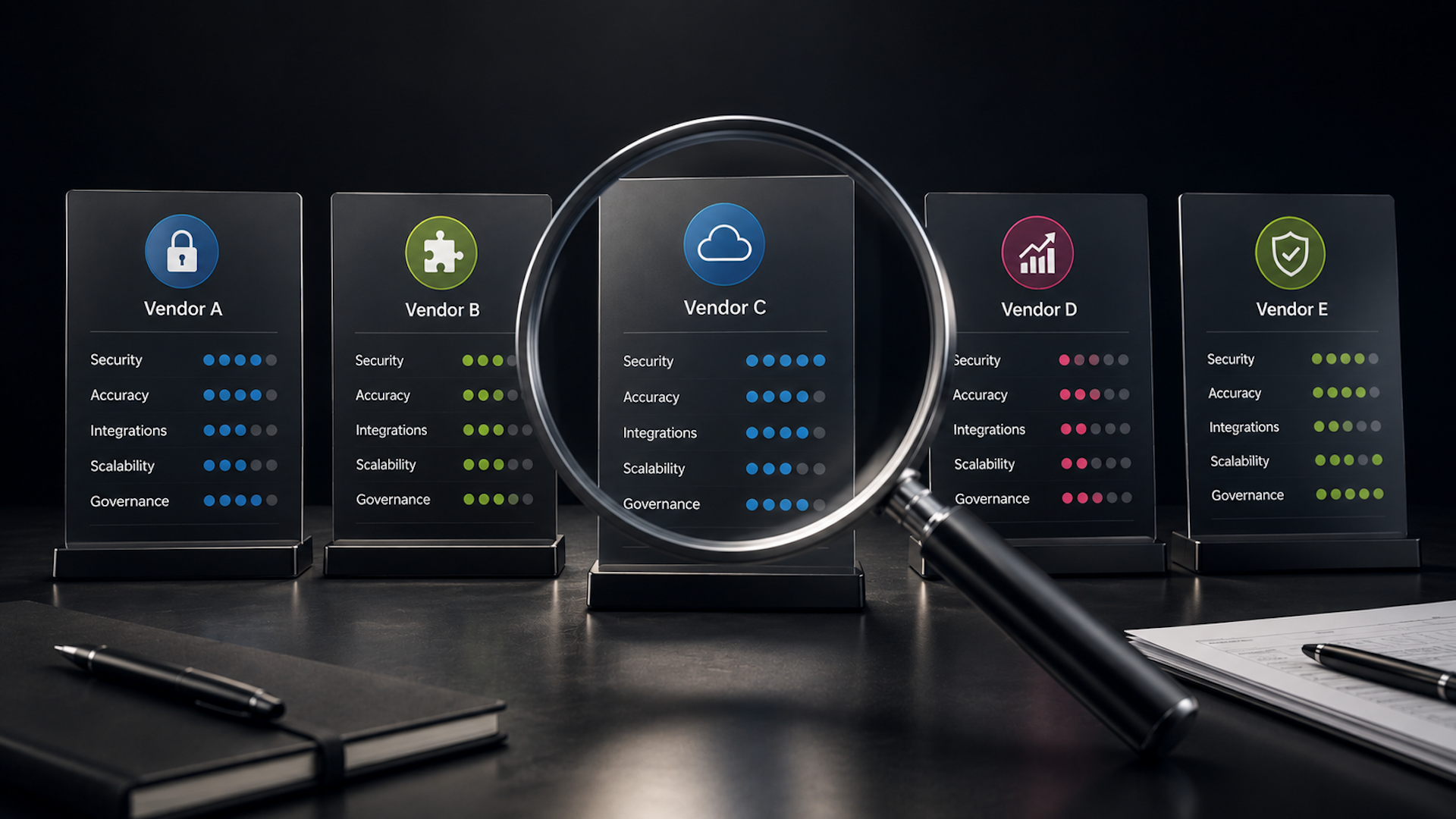
AI now shows up in nearly every corner of marketing, and for every useful initiative I see, it feels like 10 vendors appear with a tool that claims to solve it.
When this wave first started, I took more vendor calls and answered more outreach than I do now. Over time, I noticed I was asking the same core questions again and again to decide whether an AI tool was actually worth deploying.
If I feel overwhelmed by AI vendor pitches, these are the five questions I use to separate useful solutions from noise. They help me understand what the tool does, whether it solves a real business problem, and whether the vendor is the kind of partner I would trust with my budget, data, and team’s time.
1. What problem does your tool solve?
I start here because I want to understand the purpose of the tool and, more importantly, whether the value it creates connects to real business outcomes.
If a vendor cannot clearly explain the challenges or use cases the tool addresses, I assume it was not purpose-built for a real problem my team faces. That applies whether I am evaluating it from an in-house perspective or on behalf of an agency. I am cautious when vendors lead with feature-heavy language but cannot explain the business benefits those features are supposed to deliver.
If a vendor can identify at least one existing team problem and explain how the tool improves business outcomes, I keep the conversation going. My next question is usually for a case study that shows how the tool was used and what results it delivered for an organization similar to mine in size, market, or vertical.
I look for benefits such as increasing output or identifying tracking gaps that speed up troubleshooting. I do not rush to buy a tool simply because it promises to save time, even if that promise is true. I need to know how I will use that extra time before I can decide whether the savings are meaningful.
2. What expertise do you have in the space where this tool solves a problem?
This answer tells me whether the vendor built the tool for advertisers or merely at advertisers.
Technical skill matters, but so does understanding how a media buyer actually spends the day. If the vendor does not have direct experience in media buying, I want to hear how the team researched the market and how those insights shaped the product.
A shallow understanding of the problem is a red flag for me. I do not expect every sales rep to have deep domain expertise, but someone on the team should. If I am seriously considering the tool, I want access to that person early in the process.
When a vendor has a credible story about identifying a problem I recognize firsthand and building a solution around it, I find that compelling. A founding mission tied to my actual challenges gives me more confidence that the tool can make a real difference in performance.
3. What case studies, real use cases, and results can you share?
In a fast-moving AI market, I treat case studies as essential. I want to know whether the vendor has a strong track record with customers like me or whether I would be one of the first teams testing the product in my space.
If I would be an early adopter, I weigh the tradeoffs carefully. I might gain an advantage by finding a growth accelerator before competitors do. I might also spend time working through bugs, giving detailed feedback, or discovering that the tool does not deliver what was promised.
If I cannot trust the tool, or if I will need to provide a lot of feedback just to make it useful, I have to decide whether the potential payoff is big enough to justify the time and money. In most cases, that bar should be high.

If I am clearly going to be an early adopter and the vendor will not offer flexible contract terms that reduce my risk, I consider that a nonstarter. Established tools may be less flexible on pricing because they can already prove consistent value. Newer tools that take a hard line on price and contract terms are much less likely to become strong long-term partners.
For established vendors, I want specific and relevant case studies with real numbers from advertisers in a similar space, at a similar size, or with a similar use case.
For early-stage companies, the best answer is honesty. If a vendor says, “You’d be one of our first clients in this vertical. Here’s what we’ve seen elsewhere, and here’s what that partnership would look like,” I see that transparency as a positive sign.
4. Who owns my data, and how is it being used to train models?
I am still surprised by how quickly people share data with AI tools in the rush to find a competitive edge. Before I sign anything, I take data ownership and model training terms seriously.
I watch for any answer suggesting that my data could be used to train shared or third-party models without my explicit consent. I also treat vague answers, deflections, or terms of service that conflict with the salesperson’s verbal explanation as major warning signs.
I own my data, full stop.
The vendor should be able to clearly explain where my data is stored, how long it is retained, whether it is used for model training, and what happens to it if I stop using the tool. If model training is involved, I want that training limited to refining my own instance. Most importantly, I want those commitments in the contract, not just in a conversation. If the language is missing, I insist that it be added before I sign.
5. What does implementation actually look like, and what does success require from our team?
Before I commit budget, I need to understand the real cost of adopting the tool. That cost is not just the subscription price. It includes the time, internal lift, integration work, training, QA, and possible disruption to the existing martech stack.
If the tool requires resources my team does not have, or if I cannot realistically dedicate the time needed to use it well, I do not consider it a smart investment yet. A lot of wasted martech spend could be avoided by asking this question and taking the answer seriously.
I do not expect every tool to fit every organization, but I do expect implementation to be clear and the product to be intuitive enough for the team to adopt. If people cannot understand it, trust it, or fit it into their workflow, it will not create the value the vendor promised.
I do not let AI hype rush my decision
I know firsthand that many AI tools sound too good to be true, and often they are. I still want to stay curious and ambitious, but I balance that with caution.
I also remind myself that AI adoption is still early. If a tool feels too expensive, too difficult to onboard, or too rigid in its contract terms compared with its track record, I am willing to wait. A better option may appear in the next few months.
When I am unsure, I ask for a free trial. If integrating the tool will not create too much work for the team, a trial can be the best way to decide whether I have found a real competitive advantage or just another AI pitch dressed up as one.
Inspired by this post on Search Engine Land.
