Month: January 2026

  • AI-Driven PPC Workflows: Control, Testing, and Audits

    AI-Driven PPC Workflows: Control, Testing, and Audits

    Your Google Ads account does not need more AI output. It needs a reliable way to decide where AI may act, what evidence it must use, who approves a change, and how you will reverse that change if it goes wrong.

    The goal is not hands-off PPC. It is faster analysis, testing, and production without surrendering campaign intent. The workflow below gives AI useful work while keeping budget, measurement, brand claims, and final decisions under accountable human control.

    Give AI a job description and a stopping point

    AI-driven PPC contains three different kinds of automation, and treating them as one is where control starts to disappear.

    • Generative assistance drafts copy, classifies search terms, summarizes reports, and proposes hypotheses.
    • Platform automation adjusts bids, selects placements, and combines assets within the goals and signals supplied to the campaign.
    • Operational automation uses scripts, rules, and alerts to detect changes, pacing problems, broken assumptions, or other conditions that need attention.

    Each layer needs its own permissions. A system that may summarize a report does not automatically need permission to change a budget. A model that drafts headlines does not get to approve its own claims. A script that detects a pacing anomaly does not need authority to restructure the campaign.

    WorkUseful AI roleRequired human decision
    Search-term analysisCluster terms, label intent, and surface anomaliesApprove exclusions and decide whether the pattern changes targeting strategy
    Ad-copy developmentGenerate bounded variations from an approved message setVerify claims, offer details, tone, and possible asset combinations
    Budget monitoringFlag pacing or allocation changes that breach a defined conditionApprove material budget movement and its business tradeoff
    Bidding and deliveryOptimize within the campaign objective and supplied signalsSet the objective, conversion definition, exclusions, and economic limits
    Performance diagnosisRank hypotheses and identify missing evidenceConfirm the cause before changing the account
    Change implementationPrepare an upload, checklist, or bounded script actionReview the exact entities, settings, and rollback path
    Test analysisOrganize results and identify confounding changesDecide whether to keep, expand, revise, or stop the test

    This is the governing rule: generation is inexpensive, but execution consumes budget and changes the evidence you will use later. Put the strongest approval gate at that handoff.

    Define the write boundary

    Assign every AI-assisted task to a permission level before you automate it:

    • Read only: The system can inspect approved exports and return findings, but cannot prepare or publish changes.
    • Draft only: It can create copy, labels, recommendations, or an upload plan for review.
    • Bounded execution: It can perform a narrow, reversible action when predefined conditions are met and the affected entities are known.
    • Human-only execution: A person must make the change because it affects conversion goals, tracking, material budget allocation, market eligibility, legal claims, or brand policy.

    Bounded execution should describe both what is allowed and what is forbidden. For example, a monitoring script may pause an asset with a broken destination if that behavior has been approved in advance, but it should not respond by rewriting the destination, changing the campaign goal, and reallocating spend. That is a chain of business decisions, not one operational fix.

    Strong account fundamentals still matter in automation-heavy PPC. Controlled campaign structure, dependable signals, and clear business objectives give automated systems a better operating environment; weak inputs simply let them make the wrong decision more efficiently. Maintaining those fundamentals alongside human oversight of automation is the practical center of the workflow.

    Turn business intent into a campaign contract

    Business goals and constraints pass through a structured approval framework before becoming organized digital advertising campaign modules.

    An instruction such as improve performance is not a usable brief. It leaves the system to decide what performance means, which tradeoffs are acceptable, and which constraints may be ignored. Those are business choices.

    Create a campaign contract before asking AI to analyze, generate, or recommend anything. This does not need to be a lengthy strategy deck. It needs to be a compact, versioned record that the campaign owner, analyst, creative reviewer, and automation process all use.

    • Business outcome: State what the campaign is expected to contribute, such as qualified demand, profitable sales, or retention. Do not substitute a platform metric for the outcome.
    • Primary conversion: Name the action used for optimization and describe when it counts. Separate it from secondary indicators that are useful for diagnosis but should not steer bidding.
    • Economic boundary: Record the acceptable acquisition cost, return requirement, or budget constraint supplied by the business. If the number is unsettled, mark it as unresolved rather than asking AI to invent one.
    • Audience and intent: Describe who the campaign should reach, the need being addressed, and the search intent that belongs inside the campaign.
    • Eligibility and exclusions: Record locations, schedules, inventory restrictions, existing-customer rules, query exclusions, and any other boundary that must survive automation.
    • Offer and destination: Specify the approved offer, landing page, availability conditions, and any time-sensitive detail that must remain synchronized.
    • Message policy: List approved facts, mandatory language, prohibited claims, tone requirements, and terms that require specialist review.
    • Test rule: Name the hypothesis, allowed changes, evaluation metric, possible confounders, stop condition, and person who will decide the result.
    • Ownership: Assign an approver for budget, measurement, creative, targeting, and rollback. A shared workflow still needs a named decision owner.

    Client and stakeholder conversations belong in this contract. A platform can report conversions or revenue, but it cannot infer whether the business is receiving low-quality leads, overloading a sales team, selling an undesirable product mix, or attracting customers it cannot retain. PPC decisions improve when the team understands objectives beyond the figures visible in the ad account.

    Give the model the contract alongside a structured performance export. Include field definitions, filters, the comparison basis, and known tracking changes. A screenshot can provide visual context, but it should not replace rows and labels that make the evidence auditable. Remove personal information and any proprietary data that the chosen AI environment is not authorized to receive.

    Reusable instruction: Act as an analyst, not an account operator. Use only the attached campaign contract and performance data. Return the observed signal, affected scope, supporting evidence, missing evidence, plausible alternative explanations, and one reversible test. Label every inference. Do not fill missing fields with assumptions and do not propose changes outside the contract.

    That instruction makes uncertainty visible. It also gives the reviewer something better than a confident recommendation: a chain of evidence that can be challenged before money moves.

    Run a traceable loop from observation to decision

    A useful PPC workflow is a loop, not a command that jumps from report to account change. Every pass should preserve enough context for another person to reconstruct what happened.

    1. Capture the baseline. Save the relevant settings, active assets, performance view, known anomalies, and recent change history. Record which filters and conversion definitions are in use. Without that baseline, a later movement cannot be tied confidently to the change.
    2. Write the observation without explaining it. Describe what changed, where it changed, and which comparison exposed it. Keep the initial statement separate from theories about the cause.
    3. Generate competing hypotheses. Ask AI for more than one plausible explanation and the evidence that would weaken each one. This reduces the risk of turning the first plausible story into an account edit.
    4. Choose one decision to test. Convert the strongest supported hypothesis into a bounded change. State what will remain fixed so the result has a chance of being interpretable.
    5. Run a human preflight. Verify entity scope, conversion settings, budget exposure, destinations, exclusions, asset combinations, tracking, claims, and rollback instructions. Review the actual proposed change, not just a summary of it.
    6. Observe delivery and business quality separately. Watch whether the campaign is serving as intended, then examine whether the resulting traffic or conversions meet the business definition in the contract. More activity is not automatically better activity.
    7. Record the decision. Keep, expand, revise, or reverse the change. Save the reason, evidence, reviewer, affected entities, and any unresolved uncertainty.

    Avoid stacking unrelated edits while a test is still being evaluated. If an urgent correction is necessary, make it, but record it as a confounder. Automated campaign types can also involve learning periods, so repeated interventions may leave you with unstable delivery and no clean answer. This becomes especially important for fixed promotional windows, where prolonged learning and interface friction can complicate time-sensitive campaigns. Build and validate the workflow before the promotion begins rather than discovering approval gaps during it.

    Make AI show its diagnostic work

    A performance summary tells you what moved. A diagnostic output should tell you what to inspect next. Require five fields for every anomaly:

    • Signal: The observed movement, expressed without a causal claim.
    • Scope: The campaigns, ad groups, assets, queries, audiences, locations, or conversion actions involved.
    • Cause class: Measurement, eligibility, demand, competition, creative, landing experience, bidding, budget, or an account change.
    • Verification: The exact report, setting, stakeholder input, or comparison needed to confirm or reject the hypothesis.
    • Safe next action: Inspect, annotate, test, pause, roll back, or escalate. A recommendation to edit the account must name the affected entities.

    This format exposes weak reasoning quickly. If the model cannot name supporting evidence or a verification step, the output is an idea for investigation, not a basis for execution.

    Put creative automation behind brand guardrails

    Creative automation carries a different risk from bidding automation. A bid error can waste budget; an asset error can misstate an offer, imply an unapproved promise, or put the brand into a narrative it would never choose. Concerns around Automatic Created Assets and loss of message control make creative governance an operating requirement, not a final proofreading step.

    Use asset permission tiers

    Sort creative inputs and outputs into three tiers:

    • Green: Approved evergreen product facts, existing brand language, standard calls to action, and verified destination descriptions. AI may produce bounded variations from these inputs.
    • Amber: New framing, audience-specific language, promotional urgency, or a rearrangement that could change meaning. AI may draft it, but a named reviewer must approve it before publication.
    • Red: Prices, guarantees, regulated claims, competitor comparisons, legal language, testimonials, eligibility promises, and time-sensitive terms. AI may help organize approved material, but it must not invent or publish these claims.

    Apply the tier to the complete rendered message, not just each individual asset. A headline may be accurate on its own and still become misleading when combined with a description, price, promotion, or landing page. Responsive formats therefore need combination-aware review.

    Use this preflight before enabling generated or automatically assembled creative:

    • Does every factual claim appear in the approved claim library?
    • Does the offer match the destination, audience, geography, and eligibility rules?
    • Could any headline and description combination create a promise that neither asset makes alone?
    • Are trademarks, product names, capitalization, and required qualifiers correct?
    • Are promotion dates, availability, and calls to action synchronized with the landing page?
    • Could the wording be read as a testimonial, guarantee, comparison, or regulated claim?
    • Is the final URL correct, functional, measurable, and appropriate for the query intent?
    • Is there an approved replacement or rollback path if an asset must be removed?

    AI polish is not a substitute for credibility. Real customer or creator material can make advertising feel more relatable than uniformly polished generated creative, which is why authentic user-generated content remains useful in AI-heavy campaigns. Use it only with appropriate permission, preserve the speaker’s actual meaning, and never have AI fabricate a customer experience or testimonial.

    Design tests that answer one decision

    Do not generate a large asset set merely because the model can. Start with a decision the business needs to make, then create only the variations needed to test it.

    • Name the hypothesis in a sentence that could be proved wrong.
    • Choose the primary evaluation metric before examining the result.
    • Specify which material difference is being tested. If several elements must move as a bundle, document the bundle rather than calling it a single-variable test.
    • Hold the offer, destination, targeting, and measurement steady when the test is meant to isolate messaging.
    • Define the evidence standard and stop condition appropriate to the campaign’s traffic, economics, and risk. Do not import a universal threshold.
    • Evaluate downstream business quality as well as platform engagement. A stronger click response does not settle whether the message attracts the right customer.

    AI is valuable here because it can produce controlled variants and check them against the contract. The test owner still decides what question matters and whether the evidence is strong enough to act.

    Make every automated change easy to investigate

    A human auditor examines a visible chain connecting campaign evidence, testing, approval, deployment, monitoring, and rollback stages.

    Monitoring is where AI-assisted PPC becomes dependable. Scripts can surface problems before they expand, but the alert must lead into a disciplined investigation. Separate four actions that are often collapsed into one: detection, diagnosis, decision, and execution.

    • Detection: A rule, script, platform notice, or reviewer identifies an unexpected condition.
    • Diagnosis: The analyst checks scope, timing, data quality, recent changes, and competing explanations.
    • Decision: The owner chooses whether to observe, test, correct, roll back, or escalate.
    • Execution: The approved action is applied to named entities and recorded.

    Trigger a focused audit after a bulk upload, a script-driven edit, a conversion or destination change, an unexpected performance movement, or a material adjustment to budget, targeting, assets, or goals. Time-sensitive promotions deserve an audit before launch and continued review while the offer is live because a late correction may have little useful runway.

    Google Ads Change history is the forensic layer for this work. When investigating an entry, select one or more changes and use the Go to… dropdown to open the affected campaign or ad group. That removes manual navigation from bulk-edit and script troubleshooting, but it does not replace the reasoning record your team needs.

    For every material change, keep these fields together:

    • The actor or automation that initiated it.
    • The affected account entities.
    • The previous and new values.
    • The campaign-contract requirement or hypothesis behind it.
    • The approval owner.
    • The expected effect and evidence needed to evaluate it.
    • The rollback action and person authorized to use it.
    • Any simultaneous change that could confound interpretation.

    During troubleshooting, ask whether the change was intended, whether it landed at the correct account level, whether adjacent settings moved with it, and whether the implemented result matches the approved plan. If you cannot answer those questions, pause further automation in the affected scope until the account state is understood. Adding more edits to an unexplained state makes both recovery and analysis harder.

    Key takeaways

    • Use AI for classification, drafting, anomaly triage, and bounded recommendations; keep business tradeoffs and material account changes with named human owners.
    • Give every AI task a campaign contract containing the business outcome, conversion definition, economic boundary, audience, exclusions, message policy, and test rule.
    • Move through observation, competing hypotheses, a reversible test, human preflight, and a recorded decision. Do not jump from a generated insight directly to execution.
    • Review creative at both the asset and combination level. Generated wording must stay inside an approved claim library.
    • Separate detection, diagnosis, decision, and execution so an alert does not silently become an account edit.
    • Use Change history to locate what changed, then connect the platform record to the business reason, approval, expected effect, and rollback plan.

    Start with one campaign, not an account-wide automation program. Write its contract, label each task by permission level, create the preflight, and make one change traceable from hypothesis through rollback. Once that loop works under normal conditions, expand it to the next campaign without weakening the gates.


    References

  • AI Search Visibility: A Practical 90-Day AEO Strategy

    AI Search Visibility: A Practical 90-Day AEO Strategy

    If your conventional rankings look respectable but your brand rarely appears in AI-generated answers, adding more pages or rolling out schema across the site is a poor first move. You first need to locate the break: can the system find your content, understand it, select it for the question, and represent it accurately?

    A useful answer engine optimization strategy connects those stages. It starts with the questions that matter to your audience, assigns each question to a credible page, removes technical barriers, and measures what actually appears across AI search surfaces. Here is how to build that system over a focused 90-day cycle.

    Key takeaways

    • AEO does not replace SEO. A page still needs to be accessible, indexable, relevant, and understandable before an answer engine can use it.
    • Optimize around question-and-answer relationships, not isolated keywords. Each priority question needs a canonical page, a direct answer, supporting evidence, and clear boundaries.
    • JSON-LD should confirm what a visitor can already see. It cannot compensate for thin content, contradictory facts, or blocked pages.
    • Measure brand mentions, cited URLs, answer accuracy, and useful visits separately. A single visibility score hides the reason you are winning or losing.
    • Use a 90-day cycle to establish a baseline, repair priority pages, rerun the same prompt set, and decide the next round of work.

    Diagnose the visibility failure before you optimize

    AI visibility is not one event. It is a chain of events, and each link can fail for a different reason:

    1. Discovery: the system must be able to reach or otherwise encounter the page.
    2. Interpretation: it must identify the subject, entities, claims, and relationships correctly.
    3. Selection: the content must be useful for the particular question, not merely related to its general topic.
    4. Composition: the answer must preserve your meaning while deciding whether to name or link to you.
    5. Conversion: the resulting mention or citation must help the reader take a relevant next step.

    You usually cannot see an AI product’s internal retrieval process. Work from observable signals instead. If the preferred page is missing from conventional search indexes, fix technical discovery first. If competing pages answer the question precisely while yours circles the topic, repair the answer. If your brand appears with the wrong description, resolve inconsistent entity information across the site. If you earn citations but visitors reach a generic page with no useful continuation, fix the landing experience.

    Keep these failure types separate in your reporting. A brand mention is not automatically a citation. A citation is not automatically an accurate recommendation. An accurate recommendation is not automatically a visit. Combining them into one score produces a number you can present, but not a diagnosis you can act on.

    Your baseline should record the exact question, the AI surface and mode used, the response, whether the brand appeared, whether a source link appeared, which URL was cited, whether the answer was materially accurate, and when the observation was captured. Visibility now spans environments such as ChatGPT, Google, Perplexity, and Meta AI, but their behavior and access to web material can differ. Record the surface rather than treating AI search as one interchangeable channel.

    Use the same wording and comparable conditions when you repeat a prompt. Even then, regard each response as an observation rather than a permanent ranking. Generated answers can vary, so a defensible trend comes from a consistent log, not a single favorable screenshot.

    Build an answer map around decisions, not keyword variants

    Hands connect decision symbols to individual content-page tiles on a clean strategy workspace.

    A keyword list tells you how people phrase a topic. An answer map tells you what they need to understand or decide. That distinction matters because an AI response normally resolves a question, combines supporting details, and anticipates a follow-up. A page targeting a broad phrase can rank conventionally yet still supply no clean answer to reuse.

    Build the map in this order:

    1. Choose the audience decision. Write down what the person is trying to choose, fix, verify, compare, or complete.
    2. State the core question in natural language. Use the wording a buyer, practitioner, or stakeholder would recognize, not an internal product label.
    3. Add the necessary follow-ups. Include the definition, criteria, process, limitations, alternatives, and failure conditions that affect the decision.
    4. Assign a canonical page. Decide which existing or planned URL should provide the strongest complete answer.
    5. Specify the required evidence. Mark which claims need primary citations, visible calculations, product documentation, examples, or a clear explanation of methodology.
    6. Define the next useful action. Decide what the reader should be able to inspect, compare, configure, or request after receiving the answer.

    For an AEO audit topic, for example, the cluster might include: What counts as an AI search appearance? Which questions should be monitored? What can prevent a page from being used? When does structured data help? How should an inaccurate brand description be corrected? What evidence would show that visibility improved? Those are connected information needs, not six excuses to publish near-duplicate pages.

    Give each page an answer contract

    Before revising a page, complete this sentence: For this audience making this decision, the page will answer this question using this evidence, while making these limits clear. If you cannot fill in every part, the brief is still too vague.

    The answer contract prevents three common forms of content sprawl. It stops one page from trying to serve unrelated intents. It stops several pages from competing to provide the same answer. It also exposes evidence gaps before polished copy disguises them.

    Do not create a separate URL for every prompt variation. Consolidate questions that share the same intent and evidence. Give a question its own page only when the answer, audience, proof, or next action is materially different. Otherwise, use descriptive subheadings and internal links to help readers and machines reach the relevant answer unit.

    Engineer pages that are extractable and hard to misread

    Clear technical access before rewriting copy

    Review the preferred URL as a retrievable document. Confirm that it loads successfully without authentication, is not excluded by a robots directive, does not carry an unintended noindex instruction, and declares the canonical URL you expect. Make sure the important answer is present in the rendered page and can be reached through ordinary internal links.

    Also look for contradictions created by migrations and templates: an old canonical pointing elsewhere, several live versions of the same answer, a title that names one product while the body describes another, or structured data carrying details that no longer appear on the page. Rewrite work will not solve those defects.

    For Google AI Overviews, indexation, relevance, useful structure, and well-supported information belong in the same optimization workflow. Treating AEO as a decorative layer applied after technical SEO leaves the discovery link unresolved.

    Write answer units that can stand on their own

    Place a direct response immediately after the heading that asks or frames the question. The opening sentence should name the subject explicitly and resolve the central point. Follow it with the qualification that changes how the answer should be used.

    For example, a weak opening says that modern brands need to adapt to a changing landscape. A usable opening says: Answer engine optimization is the practice of making content easier for answer systems to find, interpret, select, and represent when responding to a question. The second version defines the entity and its purpose without forcing a reader to reconstruct the meaning from surrounding copy.

    A strong answer unit usually contains:

    • The direct answer: a short passage that resolves the question without a promotional preamble.
    • The scope: the audience, platform, condition, or use case for which the answer holds.
    • The support: evidence or reasoning placed beside the claim it supports.
    • The boundary: an exception, limitation, or condition that prevents an overbroad interpretation.
    • The continuation: the next question or action a reader is likely to need.

    Resolve ambiguous pronouns and labels. Use the full brand, product, organization, or method name where a passage must remain understandable outside its surrounding paragraphs. Keep terminology consistent unless you are explicitly defining synonyms. If two terms mean different things, say where the boundary lies instead of rotating them for variety.

    Put evidence near the claim. Link material factual statements to the best available originating authority. Label proprietary observations as such, explain how internal figures were produced, and include the applicable date or version when a fact can change. Citation density is not the goal; claim-level traceability is.

    Use JSON-LD to corroborate the visible page

    Structured data works best as a machine-readable confirmation of content that is already clear to a visitor. Choose types and properties that accurately describe the page you have, not the search feature you hope to win. Keep names, URLs, organizational relationships, authorship, dates, and other shared facts aligned with the visible copy.

    Only mark up information that genuinely appears on the page. An FAQ structure should correspond to visible questions and answers. An organization relationship should agree with the site’s About and contact information. If the JSON-LD calls something a product while the page presents a general service or an editorial resource, correct the model rather than adding more properties.

    Validate syntax, but do not stop at syntax. A technically valid graph can still be semantically wrong. Review the rendered page and the JSON-LD side by side, compare identifiers and canonical URLs, and treat every mismatch as a data-quality defect. Schema can reduce ambiguity; it cannot manufacture authority, evidence, or relevance.

    Internal linking should reinforce the same model. Link from supporting pages to the canonical answer using anchor text that describes the relationship. Connect definitions to procedures, procedures to limitations, and comparisons to the underlying product or service facts. That creates a navigable information structure rather than a collection of isolated articles.

    Run the work as a 90-day AEO operating cycle

    A circular workspace links content diagnosis, modular page building, and evaluation of abstract answer bubbles in a repeating cycle.

    Use a 90-day operating window for AI-driven search visibility to separate diagnosis, implementation, and evaluation. This is a management cadence, not a promise that a particular system will cite you by a particular date.

    Days 1-30: establish the baseline and choose the work

    • Create the answer map for topics tied to meaningful audience decisions.
    • Freeze a prompt set you can repeat. Store the exact wording, surface, mode, conditions, response, mentions, citations, accuracy judgment, and capture date.
    • Identify which domains and pages are being cited for those questions. Compare their answer coverage and evidence with your assigned canonical pages.
    • Audit technical access, canonicalization, rendering, internal discovery, visible entity information, and structured-data consistency on the priority URLs.
    • Classify each gap as discovery, interpretation, selection, representation, or conversion. Prioritize the pages where the question matters and the failure is specific enough to fix.

    Do not begin by rewriting the entire site. A narrow baseline makes later movement interpretable. If you change templates, taxonomy, copy, schema, and internal links everywhere at once, you may improve the site while learning very little about what repaired the visibility chain.

    Days 31-60: repair canonical pages and supporting signals

    • Rewrite each priority page around its answer contract. Put the direct answer, scope, evidence, boundary, and continuation in a logical sequence.
    • Consolidate overlapping answers so one preferred URL carries the strongest version. Update internal links to point to it consistently.
    • Correct unsupported, stale, or contradictory claims. Add traceable citations where a factual claim requires them.
    • Align visible entity information with titles, headings, author or organization details, canonical URLs, and JSON-LD.
    • Add structured data only after the visible content is accurate. Validate both syntax and meaning.
    • Record what changed, where it changed, and when it was published. That change log is essential when you evaluate the next baseline.

    Keep the batch coherent. If several questions expose the same missing definition or entity conflict, repair the shared foundation once and then update the affected pages. If the questions require different evidence or serve different decisions, keep their answers separate even when the keywords overlap.

    Days 61-90: retest, classify movement, and set the next cycle

    • Repeat the baseline prompts under comparable conditions. Preserve the complete responses rather than recording only favorable mentions.
    • Compare brand presence, linked citations, cited URLs, answer accuracy, and landing-page relevance as separate fields.
    • Review results by question class and surface. An average can hide strong definition coverage alongside weak comparison or troubleshooting coverage.
    • Inspect newly cited pages to learn which answer units were selected and whether the surrounding context represented your position correctly.
    • For unchanged questions, return to the failure chain. Recheck access, answer completeness, evidence, entity consistency, and the strength of the competing material.
    • Carry unresolved gaps into the next cycle with a stated diagnosis and proposed change. Do not turn every absence into a demand for more content.

    Report outcomes in language the business can use. Named but not linked, cited and accurate, cited to the wrong URL, and visible but commercially irrelevant lead to different decisions. A visibility dashboard should preserve those distinctions.

    Your first action does not need to be a sitewide initiative. Take the highest-value unanswered question in your baseline, open the canonical page meant to resolve it, and inspect the entire chain from crawl access to the reader’s next step. Fix that chain, document the change, and retest it through the cycle. Once you can explain why a page is or is not being selected, you have an AEO operating system rather than a collection of guesses.

    References

  • Master Brand Mentions for Ultimate AI & SEO Boost

    Master Brand Mentions for Ultimate AI & SEO Boost

    How to earn brand mentions that drive LLM and SEO visibility

    I remember when link building was the cornerstone of SEO. While it’s still relevant, its role has evolved as Google set clearer standards, focusing more on quality, relevance, and intent.

    Today, in our AI-driven search world, the focus has shifted towards brand mentions, which have become a critical SEO initiative. Brand mentions provide references similar to citations, but in AI search, they explain how brands appear in LLMs (Large Language Models).

    Brand mentions are now influential factors for AI search strategies and are gaining more weight in traditional SEO algorithms. Focusing on them should be a priority in 2026 to ensure lasting organic visibility.

    Let me guide you on how we can prioritize and benefit from brand mentions.

    How and Why to Prioritize Brand Mentions

    Brand mentions have become essential in our AI search environments, moving beyond just backlinks. LLMs focus on analyzing mentions, context, and the recurring links between your brand and your target topics.

    ```json
{
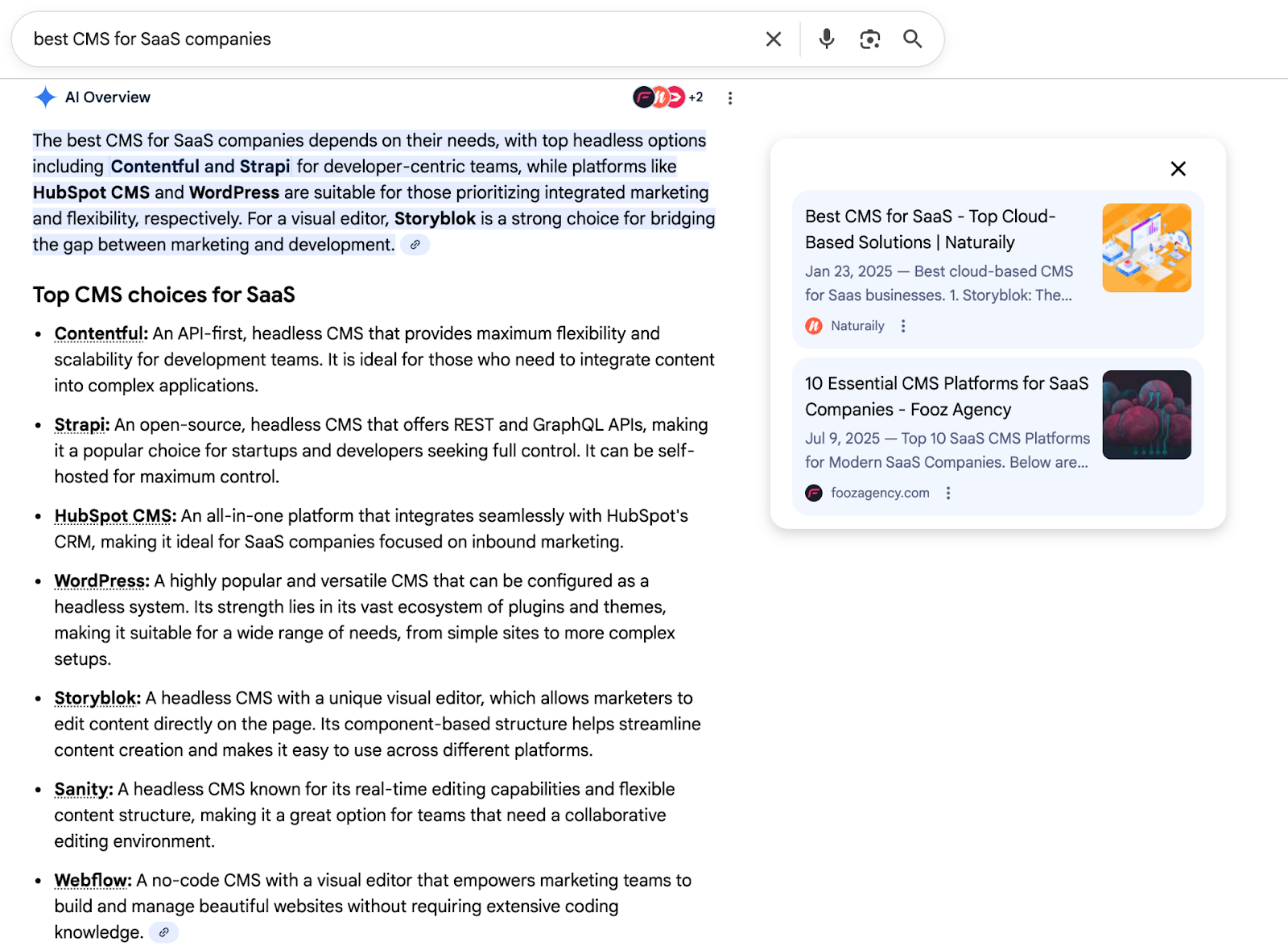
  "alt": "Search results for best CMS for SaaS companies, featuring tools like Contentful, Strapi, HubSpot, WordPress, and Storyblok.",
  "caption": "Explore the top CMS choices for SaaS companies, from headless options like Contentful and Strapi to integrated platforms like HubSpot and WordPress.",
  "description": "The image shows search results for the best CMS for SaaS companies, highlighting popular options such as Contentful, Strapi, HubSpot, WordPress, Storyblok, and more. The content emphasizes how each CMS caters to different needs, whether it’s developer-centric with APIs (Contentful, Strapi), integrated marketing (HubSpot, WordPress), or visual editing (Storyblok). Useful for companies focused on development flexibility, marketing integration, or ease of use, this guide helps in selecting the right CMS."
}
```

    These mentions form a competitive advantage, especially as they accumulate over time, creating a protective ‘ranking moat’ when competitors don’t invest similarly.

    To properly prioritize, ensure your brand’s technical and content fundamentals are solid. This includes crawlability, structured data, and clear on-page content. Afterward, focus on brand mentions before engaging in large-scale content production without an existing citation footprint.

    Dig deeper: In GEO, brand mentions do what links alone can’t

    Finding High-Priority Brand Mention Opportunities

    When seeking impactful brand mentions, it’s crucial to examine their sources. My agency goes beyond standard tools, looking for opportunities through systems like Profound that highlight relevant brand mentions aligned with key topics.

    We also review AI Overview links for SEO queries and dive into top-ranking Reddit threads to identify frequently mentioned entities related to important keywords.

    ```json
{
  "alt": "SEMRUSH ad promoting AI optimization with brand share of voice chart at 70%.",
  "caption": "Explore the future of search with SEMRUSH's AI Optimization. Discover if your brand will be seen in the changing digital landscape.",
  "description": "This SEMRUSH advertisement highlights the importance of AI optimization in modern search strategies. The image features a brand share of voice chart indicating 70%, along with a list of AI tools like Perplexity, Gemini, ChatGPT, and Claude. A call-to-action button invites users to get a demo. The vibrant purple design emphasizes innovation and technology. Keywords: AI optimization, SEMRUSH, brand visibility, search tools, digital marketing."
}
```

    You can uncover links to source articles in AI Overviews by selecting the chain-link icon, enhancing your brand’s topical visibility.

    best CMS for SaaS companies - AI Overviews

    Driving Passive Brand Mentions

    Passive brand mentions come when your content naturally fills an informational gap. The aim is to become the go-to reference for certain topics, achieving this by creating assets that are easily referenced.

    These can include original data, insightful reports, or highly scannable explanatory pages. By establishing your brand as the primary source, you’re better positioned for more mentions.

    Actively Soliciting Brand Mentions

    For proactive outreach to earn brand mentions, focus on building genuine relationships and providing valuable information. Start by sharing assets that offer clear benefits, without immediately asking for something in return.

    When contacting journalists or content creators, make your pitches relevant and timely, with a clear angle that increases your inclusion chances. Combining outreach with thought leadership, through podcasts or panels, enhances discovery possibilities.

    ```json
{
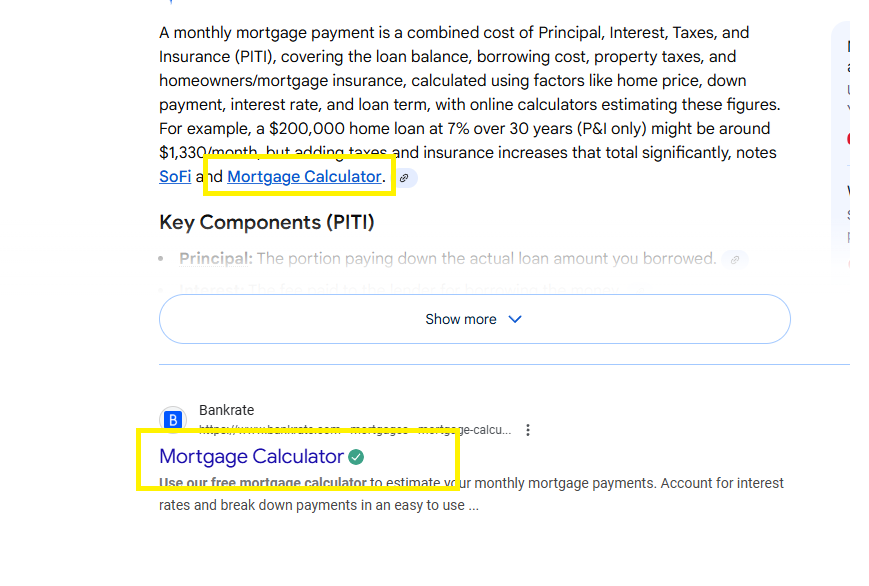
  "alt": "Highlighted text showing Mortgage Calculator links on a webpage discussing loan components and costs.",
  "caption": "Navigating mortgage complexities? Discover the role of a Mortgage Calculator in simplifying your loan planning and management.",
  "description": "This image captures sections of a webpage describing monthly mortgage payments, focusing on the Principal, Interest, Taxes, and Insurance (PITI) components. Highlighted links guide readers to online Mortgage Calculators from SoFi and Bankrate, offering tools to estimate loan payments. This content aids users in understanding and planning their financial commitments related to home loans. Keywords: mortgage, calculator, PITI, loan, SoFi, Bankrate."
}
```

    Our goal is to establish a robust outreach engine, nurturing relationships so that those individuals may naturally reference your brand in the future, potentially leading to collaborative content opportunities.

    Deciding When to Engage a PR Resource

    PR support is particularly beneficial when you have compelling stories or data but face distribution challenges. It’s also crucial for quick scaling of brand mentions, especially during fundraising, launches, or when competing in aggressive markets, like health or AI.

    However, if foundational SEO or assets are lacking, focus on establishing those first. Once ready, PR will accelerate visibility across search engines and LLMs.

    Dig deeper: How to build search visibility before demand exists

    Building Brand Mentions That Compound

    The core tenets of link building still apply: aim for quality over quantity and avoid low-impact sources. By keeping a clear focus on key sources and strategy, your brand can achieve significant improvements in search visibility.


    Inspired by this post on Search Engine Land.


    crushpress.ai community screenshot
  • Discover the Best Real Estate SEO Agencies of 2026

    Discover the Best Real Estate SEO Agencies of 2026

    n

    Last updated January 2, 2026

    n nnn

    In this report, I unveil my findings on the leading real estate SEO agencies in 2026, evaluated based on their rich experience, specializations, notable clients, and overall size.

    n
    ```json
{
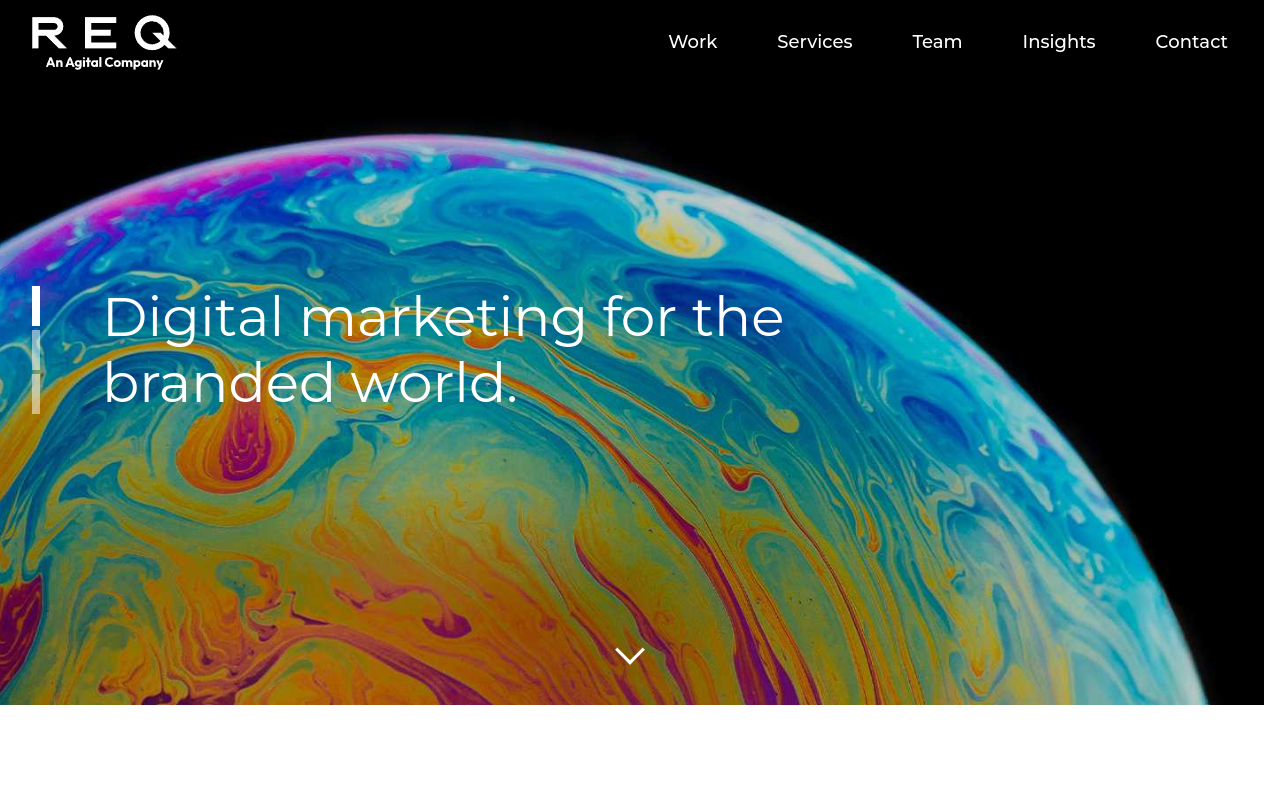
  "alt": "Colorful digital marketing graphic with text 'Digital marketing for the branded world' on a dark background.",
  "caption": "Explore the vibrant world of digital marketing transformation and branding in this eye-catching design. Discover the blend of creativity and strategy.",
  "description": "This image features a swirling, colorful graphic resembling an oil soap bubble, reflecting creativity, set against a dark backdrop. The text 'Digital marketing for the branded world' highlights the focus on innovative branding solutions. This vibrant design is part of a digital marketing company's homepage, capturing the essence of creativity and strategic branding. Keywords: digital marketing, branding, creativity, colorful design."
}
```
    nnn

    The criteria I considered are:

    n
    ```json
{
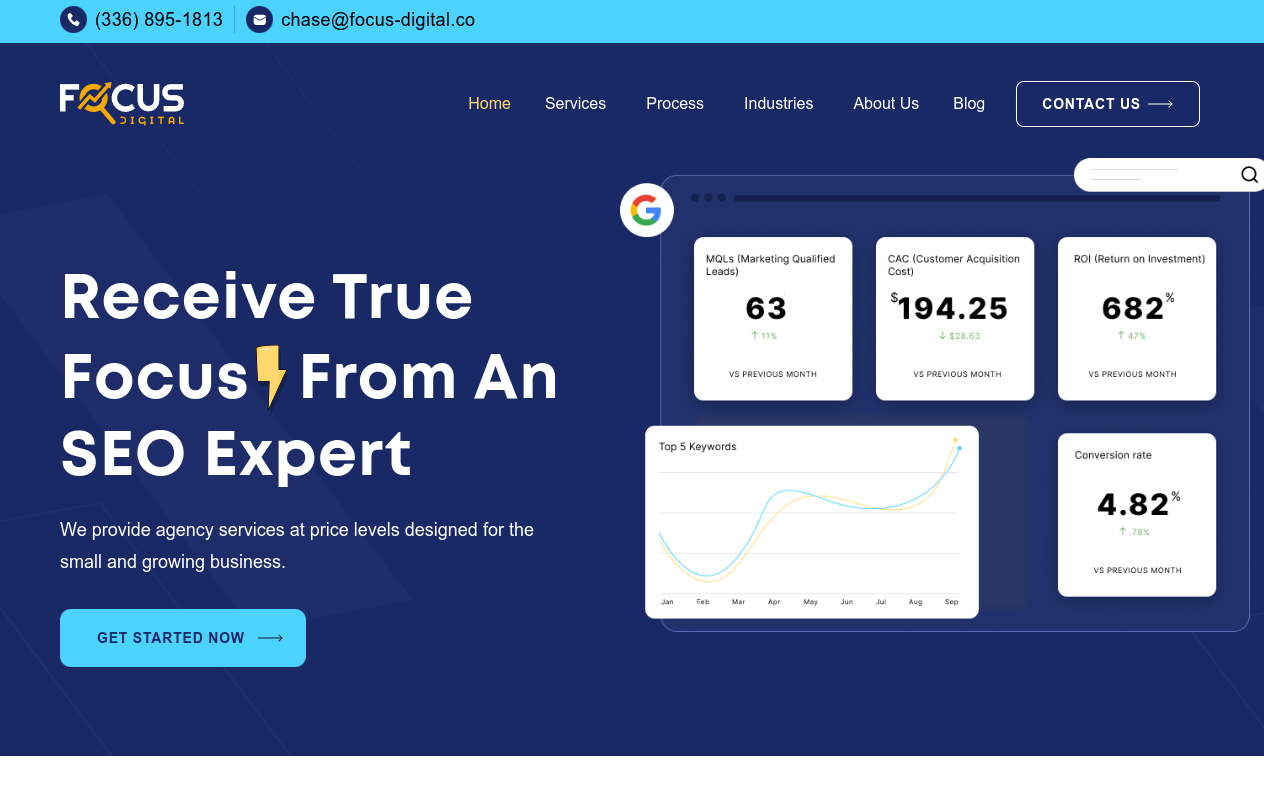
  "alt": "Focus Digital SEO services website showcasing metrics and growth data insights.",
  "caption": "Unlock true potential with Focus Digital's SEO expertise, tailored for thriving small businesses. Check out our impressive metrics and start your growth journey today!",
  "description": "This image depicts the homepage of Focus Digital, an SEO service provider. Key website elements include contact information, navigation menu, and a call-to-action button labeled 'Get Started Now'. The page highlights performance metrics such as marketing qualified leads, customer acquisition cost, and return on investment, showcasing positive trends. There's a visual representation of keyword trends, enhancing the appeal of data-driven solutions aimed at small and growing businesses. Keywords: SEO, digital marketing, small business growth, data insights."
}
```
    nnn

    Year Established: Agencies with a long-standing presence have successfully navigated industry challenges, proving their capability to deliver top-notch services.

    n
    ```json
{
  "alt": "LocaliQ webpage with text 'Unlock your business potential' and images of diverse professionals.",
  "caption": "Discover the power of LocaliQ's growth marketing platform to elevate your business success with expert solutions.",
  "description": "The LocaliQ webpage showcases the tagline 'Unlock your business potential' alongside images of diverse professionals symbolizing innovation and expertise. The page emphasizes finding and keeping customers through technology-driven marketing solutions. Prominent call-to-action buttons encourage users to 'Get a demo' and 'Find the right solution,' highlighting LocaliQ’s commitment to empowering businesses."
}
```
    nnn

    Founder Status & Leadership Experience Score: The leadership background shapes each agency

    ```json
{
  "alt": "Jives Media website showcasing awards as Digital Marketing Agency of the Year for 2020 to 2024.",
  "caption": "Celebrating Excellence: Jives Media recognized as the Digital Marketing Agency of the Year, winning awards consecutively from 2020 to 2024!",
  "description": "The Jives Media website highlights its accolades as a leading digital marketing agency, awarded 'Digital Marketing Agency of the Year' for five consecutive years (2020-2024). The image features a banner with scenic mountain background and showcases various prestigious industry awards, enhancing its credibility and expertise in the digital marketing field. Keywords: Jives Media, digital marketing, agency of the year, awards, excellence."
}
```

    Inspired by this post on First Page Sage Blog.


    crushpress.ai community screenshot
  • Google’s Blue Send Button: Revolutionizing Search Experience

    Google’s Blue Send Button: Revolutionizing Search Experience

    As I type my search query in Google, I’ve noticed an interesting change. The usual AI Mode button is sometimes replaced by a striking blue ‘Send’ button right in the search box.

    Google is currently testing this new feature. Traditionally, the AI Mode button appears on the right side of the search box, but it seems this might be changing. As soon as I start typing, the ‘Send’ button takes its place.

    What it looks like. Recently, I came across a post by Shameem Adhikarath, who shared a video of this new feature on X.

    From the video, it’s clear that when I start typing my query, the AI Mode, Lens, and Microphone buttons vanish, leaving behind this new blue ‘Send’ button.

    Interestingly, the familiar plus sign remains unaffected, sticking around as always.

    Why this matters. While this is currently just a test, it could have significant implications. If implemented, it might mean fewer users are directed to Google’s AI Mode, prompting more straightforward searches.

    For those of us who rely on AI Mode, this change could make accessing it a bit more challenging, urging us to adjust how we initiate searches.


    Inspired by this post on Search Engine Land.


    crushpress.ai community screenshot